Acid-Reducing Medications: How PPIs and H2RAs Affect Drug Absorption
 Aug, 22 2026
Drug Absorption Risk Estimator
Estimate how much acid-reducing medication may reduce the absorption of your pH-sensitive drug.
Absorption Level
Bioavailability vs. Baseline
Risk Classification
--
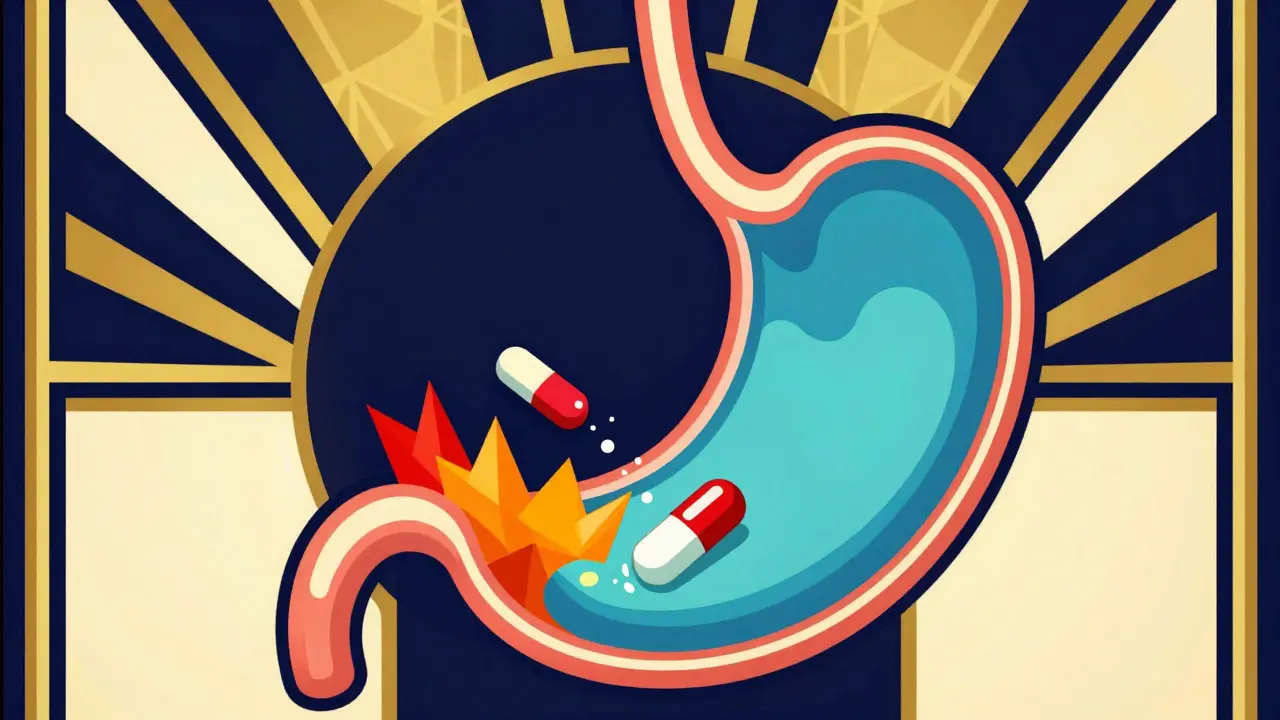
Did you know that the medicine you take for heartburn might be silently blocking your other prescriptions from working? It happens more often than most people realize. Acid-reducing medications are drugs like proton pump inhibitors (PPIs) and histamine H2-receptor antagonists (H2RAs) that lower stomach acid to treat conditions such as GERD and ulcers. While they effectively soothe your stomach lining, they also change the chemical environment where your other pills dissolve. This shift in pH can prevent certain drugs from absorbing properly, leading to unexpected treatment failures.
If you take daily medication for HIV, leukemia, or fungal infections, this is a critical issue. The problem isn't just theoretical; it's a documented cause of thousands of preventable health setbacks every year. Understanding how these interactions work empowers you to ask the right questions at your next pharmacy visit.
Quick Summary / Key Takeaways
- PPIs raise stomach pH significantly longer than H2RAs, creating a higher risk for drug interactions.
- Weakly basic drugs (like atazanavir and ketoconazole) are most vulnerable because they need an acidic environment to dissolve.
- Up to 50% of top-prescribed medications in the US are weak bases potentially affected by acid reducers.
- Staggering doses helps but doesn't eliminate risk for high-potency drugs; sometimes switching medication classes is safer.
- Always check with a pharmacist if you start or stop an acid reducer while on chronic therapy.
How Stomach Acid Controls Drug Dissolution
To understand why this matters, we have to look at the chemistry happening in your gut. Your stomach normally maintains a highly acidic environment, with a pH between 1.0 and 3.5 when fasting. Most orally administered drugs, particularly weak bases, rely on this acidity to break down into their soluble forms. Think of it like trying to dissolve sugar in cold water versus hot water-the temperature (or in this case, acidity) determines how fast and completely the substance dissolves.
When you take an acid-reducing agent, the pH rises to approximately 4.0-6.0. For weakly basic drugs, which make up about 70% of oral medications, this higher pH keeps them in a non-ionized state. In this state, they don't dissolve well. If a pill doesn't dissolve, it can't cross the intestinal wall to enter your bloodstream. Even though 90% of absorption technically happens in the small intestine, the dissolution process often starts in the stomach. If the drug remains as a solid chunk entering the intestines, its bioavailability drops dramatically.
PPIs vs. H2RAs: Which One Poses More Risk?
Not all acid reducers are created equal. Proton Pump Inhibitors (PPIs) are medications like omeprazole and lansoprazole that irreversibly inhibit the H+/K+ ATPase pump in parietal cells. They provide profound and sustained acid suppression, keeping gastric pH above 4 for 14 to 18 hours a day. In contrast, Histamine H2-Receptor Antagonists (H2RAs) are drugs like famotidine and cimetidine that competitively block histamine receptors, maintaining a higher pH for only 8 to 12 hours.
This duration difference matters. A 2024 study in JAMA Network Open found that PPIs reduce the absorption of pH-dependent drugs by 40-80%, whereas H2RAs typically cause a 20-40% reduction. Because PPIs keep the stomach less acidic for longer, they present a greater window of vulnerability for drugs that need low pH to dissolve. If you are on a high-risk medication, switching from a PPI to an H2RA or even simple antacids (with proper timing) might be a safer strategy, provided your doctor agrees.
| Feature | PPIs (e.g., Omeprazole) | H2RAs (e.g., Famotidine) |
|---|---|---|
| Mechanism | Inhibits H+/K+ ATPase pump | Blocks Histamine H2 receptors |
| pH > 4 Duration | 14-18 hours | 8-12 hours |
| Absorption Reduction | 40-80% | 20-40% |
| Risk Level | High | Moderate |

High-Risk Medications: Who Should Worry?
You don't need to panic if you're taking common painkillers or vitamins. The biggest risks involve weak bases with narrow therapeutic indices-meaning there's a small gap between a dose that works and a dose that fails or causes toxicity. The FDA has identified several key culprits:
- Atazanavir (Reyataz): An HIV protease inhibitor. Co-administration with PPIs can reduce its effectiveness by up to 95%. Complete avoidance of PPIs is generally recommended.
- Ketoconazole: An antifungal used for severe fungal infections. Its absorption drops by 75% with PPIs, often rendering it ineffective.
- Dasatinib (Sprycel): Used for leukemia. Studies show a 37% higher rate of treatment failure when combined with PPIs.
- Itraconazole: Another antifungal with similar solubility issues to ketoconazole.
On the flip side, weakly acidic drugs like aspirin or nilotinib see only modest increases in absorption (15-25%) when stomach acid is reduced. These changes are rarely clinically significant enough to require dose adjustments.
Real-World Consequences and Case Examples
Theoretical chemistry becomes very real when patients experience treatment failure. A retrospective cohort study involving over 12,000 patients found that those taking dasatinib alongside PPIs had significantly higher rates of relapse compared to those who didn't. Similarly, data from the FDA Adverse Event Reporting System shows over 1,200 reports of therapeutic failure linked to acid-reducer interactions between 2020 and 2023.
Consider the case of an HIV patient who started taking omeprazole for occasional heartburn. Unaware of the interaction, their viral load rebounded from undetectable to 12,000 copies/mL within months. Their specialist later explained that the omeprazole prevented the atazanavir from dissolving properly. This isn't an isolated incident; it’s a classic pharmacology lesson playing out in living rooms across the country.
Practical Strategies to Manage Interactions
If you must take both an acid reducer and a pH-sensitive drug, you have options. Here is how clinicians usually approach this:
- Check for Alternatives: Can you switch to a different medication that isn’t pH-dependent? For example, some HIV regimens use integrase inhibitors instead of protease inhibitors, which have fewer acid-related issues.
- Switch Acid Reducer Type: Moving from a PPI to an H2RA or antacid may lower the risk. Antacids work quickly but wear off fast, so timing is crucial.
- Stagger Dosing: For unavoidable combinations, take the pH-sensitive drug two hours before the acid reducer. However, this only reduces the interaction magnitude by 30-40%, so it’s not a perfect fix for high-risk drugs.
- Monitor Blood Levels: For drugs with narrow therapeutic windows, doctors may order blood sampling during the absorption phase (0-6 hours post-dose) to ensure adequate levels are reached.
Pharmacists play a vital role here. A recent study showed that pharmacist-led reviews reduced inappropriate co-prescribing by 62%. Don’t hesitate to ask them to scan your full medication list whenever you add a new heartburn remedy.
Frequently Asked Questions
Do all acid-reducing medications interact with other drugs?
No. Only drugs whose absorption depends on low stomach pH are significantly affected. Most antibiotics, statins, and blood pressure medications are not major concerns, but weak bases like certain antivirals and antifungals are high-risk.
Is it safe to take omeprazole with my HIV medication?
It depends on the specific HIV regimen. If you are taking atazanavir, omeprazole is generally contraindicated. If you are on integrase-based therapies, the risk is much lower. Always consult your infectious disease specialist before combining them.
Can I just take my heartburn pill at a different time of day?
Timing helps, but it’s not a cure-all. Separating doses by 2 hours can reduce the interaction effect by 30-40%. For high-risk drugs like atazanavir, separation may not be enough, and a medication change might be necessary.
Are H2 blockers like Zantac safer than PPIs?
Generally, yes. H2 blockers like famotidine suppress acid for a shorter duration (8-12 hours) compared to PPIs (14-18 hours). This results in a smaller impact on drug dissolution, making them a lower-risk option for many patients.
How do I know if my medication is pH-dependent?
Ask your pharmacist. They can check the drug’s pKa value and solubility profile. Drugs with a pKa greater than 7 (weak bases) and low solubility at higher pH levels are the ones to watch out for.