Anaphylaxis from Medication: Emergency Response Steps
 Mar, 25 2026
When a Drug Reaction Turns Deadly
Imagine you are at the pharmacy or in a hospital room. You take a pill or get an injection, and within minutes, your throat closes up. This isn't just a rash or a stomach ache. This is Anaphylaxis, a severe, life-threatening systemic allergic reaction characterized by sudden onset and rapid progression of airway, breathing, and circulation problems. It happens faster than you think. Medication-induced anaphylaxis accounts for roughly 20-30% of all cases seen in hospitals. If you or someone near you starts reacting to a drug, you don't have time to Google symptoms. You need to know the steps right now.
The difference between walking away and a tragic outcome often comes down to five minutes. That is the window where you must act. We are talking about immediate recognition and the swift use of specific tools. This guide breaks down exactly what to do when a medication triggers this hypersensitivity reaction, based on the latest consensus from major medical organizations.
Recognizing the Signs Before It's Too Late
Many people wait for the skin to turn red before they act. That is a mistake. In about 10-20% of cases, skin changes are completely absent. You cannot rely on hives to tell you if a reaction is serious. You need to look at the ABCs: Airway, Breathing, and Circulation.
According to data from the ASCIA Australian Society of Clinical Immunology and Allergy First Aid Plan updated in 2025, difficult or noisy breathing occurs in 89% of cases. Swelling of the tongue happens in 76% of cases. If someone is wheezing, coughing persistently, or sounds hoarse, that is your signal. Difficulty talking is another major red flag, appearing in 57% of incidents.
Look for signs of shock. Persistent dizziness or collapse happens in 49% of cases. In children, a pale appearance is a critical warning sign seen in 33% of instances. If the person feels like they are going to pass out, or if they actually collapse, the reaction has moved beyond the skin. These are the moments that require immediate intervention. Do not wait for all symptoms to appear. If you see two or more of these signs after a medication dose, assume it is anaphylaxis.
The Golden Rule: Epinephrine First
There is a common myth that you should give an antihistamine like diphenhydramine first. This is dangerous. Antihistamines treat skin symptoms, but they are completely ineffective for airway, breathing, or circulation problems. Clinical data shows no improvement in mortality rates when used as a standalone treatment for anaphylaxis. The only drug that reverses the life-threatening symptoms is Epinephrine, a medication that works within 1-5 minutes to reverse symptoms by constricting blood vessels and opening airways.
The Resuscitation Council UK guidelines from May 2021 mandate that epinephrine must be administered within 5 minutes of symptom recognition for optimal outcomes. Dr. Robert Wood of Johns Hopkins University notes that 70% of fatal anaphylaxis cases involve delayed or absent epinephrine administration. You might worry about side effects like a racing heart or high blood pressure. Those are real, but they are temporary. The risk of death from the reaction far outweighs the risk of the drug.
Out of 35,000 documented epinephrine administrations for anaphylaxis between 2015-2020, only 0.03% resulted in significant adverse cardiac events. If you are hesitating, remember the directive from the ASCIA First Aid Plan: 'IF IN DOUBT GIVE ADRENALINE DEVICE'. Hesitation contributed to 35% of preventable anaphylaxis deaths between 2015-2020. You must act fast.
Step-by-Step Emergency Protocol
When the reaction starts, follow this sequence without skipping steps. Time is the enemy here.
- Call Emergency Services: Dial 911 or your local emergency number immediately. Tell them the person is having a severe allergic reaction. Do this before or while you are giving the medication.
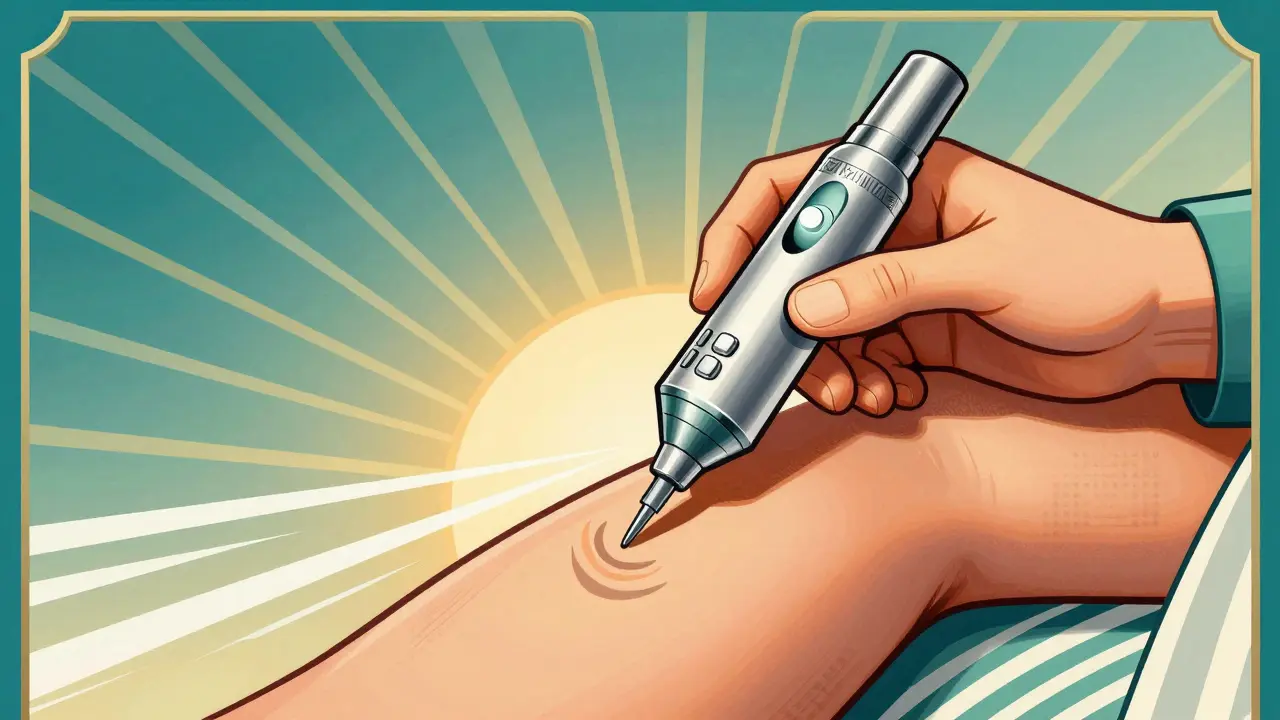
- Administer Epinephrine: Use an auto-injector device like an EpiPen, Auvi-Q, or Adrenaclick. Inject into the anterolateral thigh (the outer middle of the thigh). You can push through clothing if necessary.
- Check Dosing: For adults and children over 30 kg, use 0.3 mg. For children weighing 15-30 kg, use 0.15 mg. The AAAIA's 2016 Emergency Action Plan details these specific doses.
- Hold the Injector: Keep the device in place for the full 10 seconds. Many people pull it out too soon. A 2022 Red Cross training evaluation found that 37% of people failed to hold the auto-injector for the full time.
- Massage the Area: Rub the injection site gently for a few seconds to help absorption.
- Wait and Watch: If symptoms persist after 5 minutes, give a second dose. Some protocols suggest doses every 10 minutes if symptoms continue, as per FAACT's 2023 recommendations.
Remember that epinephrine has a short duration of action, approximately 10-20 minutes. This is why the second dose might be needed. The Cleveland Clinic's 2023 guidance emphasizes that you cannot rely on the first shot to last until the ambulance arrives.
Positioning Matters More Than You Think
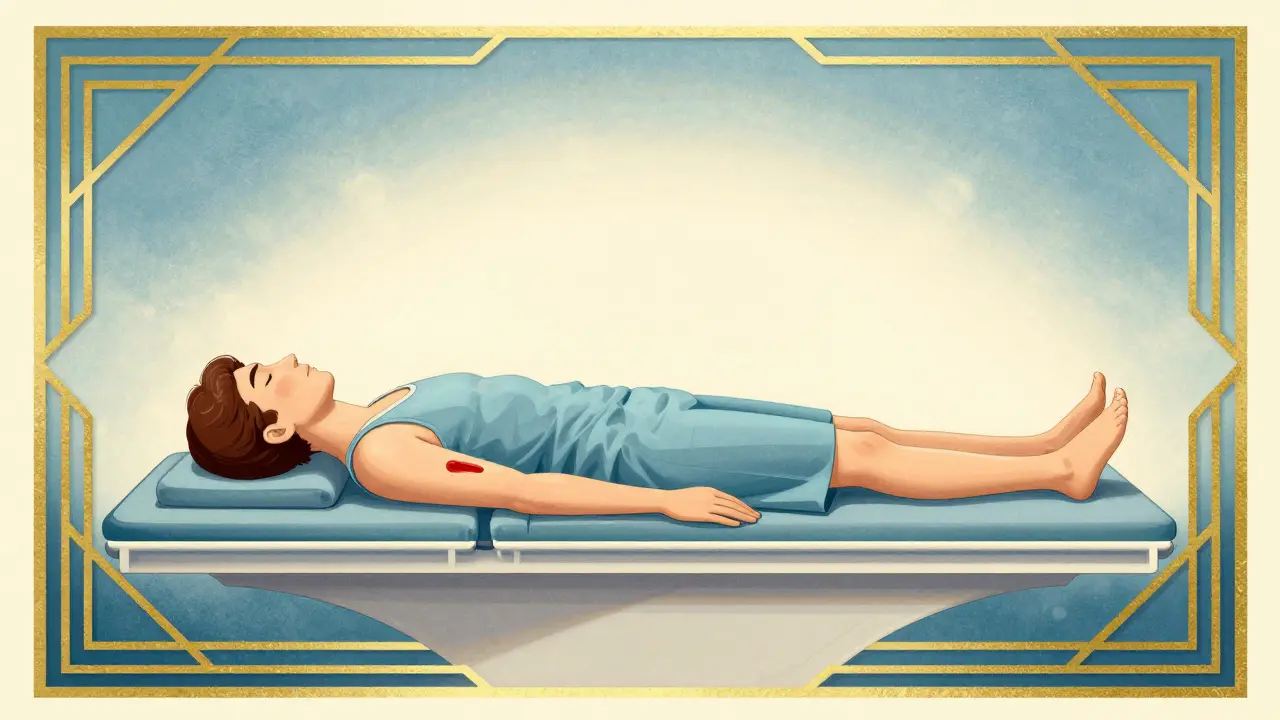
Once you have given the shot, what do you do with the person? Most people want to help the patient sit up because they feel like they can't breathe. This is the wrong move. The Resuscitation Council UK guidelines mandate that the patient must be laid flat immediately. Posture changes from supine to standing are directly associated with cardiovascular collapse and death in 15-20% of cases.
When the body is upright during a severe reaction, blood pools in the legs. The heart cannot pump enough blood to the brain because the blood vessels have dilated. Laying them flat helps return blood to the heart and brain. There are specific exceptions to this rule based on the patient's condition.
| Patient Condition | Recommended Position | Reason |
|---|---|---|
| Conscious Adult/Child | Lay flat with legs elevated | Maintains blood flow to vital organs |
| Unconscious Patient | Recovery position (on side) | Prevents choking on vomit |
| Pregnant Woman | Left side (Recovery position) | Prevents pressure on major blood vessels |
| Severe Breathing Difficulty | Sit with legs outstretched | Allows easier breathing mechanics |
| Young Children | Hold flat rather than upright | Prevents cardiovascular collapse |
The ASCIA First Aid Plan specifically notes that 55% of lay rescuers incorrectly allow patients to stand during reactions. This error potentially triggers cardiovascular collapse. If the person is vomiting, turn them onto their side while keeping them flat. Do not prop them up on pillows if you can help it. The goal is to keep the blood circulating effectively to the heart and brain.
After the Reaction: Observation and Biphasic Risks
You might think the job is done once the ambulance arrives or the symptoms fade. It is not. Hospital transfer for a minimum 4-hour observation is mandatory per ASCIA guidelines. This is because of the risk of biphasic reactions. These are recurring symptoms that happen without re-exposure to the trigger.
The risk of biphasic reactions occurring 1-72 hours after the initial episode is about 20%. FAACT specifies 4-6 hours of observation as the standard of care. Recent research from the NIH's 2023-2025 Anaphylaxis Registry suggests patients with medication-induced anaphylaxis have a 25% higher risk of biphasic reactions compared to food-induced cases. This means high-risk patients might need extended observation periods of 6-8 hours.
Even if the patient feels fine, the internal inflammation might return. The Resuscitation Council UK anticipates updating their guidelines in 2025 to incorporate new evidence on this risk. Do not let the patient drive themselves home. Do not let them go back to work immediately. The body needs time to stabilize. During this time, doctors may administer IV fluid resuscitation, typically 1-2 liters of normal saline administered rapidly, which is now considered an essential adjunct to epinephrine in cases of shock.
Common Mistakes That Cost Lives
Real-world implementation of these protocols reveals specific challenges. In hospitals, the average time from symptom recognition to epinephrine administration is 8.2 minutes. This exceeds the recommended 5-minute window in 65% of cases. Why does this happen? Often, it is hesitation.
A 2021 survey of 1,200 nurses reported that 42% admitted delaying epinephrine due to fear of legal repercussions. This fear is misplaced. The guidelines emphasize that epinephrine's benefits far outweigh risks. Another common error is improper injection technique. 23% of cases involve technical errors, and 18% involve injecting into subcutaneous fat rather than muscle. The drug needs to hit the muscle to work fast.
There are also unique considerations for certain medications. If the patient is taking beta-blockers, which are used by 25-30% of adults over 40, standard epinephrine doses may be less effective. Dr. Elina Jerschow's 2021 study showed these patients may require 2-3 times higher doses. This is a critical detail for doctors to know, but for first responders, it reinforces the need to give the first dose immediately and monitor for a second dose.
Finally, do not rely on corticosteroids like hydrocortisone for the immediate reaction. The Cleveland Clinic's 2023 guidance specifically warns that these are no longer recommended for routine anaphylaxis treatment except in refractory cases. They take too long to work and do not stop the airway collapse. Stick to epinephrine as the primary tool.
What are the most common drugs that cause anaphylaxis?
The most common triggers include antibiotics, particularly penicillins, NSAIDs (like ibuprofen), chemotherapy agents, radiocontrast media used in imaging, and muscle relaxants used during surgery. Antibiotics alone cause 45% of medication-induced anaphylaxis fatalities.
Can I use an antihistamine instead of epinephrine?
No. Antihistamines like Benadryl treat skin symptoms but are completely ineffective for airway, breathing, or circulation problems. Epinephrine is the only medication that reverses the life-threatening symptoms of anaphylaxis.
How long should I stay at the hospital after a reaction?
You should stay for a minimum of 4 hours. This is because there is a 20% risk of biphasic reactions occurring 1-72 hours after the initial episode. High-risk patients may need 6-8 hours of observation.
What if the person is pregnant and has anaphylaxis?
Pregnant women should be placed in the recovery position on their left side. This prevents pressure on major blood vessels. Epinephrine is still the first-line treatment and is safe for the fetus in this emergency context.
Does the epinephrine auto-injector expire?
Yes, auto-injectors have expiration dates. If the device is expired, the medication may not work effectively. However, an expired device is better than no device in a life-or-death situation. Always check dates and replace them annually.
Preparing for the Unexpected
Knowing the steps is half the battle. The other half is preparation. If you have a known medication allergy, carry your auto-injector with you at all times. FAACT's 2023 patient survey revealed that 68% of patients carried epinephrine auto-injectors but only 41% felt confident using them. Practice with a trainer device if you are unsure.
Make sure your family and close friends know where your medication is kept. If you are in a hospital setting, ensure your medical record clearly flags your allergies. The Cleveland Clinic reports that medication-induced anaphylaxis accounts for 7-10% of all anaphylaxis fatalities in the United States annually. Prevention starts with communication.
Recent developments include the FDA's May 2023 approval of the first epinephrine auto-injector with voice guidance, the Auvi-Q 4.0. Clinical trials showed this improved correct administration rates from 63% to 89% among untrained users. If you are buying a new device, consider one with audio guidance to reduce user error. Every second counts when your throat is closing.
Remember, this is not just about medical knowledge. It is about action. When the moment comes, fear will try to paralyze you. Push through it. Lay the person flat. Give the shot. Call for help. These steps save lives.
Blessing Ogboso
March 26, 2026 AT 03:12We need to talk about how this affects everyone in our communities. It is not just a medical issue that doctors handle alone. It is a community safety issue that requires vigilance. People often ignore the early signs of a reaction. They think it is just a rash or a minor itch. But the throat closes up very fast without warning. You need to know the steps before an emergency happens. The epinephrine saves lives in those critical moments. Waiting for an ambulance is not an option for the first aid. We must educate our families on the proper protocol. Schools need to have these plans in place for students. Hospitals need to be faster in their response times. The guidelines are clear and should be followed strictly. We should not hesitate when someone is struggling. Every second counts here when the airway closes. Please share this information widely with your friends. It could be the difference between life and death.
Rama Rish
March 27, 2026 AT 03:31i never knew the timing was that tight before now
Kenneth Jones
March 28, 2026 AT 16:20stop waiting for the ambulance to save them just inject the thing already people die because they hesitate and i hate seeing that waste of life
Mihir Patel
March 29, 2026 AT 14:01oh my god the stats are scarry i cant beleive 35 percent of deaths are preventable this is so tragic and we all need to be more carefull
Jefferson Moratin
March 30, 2026 AT 04:03Preparedness is a moral obligation we owe to one another in society. The knowledge of how to administer epinephrine should be ubiquitous. Ignorance in this specific context leads to preventable mortality. We must internalize these protocols until they become instinctual. The margin for error is nonexistent in anaphylactic events. Action must precede hesitation every single time without exception. This is the nature of emergency response in a modern world.
Elaine Parra
March 31, 2026 AT 06:52people are just too lazy to carry their own medicine and then they expect everyone else to save them when they mess up their health
Anil Arekar
April 1, 2026 AT 18:15It is imperative that the general public adheres to the established medical guidelines regarding anaphylaxis. The data presented herein underscores the necessity of immediate intervention. One must not deviate from the prescribed protocol under any circumstances. The preservation of life depends upon strict compliance with these measures.
Kevin Siewe
April 2, 2026 AT 17:35I just want to remind everyone that having the device is only half the battle. Knowing how to use it correctly is the other half. Please practice with the trainer units if you can. It helps build confidence for when you really need it.
Marissa Staples
April 3, 2026 AT 03:59i guess i never thought about how fast this could happen before reading this. it makes me want to check my first aid kit. maybe i should get one of those voice guided ones too.
Korn Deno
April 3, 2026 AT 21:10everyone needs to see this stuff and share it with their groups we cant let people die over something simple like a pill reaction
Linda Foster
April 4, 2026 AT 23:58Current clinical standards require observation periods for patient safety following the initial event. Adherence to the four hour minimum is advised by experts in the field. This ensures stability before discharge.