Are Generic Drugs Really Just as Good as Brand-Name Medications? The Truth Behind the Price Difference
 Dec, 20 2025
Every year, Americans fill over 8.8 billion prescriptions. Nearly 90% of them are generic. Yet, if you walk into a pharmacy and see a pill that looks nothing like the one you’ve been taking for years, you might pause. Is this really the same? Will it work just as well? These questions aren’t just about cost-they’re about trust.
Same Active Ingredient, Same Rules
Generic drugs aren’t knockoffs. They’re not cheaper because they’re weaker or made with lower-quality materials. They’re cheaper because the patent on the brand-name version expired. By law, a generic drug must contain the exact same active ingredient as the brand-name version. That means if your brand-name blood pressure pill has amlodipine besylate, so does the generic. Same strength. Same dosage form-tablet, capsule, liquid. Same way it enters your body: by mouth, injection, patch. The FDA doesn’t approve generics based on guesswork. Manufacturers must prove bioequivalence. That means the generic drug must be absorbed into your bloodstream at the same rate and to the same extent as the brand. The standard? The amount of drug in your blood (measured as AUC and Cmax) must fall within 80% to 125% of the brand’s levels. For most drugs, that’s a wide enough window to ensure the same effect. For drugs with a narrow therapeutic index-like warfarin, levothyroxine, or seizure meds-the standard tightens to 90% to 111%. That’s not a loophole. It’s a safety net.Why Do They Look Different?
You might notice your generic pill is a different color, shape, or size. Sometimes it even has a different imprint. That’s not a mistake. It’s required by law. Brand-name companies hold trademarks on the appearance of their pills. Generics can’t copy that look. So manufacturers change the inactive ingredients-fillers, dyes, coatings-to make them visually distinct. These inactive ingredients-like lactose, cornstarch, or food coloring-don’t affect how the drug works. But they can cause problems for a small number of people. If you’re allergic to lactose, a generic version with lactose as a filler could trigger a reaction. That’s rare, but it happens. That’s why it’s important to check the full ingredient list if you have known allergies. Your pharmacist can help.Do They Work the Same? The Evidence
A 2019 study in JAMA Internal Medicine looked at 3.5 million patients across 13 conditions: diabetes, high blood pressure, depression, osteoporosis. The results? No difference in outcomes between generics and brand-name drugs. Patients on generic glipizide had the same blood sugar control. Those on generic amlodipine had the same blood pressure drops. Same for escitalopram and alendronate. Even more surprising? A 2020 study in Austria found patients on generic blood pressure meds had better survival rates than those on brand-name versions. But researchers didn’t conclude generics were stronger. They pointed to something else: patients who got generics were more likely to stick with their treatment because they could afford it. That’s not the drug working better-it’s the patient taking it consistently. The FDA has tracked this for 40 years. Their conclusion? Generic drugs work the same. Dr. Janet Woodcock, former head of the FDA’s drug review division, said it plainly: “Generic drugs work the same as brand-name drugs and are just as effective.”
When Generics Might Not Be the Best Fit
There are exceptions. For drugs with a narrow therapeutic index-where even a tiny change in blood level can cause harm-some doctors prefer brand-name versions. Levothyroxine, used for thyroid disorders, is one. While most patients switch without issue, about 5-10% report changes in energy, weight, or heart rate after switching. That’s not because the generic is inferior. It’s because thyroid hormone levels are so sensitive that even small differences in absorption can matter. If you’re on levothyroxine and you switch generics, your doctor might recommend checking your TSH levels after 6-8 weeks. If your levels shift, going back to the brand or sticking with one generic manufacturer might help. It’s not about quality-it’s about consistency. The same applies to epilepsy drugs. A 2022 survey by the Epilepsy Foundation found 18% of patients reported more seizures after switching to a generic. But clinical trials haven’t consistently shown a difference. The most likely explanation? Patients switching between multiple generic brands (different manufacturers, different fillers) might experience slight variations in absorption. Sticking with one brand or one generic manufacturer can help.Why Do Some People Think Generics Don’t Work?
A 2022 Consumer Reports survey found 42% of Americans believe generics are less effective. Why? Perception. If you’ve been taking a brand-name pill for years and suddenly get a different-looking one, your brain assumes it’s different. You might notice a new side effect-headache, nausea-and blame the drug. But it could be stress, diet, or just coincidence. Studies show people who believe generics are inferior are 20% more likely to stop taking them. That’s dangerous. Skipping meds because you think they’re “weaker” puts your health at risk. GoodRx’s 2023 data tells a different story: 89% of people who use generics say they’d recommend them to others. Why? Because they save money. The average brand-name prescription costs $685. The generic? Around $15. That’s not a small difference. For people on fixed incomes, it’s the difference between taking their meds and skipping them.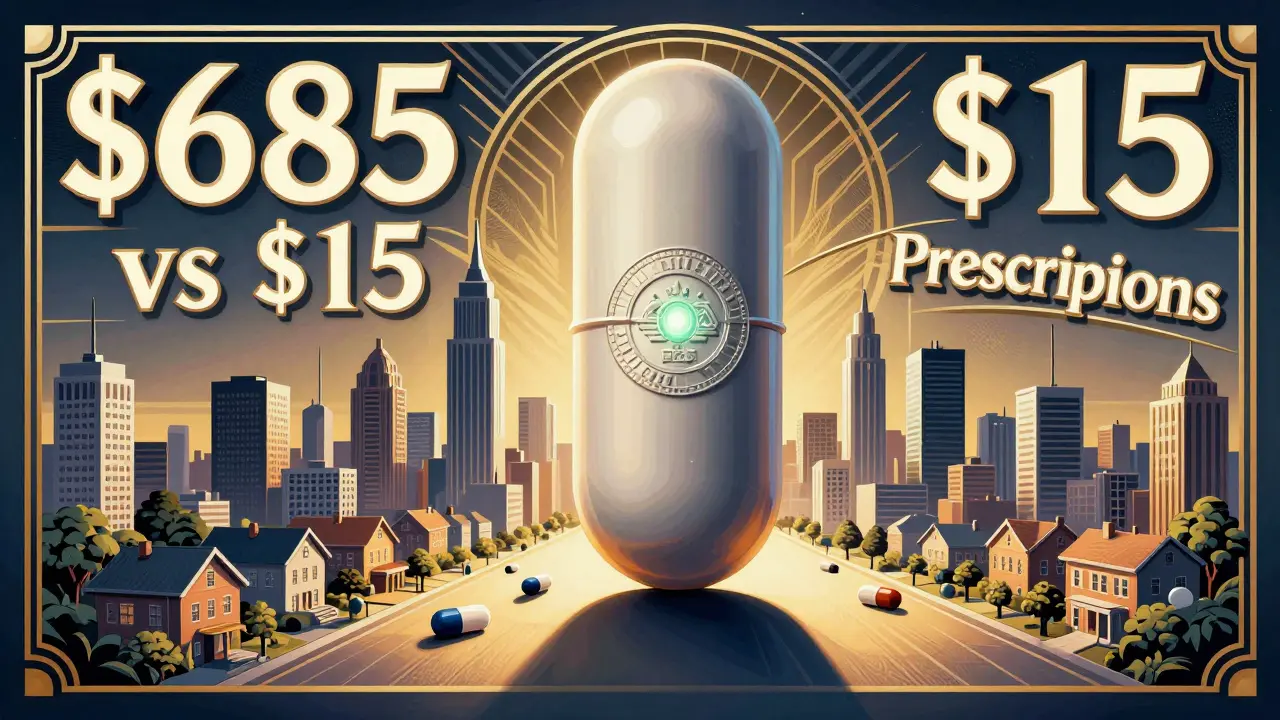
How to Use Generics Wisely
If you’re switching from a brand to a generic:- Ask your pharmacist to use the same manufacturer each time. Switching between different generic brands can cause confusion.
- Keep your pharmacy consistent. If you switch pharmacies, your pill might look different-even if it’s the same generic.
- Use a pill identifier app like Medisafe. It can scan your pill and tell you exactly what it is, even if it looks unfamiliar.
- Don’t assume a different color means a different dose. A blue pill isn’t stronger than a white one. Check the imprint and dosage on the bottle.
- Call your doctor if you notice real changes-new side effects, worsening symptoms, or unusual fatigue. It’s not always the generic, but it’s worth checking.
The Bigger Picture: Cost and Access
Generic drugs save the U.S. healthcare system $373 billion a year. Without them, millions of people couldn’t afford their prescriptions. Medicare Part D plans require insurers to push generics because they keep premiums low. Hospitals use generics for 97% of their medications. Why? Because they’re safe, effective, and cost-efficient. The real threat isn’t generic drugs. It’s supply chain issues. Over 78% of active ingredients come from China and India. When a factory there has an inspection problem, shortages happen. In 2022, 28% of drug shortages involved generics-not because they’re inferior, but because production is concentrated in a few facilities.Final Answer: Yes, They’re Just as Good
For the vast majority of people, generic drugs are every bit as good as brand-name ones. They’re held to the same standards. They’re tested the same way. They work the same way. The differences are in color, shape, price-and sometimes, in how we feel about them. If you’re worried, talk to your doctor or pharmacist. Ask if your medication has a narrow therapeutic index. Ask if there’s a reason to stick with the brand. But don’t let fear stop you from saving money-unless your doctor says otherwise.Generics aren’t a compromise. They’re the standard.
Cara C
December 21, 2025 AT 20:04I used to be super skeptical about generics too-until I switched my blood pressure med and didn’t notice a difference. My wallet did, though. Saved me like $500 a year. Now I ask my pharmacist to stick with the same manufacturer so I don’t get weird pill shapes. It’s not about trust in the drug-it’s about consistency in the filler stuff.
Also, if you’ve got allergies, always check the inactive ingredients. Lactose is a sneaky one.
Jay lawch
December 23, 2025 AT 19:44You think this is about science? No. This is corporate engineering disguised as public health. The FDA is a revolving door for Big Pharma execs. Generics aren't 'just as good'-they're the compromise forced on you so the system can keep bleeding you dry. The 80%-125% bioequivalence window? That's not science. That's a loophole carved out by lobbyists who own the regulators. And don't get me started on how 78% of active ingredients come from China-your medicine is made in a factory where inspectors are bribed and workers are paid in noodles. You think your thyroid med is safe? You're just lucky the batch didn't have trace heavy metals.
This isn't medicine. It's geopolitical risk wrapped in a white pill.
Christina Weber
December 25, 2025 AT 13:49Actually, the article states that generics must meet bioequivalence standards of 80% to 125% for most drugs, but for narrow therapeutic index drugs, it tightens to 90% to 111%. You cannot say the FDA 'approves generics based on guesswork'-that’s factually incorrect. The agency requires ANDA submissions with pharmacokinetic data, dissolution profiles, and stability testing. Also, 'inactive ingredients' is the correct term, not 'fillers'-though colloquially people say that. And please, stop saying 'the generic is inferior' when discussing levothyroxine; it's not inferior, it's just less consistent across manufacturers due to formulation variables. Precision matters.
Theo Newbold
December 26, 2025 AT 17:34Let’s be real: the only reason generics exist is because the system is rigged. Brand-name companies spend billions on marketing and lobbying to keep you hooked on their $600 pills. Then, as soon as the patent expires, they release their own 'generic' version under a different name-same factory, same chemist, same pill, just cheaper. And you fall for it. You think you're saving money? You're just being manipulated by the same people who sold you the brand in the first place. The real villain isn't the pill-it's the entire pharmaceutical business model. They want you dependent. Generics? Just the next stage of the trap.
Michael Ochieng
December 27, 2025 AT 21:32My mom’s been on generic levothyroxine for 12 years. No issues. She’s 78, hikes every weekend, and her TSH is perfect. I’ve switched between generics three times myself-no side effects. I get why people freak out-it’s the color change, the weird imprint, the fact that it doesn’t look like the pill they grew up with. But your brain’s playing tricks on you. If it worked for 90% of people, it’ll work for you too. Don’t let fear cost you your health-or your rent.
Also, I used to buy brand-name antidepressants until I switched. My anxiety didn’t get worse. My bank account got better. Win-win.
Erika Putri Aldana
December 29, 2025 AT 04:36Generic drugs are a scam. I know someone who had a seizure after switching. End of story. Why risk it? If you can afford the brand, just pay for it. Life’s too short to gamble with your brain.
Jerry Peterson
December 30, 2025 AT 14:55I work in a rural clinic. We use generics for 95% of our scripts. Patients who can’t afford meds don’t take them. Period. I’ve seen people skip doses because the brand was $300. I’ve seen people thrive on generics because they could finally take them every day. It’s not magic. It’s access.
And yeah, sometimes a pill looks weird. But if your doctor says it’s safe, trust the science, not the color.
Adrian Thompson
January 1, 2026 AT 14:20Oh wow, another FDA shill article. Let me guess-next you’ll tell me the moon landing was real and the government isn’t spiking the water supply with lithium to keep us docile. Generics? Sure. But did you know the FDA doesn’t inspect 90% of foreign manufacturing plants? They rely on paperwork. Paperwork. You think your 'bioequivalent' pill isn’t made in a facility that got shut down three times for contamination? You’re not a patient-you’re a data point. And your trust? It’s the product they’re selling.
Jon Paramore
January 3, 2026 AT 02:01For narrow therapeutic index drugs, the key is consistency-not brand vs generic. If you’re on warfarin or levothyroxine, stick with one manufacturer. Don’t switch between generics unless your doctor approves. The active ingredient is identical, but excipients can affect dissolution rates slightly. That’s why TSH or INR levels can drift.
For 95% of meds? No difference. Save your money. For the rest? Monitor. Don’t fear. And always check the pill imprint with a reliable app. Most side effects blamed on generics are placebo-or stress, or seasonal allergies.