Asthma vs. COPD: How to Tell the Difference in Symptoms and Treatment
 Apr, 11 2026
If you've ever felt like you couldn't catch your breath, you know how scary it is. Whether it's a sudden wheeze during a workout or a lingering cough that just won't quit, chest tightness can make you feel like your body is betraying you. Many people assume that any kind of shortness of breath is just "asthma," but the reality is often more complex. While asthma and COPD is Chronic Obstructive Pulmonary Disease, a progressive lung condition that makes it increasingly difficult to breathe share a similar "look" on the surface, they are fundamentally different beasts. One is often a lifelong companion that comes and goes in waves; the other is a steady, relentless decline if not managed aggressively. Understanding which one you're dealing with isn't just about a label-it's the difference between a treatment that works and one that leaves you struggling for air.
The Core Difference: Reversible vs. Permanent
The biggest divide between these two conditions comes down to whether your lungs can "bounce back." Asthma is a chronic inflammatory disorder of the airways where the narrowing is typically reversible. For most people with asthma, the airflow obstruction isn't constant. You might have days where you feel completely normal, only to be hit by a sudden attack triggered by pollen or a dusty room. In fact, about 68% of people with asthma experience intervals where they have no symptoms at all.
COPD is a different story. It's an umbrella term that covers emphysema (where the air sacs in the lungs are destroyed) and chronic bronchitis (where the bronchial tubes are constantly inflamed). Unlike asthma, the damage in COPD is generally permanent. You don't just "wake up feeling better" one day. Instead, it's a progressive limitation. While asthma is often diagnosed in childhood-with 80% of cases appearing before age 30-COPD rarely shows up before age 40. If you're 55 and suddenly struggling to breathe after decades of smoking, it's much more likely to be COPD than a late-onset asthma case.
Spotting the Signs: Symptoms That Set Them Apart
At a glance, both look like a cough and a wheeze. But if you look closer, the patterns emerge. Asthma usually presents as a dry cough and sudden "attacks." These are often triggered by external factors. For example, a huge chunk of sufferers find that dust mites or physical activity are the primary culprits. If your shortness of breath happens mostly at night or in the early morning, that's a classic asthma red flag.
COPD symptoms are more like a steady hum that gets louder over time. The most telling sign is a chronic productive cough. We're talking about a cough that brings up significant amounts of phlegm nearly every day. While an asthma patient might have a dry tickle in their throat, 87% of COPD patients deal with this heavy mucus production. In advanced stages of COPD, you might even see cyanosis-a bluish tint around the lips or fingernails. This happens because the lungs can no longer get enough oxygen into the blood. You almost never see this in asthma patients unless they are in the middle of a life-threatening crisis.
| Feature | Asthma | COPD |
|---|---|---|
| Typical Age of Onset | Childhood or Young Adulthood | Usually 40+ years |
| Airflow Obstruction | Often reversible | Largely irreversible |
| Cough Type | Mostly dry | Productive (with phlegm) |
| Primary Trigger | Allergens, Exercise, Cold Air | Smoking, Long-term Pollutants |
| Symptom Pattern | Intermittent / Episodic | Constant / Progressive |
How Doctors Actually Tell Them Apart
You can't just tell the difference by listening to someone wheeze. Doctors use a process called spirometry, which measures how much air you can breathe out and how fast you can do it. The magic number here is 12%. If a patient takes a bronchodilator (a medicine that opens the airways) and their lung function improves by 12% or more, it's a strong sign of asthma. COPD patients usually don't see that kind of jump because their lung tissue is physically damaged, not just constricted.
Another clue is the presence of other allergies. If you've spent your whole life dealing with hay fever or eczema, you're statistically more likely to have asthma. On the flip side, if you have a history of smoking and now have coronary heart disease or osteoporosis, the odds lean heavily toward COPD. Modern tech has also given us the FeNO test, which measures nitric oxide in your breath. High levels usually mean the eosinophilic inflammation seen in asthma, while low levels are more typical for COPD.
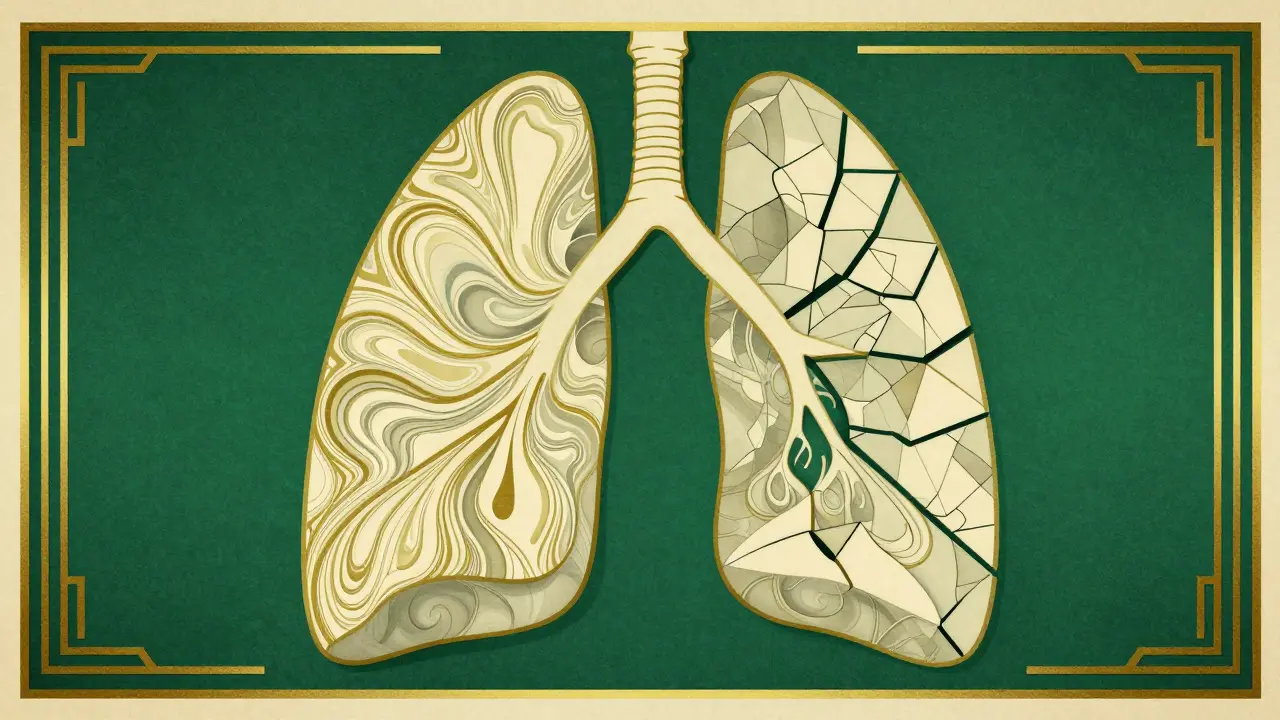
Different Problems Require Different Solutions
Treating asthma like COPD (or vice versa) can be a dangerous mistake. For asthma, the goal is to keep the inflammation down so an attack never happens. This usually starts with a "rescue" inhaler like albuterol for emergencies and moves toward inhaled corticosteroids (ICS) to treat the underlying swelling. For those with severe cases, doctors might use biologic therapies that target specific immune cells.
COPD treatment is less about "curing" the inflammation and more about keeping the airways open and maintaining quality of life. The first line of defense is usually long-acting bronchodilators (LABAs and LAMAs). Steroids are used much more sparingly in COPD, and only if the patient has frequent flare-ups. One of the biggest differences is in pulmonary rehabilitation. A person with COPD can see a massive improvement in their walking distance and stamina after a rehab program because their baseline is so low. For an asthma patient, rehab doesn't do much because their lungs actually work fine between attacks.
The Gray Area: Asthma-COPD Overlap (ACOS)
It's not always a clean split. Some people land in a frustrating middle ground called Asthma-COPD Overlap Syndrome (ACOS). These patients have the hallmarks of both: they might have a history of childhood asthma, but they've also smoked for twenty years. They have the high eosinophil counts of asthma but the permanent lung damage of COPD.
ACOS is a tough spot to be in. These patients tend to have more severe symptoms and end up in the emergency room more often than people with just one of the conditions. Because they are fighting two different battles in their lungs, specialists often use a "triple therapy"-a combination of two different types of bronchodilators and a steroid-to keep them stable. It's a reminder that the human body doesn't always fit neatly into a textbook category.

Long-Term Outlook and Lifestyle
The prognosis for these two conditions differs wildly. For someone with moderate asthma, the 10-year survival rate is roughly 92%. With proper management, most people live full, active lives. COPD is more sobering. Because it is a progressive disease, the 10-year survival rate for moderate cases drops to around 78%. This is why smoking cessation is the single most important move a COPD patient can make. Quitting can cut the rate of disease progression in half.
Interestingly, if you've had asthma for over 20 years, it can actually start to look like COPD. Long-term inflammation can lead to "fixed airflow limitation," where the lungs lose some of their elasticity. This is why regular check-ups are vital-your diagnosis can actually change as you age, and your medication needs to change with it.
Can you have both asthma and COPD at the same time?
Yes, this is known as Asthma-COPD Overlap Syndrome (ACOS). It typically occurs in people who have a history of asthma but also have risk factors for COPD, such as long-term smoking. These patients often experience more frequent and severe exacerbations than those with only one condition.
Will a rescue inhaler work for both conditions?
Short-acting bronchodilators like albuterol can help open the airways in both asthma and COPD during a flare-up. However, they only treat the symptoms, not the cause. In asthma, the primary cause is inflammation (treated with steroids), while in COPD, it is often structural damage to the lungs.
Why is the age of diagnosis so different?
Asthma often has a strong genetic component and is linked to allergic responses, which usually manifest in childhood. COPD is primarily caused by long-term exposure to irritants-most commonly cigarette smoke or industrial pollution-which takes decades to cause permanent structural damage to the lung tissue.
Is the cough in COPD different from asthma?
Generally, yes. COPD is characterized by a chronic productive cough, meaning it produces a significant amount of phlegm. Asthma coughs are more likely to be dry and are often associated with nighttime wheezing or specific triggers like pollen.
Can COPD be cured?
No, COPD is an irreversible and progressive disease, meaning the damage to the air sacs (emphysema) or bronchial tubes cannot be undone. However, it can be managed effectively through smoking cessation, medication, and pulmonary rehabilitation to slow the progression and improve quality of life.
What to Do Next
If you're struggling to breathe, the first step is a professional spirometry test. Don't try to guess based on your symptoms, as the treatments are different and using the wrong one can be ineffective. If you have a history of smoking, prioritize a full lung function screen even if you feel "fine," as COPD often goes undiagnosed until it has progressed significantly.
For those already diagnosed, keep a symptom diary. Note whether your breathlessness is constant or happens in spikes, and whether you're coughing up mucus or have a dry throat. This data is gold for your pulmonologist and can help them decide if you need a shift from a simple steroid inhaler to a long-acting bronchodilator or a combined triple therapy approach.
Clare Elizabeth
April 12, 2026 AT 02:57This is such a helpful breakdown for anyone feeling overwhelmed by their diagnosis just keep pushing forward and stay positive because managing it is half the battle!
Sam Dyer
April 13, 2026 AT 08:29Spirometry is the only real way to get a straight answer and honestly most people just guess and mess up their meds 🙄 total amateur hour in some of these clinics.
Clint Humphreys
April 13, 2026 AT 18:57It is all very interesting how they categorize these things but you have to wonder why the pharmaceutical companies are so keen on pushing these long-term inhalers when they could probably just fix the air quality in our cities if the government wasn't in the pocket of big oil and other shadowy interests who want us dependent on a monthly subscription for the basic right to breathe air comfortably while we all pretend the symptoms are just genetic when they are actually environmental markers for something much deeper and more sinister.
john chiong
April 14, 2026 AT 09:21absolute poppycock to suggest some folks just guess their meds when the healthcare system is a bloated carcass of inefficiency and greed that leaves regular joes twisting in the wind while doctors play god with a clipboard
Catherine Mailum
April 15, 2026 AT 05:54oh yeah because waiting until you're 40 to realize your lungs are basically shredded is just such a great life plan lol
Haley Moore
April 15, 2026 AT 19:39Um, the formatting of that table is literally so basic it's almost offensive 🙄 like please give us some actual aesthetic if you're going to explain my inevitable decline into respiratory failure 💅
melissa mac
April 17, 2026 AT 13:46It's really important to remember that everyone's journey with respiratory health is different, so please be kind to yourselves and others while navigating these diagnoses.
Kenzie Evans
April 18, 2026 AT 13:58The part about the 12% improvement in spirometry is common knowledge and if you don't get that it's obviously a permanent obstruction so stop overcomplicating it with these long essays.
Mary Johnson
April 20, 2026 AT 11:57The FeNO test is just another way for them to track our biological data and feed it into a system that decides who is 'fit' for work and who isn't based on chemical markers that they control and manipulate in the lab to ensure we stay docile and sick enough to keep the clinics running but not dead enough to stop paying premiums!
Princess Busaco
April 20, 2026 AT 22:11I honestly find it so laughable that people still struggle with the concept of ACOS when it is blatantly obvious that lifestyle choices and genetics collide in the most predictable ways possible and yet we act like it is some great medical mystery when it is really just the consequence of a century of poor choices and systemic ignorance regarding how the human body actually reacts to toxins over a prolonged period of time which is why I can't even deal with the simplistic nature of this guide.
Shaylia Helland
April 21, 2026 AT 00:46i just think it's really interesting how the body tries to adapt and some of us just have these long histories with allergies that we just live with and don't even think about until it becomes this huge thing that affects how we move through the world and honestly it's just a part of the human experience to have these little glitches in our system that make us slow down and actually notice the air we are breathing instead of just rushing through life without a second thought about the biological machinery that keeps us going every single day