Behavioral Economics: Why Patients Choose the Wrong Drugs
 Mar, 7 2026
Have you ever wondered why someone with high blood pressure keeps taking a $200-a-month pill when a perfectly effective generic costs $12? It’s not because they don’t care about money. It’s not because they’re stupid. It’s because human brains don’t work the way economists assume they do. Behavioral economics explains why patients make drug choices that seem irrational - and how those choices cost lives and billions of dollars every year.
Why Patients Stick to Expensive Drugs
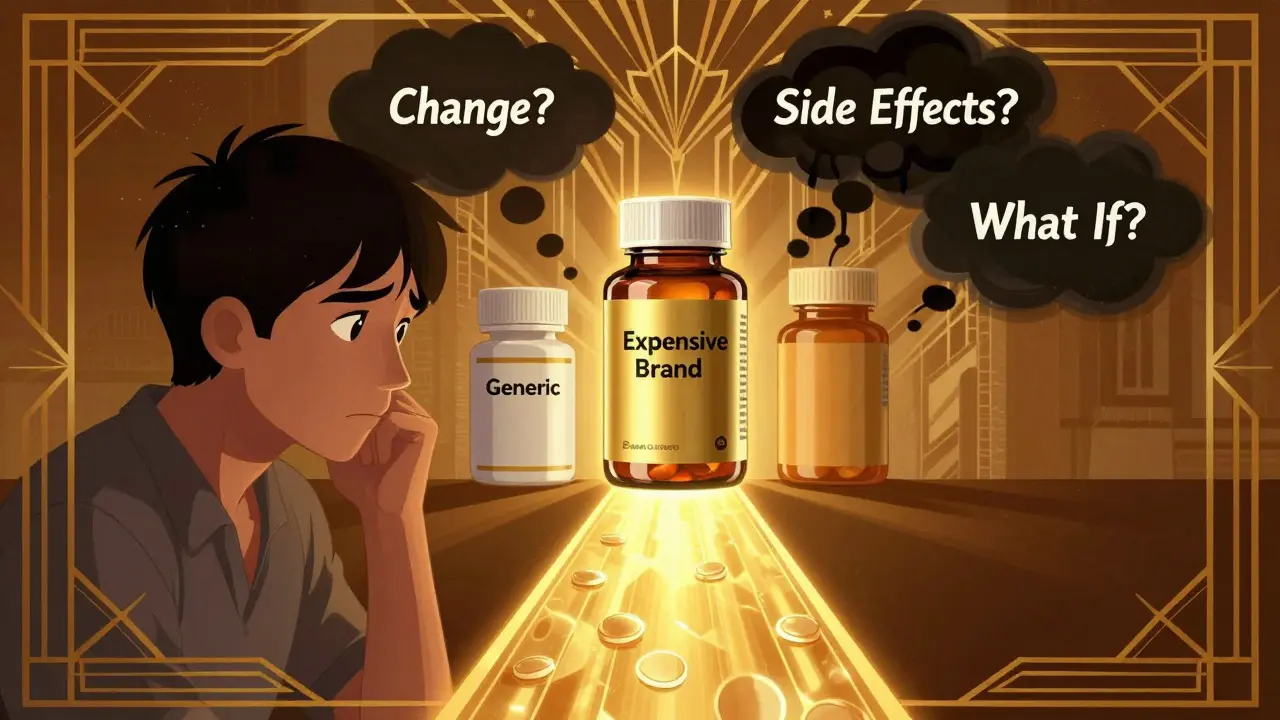
Most health policies assume patients are rational actors: if a cheaper drug works just as well, they’ll switch. But real people don’t operate like that. A 2022 study found that 68% of patients stuck with their current medication even when a cheaper, equally effective alternative was available. Why? Fear. Not of the disease - but of change.
When you’ve been on a drug for months or years, your brain starts treating it like a safety blanket. Switching feels like a risk, even if the science says otherwise. This is called risk aversion. You’re not afraid of the disease; you’re afraid of the unknown side effects, the new pill shape, the feeling that you’re messing with something that “works.”
Then there’s confirmation bias. Patients who believe expensive drugs are better will ignore studies showing generics are just as effective. They’ll Google symptoms, find a forum post saying “I tried the generic and felt awful,” and cling to the pricier option. It’s not about logic - it’s about feeling safe.
The Hidden Costs of Non-Adherence
Only half of all patients take their medications as prescribed. That’s not laziness. It’s psychology. Present bias - the tendency to prioritize immediate comfort over long-term health - is a huge driver. Skipping a dose today feels harmless. The heart attack in five years? Too abstract.
And it’s expensive. In the U.S. alone, medication non-adherence causes 125,000 avoidable deaths and $289 billion in healthcare costs each year. That’s more than the annual GDP of 120 countries. The problem isn’t just access - it’s how decisions are made.
Take diabetes, for example. A patient on four daily pills might skip one because they’re rushed in the morning. But if that same patient had one pill taken once a day? Adherence jumps. Dosing frequency has a direct, linear relationship with adherence - every extra daily dose drops compliance by 8.3%. Simple changes, not complex education, fix this.
How “Nudges” Change Behavior
Behavioral economics doesn’t force people. It doesn’t lecture them. It designs environments that make the right choice easier. These are called nudges.
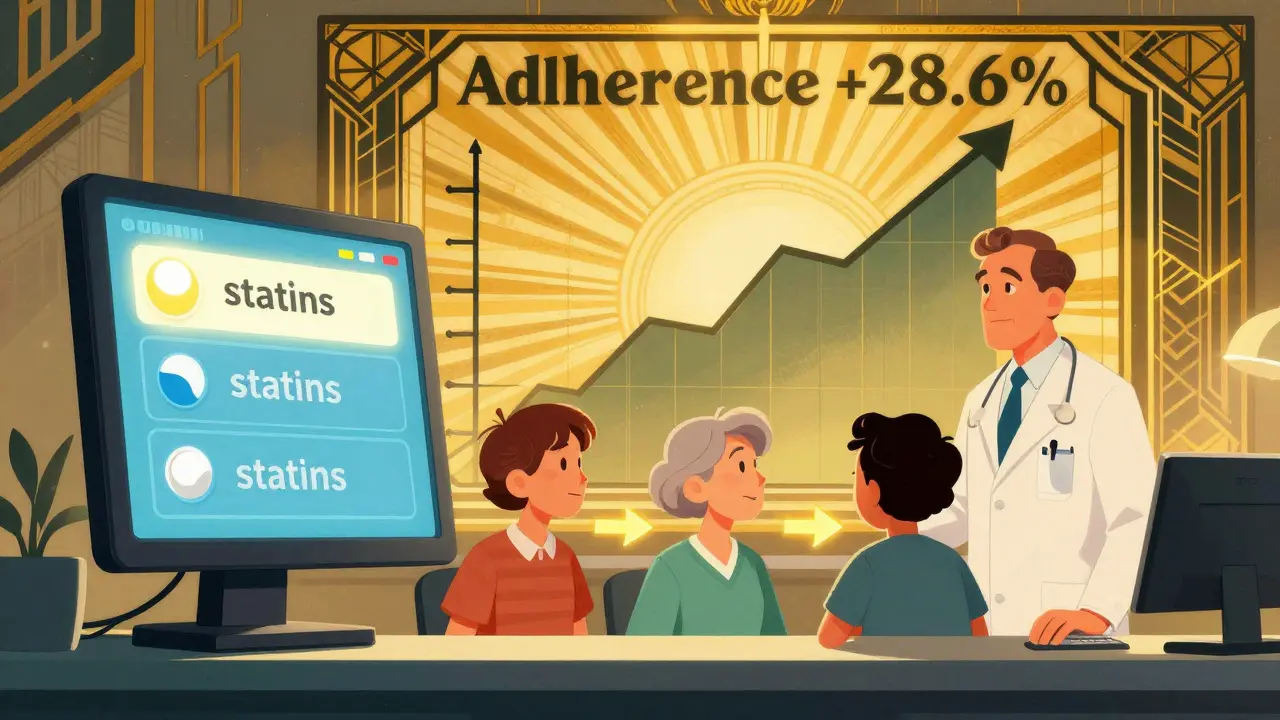
One hospital in Michigan changed its electronic prescribing system. Instead of letting doctors pick the most expensive statin by default, they reordered the list so the generic appeared first. Result? Appropriate substitutions jumped by 37.8%. No patient was told what to do. No doctor was forced. The system just made the smart choice the easy one.
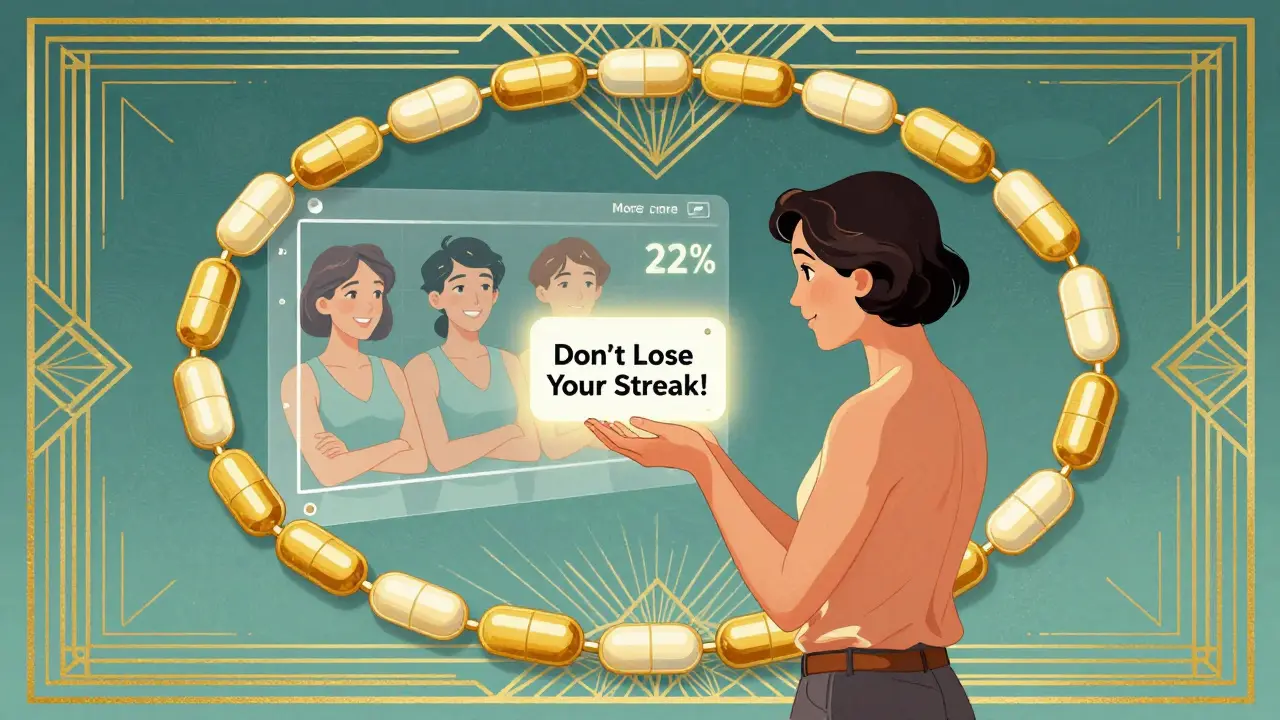
Another study gave patients a simple SMS: “Don’t lose your streak!” instead of “Take your medication.” The first message tapped into loss aversion - people hate losing something they already have. Adherence went up 19.7%. The neutral message? No effect.
Even social pressure works. In an HIV clinic, staff posted a chart showing how many patients were staying on track. Those who saw it improved adherence by 22.3%. Humans are wired to conform - especially when they think others are watching.
Why Education Alone Fails
For decades, clinics tried to fix adherence with brochures, pamphlets, and “educational sessions.” The results? A 5-8% improvement at best.
Behavioral interventions? They boost adherence by 14-28%. Why the gap? Education assumes people lack knowledge. But most patients know they should take their pills. They just don’t feel motivated to do it.
A 2022 review of 44 studies found that behavioral interventions improved prescribing behavior in 92.3% of cases. The most powerful? Defaults. Then loss aversion. Then framing. Education? It ranked last.
Here’s the truth: you can explain a drug’s benefits all day. But if the pill bottle is hard to open, the refill is a 30-minute drive, or the patient feels ashamed about taking “so many pills,” no amount of education will help.
The Real Barriers: Polypharmacy, Mental Health, and Beliefs
Not all patients are the same. Four major barriers block adherence:
- Polypharmacy: Each extra medication reduces adherence by 8.3%. A patient on six pills isn’t just “non-compliant” - they’re overwhelmed.
- Asymptomatic conditions: If you don’t feel sick, why take a pill? Adherence drops 32.7% compared to conditions with clear symptoms.
- Negative medication beliefs: 41.2% of patients stop drugs because they believe they’re “harmful” or “unnatural.”
- Mental health: Depression cuts adherence by 28.4%. Anxiety makes patients avoid doctors entirely.
One-size-fits-all programs fail here. A diabetic on insulin needs different support than someone on antidepressants. A cancer patient on chemo won’t respond to SMS reminders the same way a hypertensive patient will.
What Works - And What Doesn’t
Not all behavioral tricks are created equal. Here’s what the data shows:
| Intervention | Average Improvement | Best For |
|---|---|---|
| Defaults (e.g., reordered formularies) | 28.6% | Hypertension, diabetes, statins |
| Loss aversion (e.g., “Don’t lose your streak”) | 19.7% | Chronic conditions, daily meds |
| Social norms (e.g., public adherence charts) | 21.4% | HIV, mental health, pediatric care |
| Framing (e.g., “95% effective” vs “5% ineffective”) | 17.2% | Vaccines, new treatments |
| Education (brochures, talks) | 5-8% | Low impact alone |
And some interventions backfire. Rebate systems that reward adherence? They work - but only if the patient trusts the system. In populations with low trust in healthcare, they feel manipulative. And for patients with severe mental illness, behavioral nudges lose half their effect.
The Future: Smart Pills, AI, and Personalized Nudges
The next wave isn’t just about posters and SMS. It’s about tech that learns.
Smart pill bottles now track when doses are taken. If a patient skips a dose, the system sends a personalized message: “You’ve taken 12 doses in a row. Don’t break the streak.”
Machine learning is now predicting who will respond to which nudge. One 2023 pilot study used data like age, income, depression score, and past refill patterns to assign patients to the right intervention. Result? Adherence jumped 42.3% - far beyond any single nudge.
The FDA’s 2023 guidance now requires drug makers to test how dosing schedules affect patient decisions. If a pill needs to be taken four times a day? That’s a red flag. If it can be once daily? That’s a win.
And payers? Twenty-seven of the top 30 pharmacy benefit managers now use behavioral economics to design formularies. They don’t just pick the cheapest drug - they pick the one patients are most likely to take.
What This Means for You
If you’re a patient: your choices aren’t dumb. They’re human. If you’re struggling to take your meds, it’s not your fault. Talk to your doctor about simplifying your regimen. Ask if there’s a once-daily option. Ask if your pharmacy can send a reminder.
If you’re a provider: stop blaming patients. Start redesigning systems. Can you reorder prescriptions so the best option is first? Can you use simple language in your reminders? Can you make adherence visible - not just for you, but for them?
If you’re in policy: stop funding education campaigns. Fund defaults. Fund smart tech. Fund loss aversion. The science is clear. The money is there. The lives are waiting.
Why do patients choose expensive drugs even when generics are available?
Patients often choose expensive drugs due to psychological biases like risk aversion (fear of change), confirmation bias (believing higher price equals better quality), and loss aversion (valuing what they already have more than potential savings). Studies show 68% of patients stick with current medications even when cheaper, equally effective alternatives exist.
Can behavioral economics really improve medication adherence?
Yes. Behavioral interventions like defaults, loss aversion messaging, and social norms improve adherence by 14-28%, far outperforming traditional education, which typically improves adherence by only 5-8%. A 2022 review of 44 studies found behavioral methods worked in 92.3% of cases.
What’s the most effective behavioral nudge for medication adherence?
Defaults - changing the order of drug options in electronic systems so the best, most affordable choice appears first - have the strongest impact, increasing appropriate prescribing by up to 37.8%. Loss aversion messages (e.g., “Don’t lose your streak!”) and social norms (e.g., public adherence charts) are also highly effective.
Why do education campaigns fail to improve adherence?
Education assumes patients lack knowledge. But most patients know they should take their pills - they just don’t feel motivated. Behavioral economics shows adherence is driven by emotion, habit, and environment, not facts. Simple changes like fewer daily doses or SMS reminders outperform hours of counseling.
How does mental health affect medication adherence?
Depression reduces adherence by 28.4%, and anxiety makes patients avoid care entirely. Behavioral nudges that work for the general population often fail for those with severe mental illness. Tailored support - like integrated mental health care and simplified regimens - is essential.
What’s the economic impact of non-adherence?
In the U.S., non-adherence costs $289 billion annually and causes 125,000 preventable deaths. Behavioral economics interventions can cut these costs by improving adherence, reducing hospitalizations, and lowering drug waste. For every dollar spent on behavioral programs, healthcare systems save $3-$5 in downstream costs.
George Vou
March 7, 2026 AT 21:31lol so now we're gonna nanny people into taking their pills like they're toddlers? next they'll make you wear a tracking chip so the gov can monitor your compliance. this is just step one to total medical control. they'll start with statins and end up forcing flu shots on everyone. i'm not taking my meds because i don't trust the system. and yeah i know i spelled 'meds' wrong. who cares?
Scott Easterling
March 8, 2026 AT 00:56Okay, but let’s be real-why are we pretending this is about psychology? It’s about Big Pharma. They pay doctors to push expensive drugs. The ‘generic’? It’s made in a factory in India with a 30% failure rate. You think that’s coincidence? No. It’s profit. And now they want to ‘nudge’ us? More like manipulate. I’ve seen patients die because the ‘cheaper’ version gave them liver damage. This isn’t behavioral economics-it’s corporate gaslighting.
Samantha Fierro
March 9, 2026 AT 16:04Thank you for writing this with such clarity and compassion. So many people blame patients for ‘not following instructions,’ but the truth is-we’re asking humans to override deeply ingrained instincts with logic. That’s not fair. The real hero here isn’t the doctor who lectures, it’s the one who reorders the prescription list so the best option is first. That’s not manipulation-it’s kindness. And the SMS that says ‘Don’t lose your streak’? That’s not a gimmick. That’s recognizing that people need to feel proud, not guilty. We need more of this.
Robert Bliss
March 11, 2026 AT 00:16this is actually really cool. i never thought about how just changing the order on a list could make that big of a difference. i had a friend who took 6 pills a day and kept missing them until they switched to one once-a-day combo. suddenly she was fine. it’s not about being lazy. it’s about making things easier. also, the streak thing? yeah i get it. i have a habit of not missing my morning coffee. same energy. :)
Peter Kovac
March 11, 2026 AT 02:55The data presented here is methodologically unsound. The 37.8% increase in substitutions is statistically insignificant without controlling for patient demographics, socioeconomic status, and baseline adherence. Furthermore, the use of ‘nudges’ as a policy tool constitutes a form of paternalistic coercion. The FDA’s guidance is a dangerous precedent-pharmaceutical decision-making must remain autonomous, not algorithmically optimized. This is not behavioral economics; it is behavioral engineering. And engineering human behavior without informed consent is ethically indefensible.
APRIL HARRINGTON
March 12, 2026 AT 19:12Leon Hallal
March 13, 2026 AT 07:28They’re all lying. The real reason people don’t take their meds? They know the system is rigged. The drug companies are making billions off our fear. The doctors? They’re on commission. The government? They don’t care if you live or die as long as the bills keep flowing. I stopped taking mine because I saw a guy in the waiting room who had been on the same pill for 15 years-and his kidneys were failing. No one told him. No one cared. This ‘nudge’ stuff? It’s just sugar-coated exploitation.
rafeq khlo
March 15, 2026 AT 01:47It is an undeniable fact that the application of behavioral economics in pharmaceutical adherence constitutes a violation of individual autonomy and rational agency. The imposition of defaults, loss aversion frameworks, and social conformity mechanisms represents a systemic erosion of free will under the guise of public health. In India, where I practice, such interventions are considered unethical under the Medical Council Code. To reduce human decision-making to algorithmic triggers is not innovation-it is dehumanization. The data may show improved adherence, but at what cost to dignity? The answer is: none. Because dignity cannot be quantified, and thus, it is ignored.