Checking Your Medicine Cabinet for Expired Drugs: A Simple Checklist for Safety
 Jan, 18 2026
Why You Need to Check Your Medicine Cabinet Right Now
Have you ever reached into your medicine cabinet for pain relief, only to find a bottle with a faded label and a date that looks like it’s from last decade? You’re not alone. Most households have at least a few expired or forgotten medications tucked away. But keeping them isn’t harmless-it’s risky.
Expired drugs don’t just lose their power. Some become dangerous. Tetracycline antibiotics can turn toxic. Insulin and epinephrine may stop working entirely. Even your common painkillers or allergy meds might be too weak to help when you need them most. And if you have kids, pets, or older adults in the house, the chance of accidental ingestion goes up fast. In 2022 alone, over 67,500 children in the U.S. were treated for medication exposures from home cabinets, according to the American Association of Poison Control Centers.
What Counts as Expired-and Why It Matters
The expiration date on your medicine bottle isn’t just a suggestion. It’s the last day the manufacturer guarantees the drug will work as intended. After that, chemical breakdown begins. Some pills stay stable longer than others, but you can’t tell by looking. That’s why experts say: if it’s past the date, toss it.
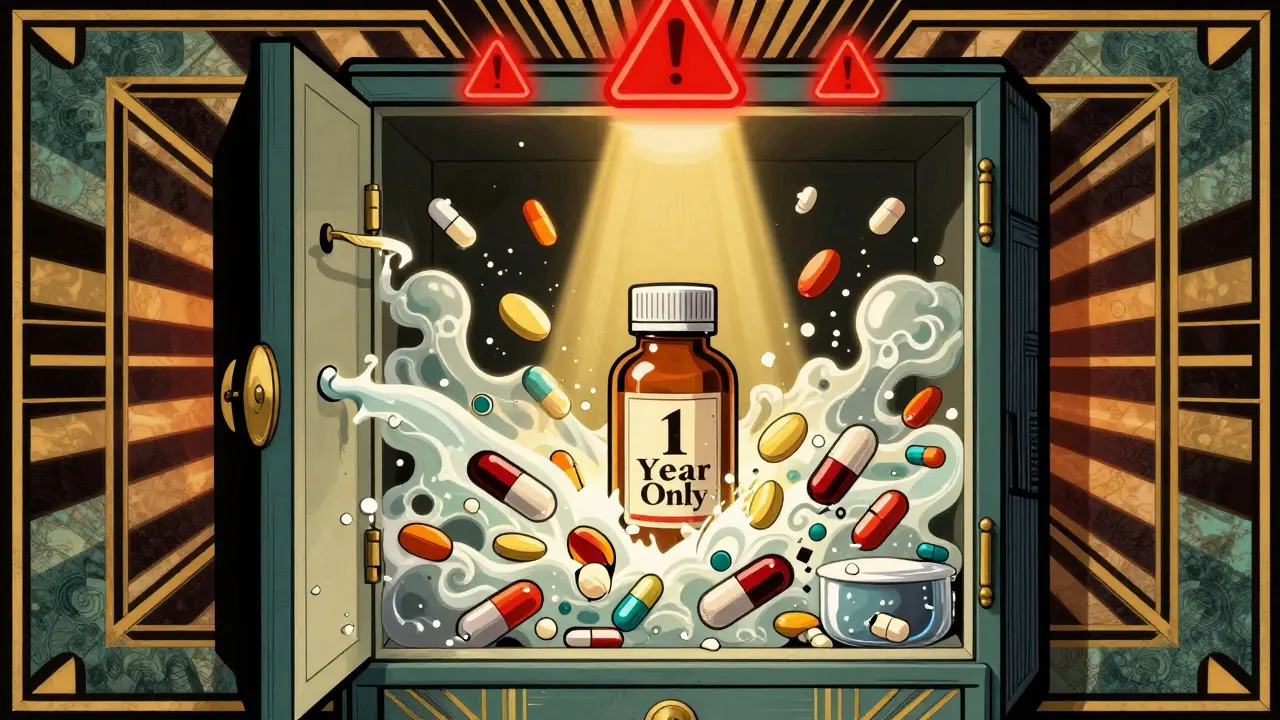
There’s an even stricter rule for prescriptions: discard any prescription medication after one year, even if the label says it’s good for three. Why? Once you open a bottle, exposure to air, light, and moisture speeds up degradation. The National Kidney Foundation recommends this one-year cut-off for safety. It’s not about cost-it’s about trust. Would you want to rely on a heart medication that might have lost half its strength?
And don’t forget about non-pill items. Liquid antibiotics, eye drops, nasal sprays, and even topical creams can grow bacteria or lose potency. If your hydrocortisone cream smells funny, looks cloudy, or has separated into layers-throw it out. Same with insulin. If it’s been sitting in a hot bathroom for months, it’s already useless.
Where Not to Store Your Medications
The bathroom cabinet is the worst place for medicine. It’s humid, warm, and full of steam from showers. A 2022 study from Yale New Haven Health found that humidity in bathrooms reduces drug potency by 15-25% in just six months. That means your blood pressure pill or antidepressant might be working at 70% efficiency-and you won’t even know it.
Instead, store medications in a cool, dry spot. A kitchen cabinet away from the stove or sink works best. Avoid direct sunlight. Don’t leave them in the car, on a windowsill, or near the dishwasher. Temperature swings are the enemy. If you live in a hot climate like Durban, this is even more critical. Heat doesn’t just weaken medicine-it can change its chemistry.

The Six-Step Medicine Cabinet Checkup
Here’s how to do a real, thorough check-no guesswork.
- Empty everything out. Take every pill, bottle, tube, and patch off the shelf. Lay them on a clean table. This isn’t just a quick glance. You need to see each item.
- Check every expiration date. Don’t skip supplements, vitamins, or OTC creams. Look for dates on the bottle, blister pack, or box. If there’s no date, or the label is torn or faded-pitch it. Unmarked containers are a hazard.
- Look for physical changes. Pills that are cracked, discolored, or sticky. Liquids that are cloudy, smelly, or have particles. Ointments that smell rancid. These are signs of degradation. Even if the date is still valid, if it looks wrong, it’s not safe.
- Separate what to keep from what to toss. Put expired or damaged items in a separate pile. Include unused prescriptions you no longer need. Don’t hold onto “just in case” meds. If you haven’t used it in over a year, you probably won’t.
- Move what’s left to a better spot. Find a dry, cool cabinet. A locked box is ideal if you have kids or visitors who might wander into your medicine stash.
- Set a reminder. Do this check twice a year. Tie it to daylight saving time changes-spring forward, fall back. That’s when most people check smoke detector batteries anyway. Make it a habit.
How to Dispose of Expired Medications Safely
Don’t flush pills down the toilet. Don’t toss them in the trash without prep. And never give them to someone else.
The safest way? Use a drug take-back program. The DEA runs National Prescription Drug Take Back Days twice a year, and there are over 14,600 permanent collection sites across the country-including many pharmacies and police stations. CVS and Walgreens now offer free prepaid mail-back envelopes for expired meds. Just drop your pills in the envelope, seal it, and mail it. No cost. No hassle.
If there’s no drop-off near you, here’s the FDA-approved home method:
- Remove pills from their original bottles.
- Mix them with something unappetizing-used coffee grounds, cat litter, or dirt. Use at least two parts filler to one part medication.
- Put the mix in a sealed plastic bag or container.
- Scratch out your name and prescription info on the empty bottle.
- Throw it in the trash.
For sharps like insulin needles or syringes: use a hard plastic container like a 2-liter soda bottle. Seal it tightly with heavy-duty tape. Label it “SHARPS-DO NOT RECYCLE.” Then toss it in the trash. Never bend or break needles.
What to Keep in Your Cabinet
Once you’ve cleared out the junk, rebuild with purpose. You don’t need a pharmacy. You need essentials for emergencies:
- Adhesive bandages (20+ assorted sizes)
- Gauze pads (10+)
- Adhesive tape
- Digital thermometer (non-mercury)
- Alcohol wipes (10+)
- Hydrogen peroxide (for cleaning minor cuts)
- Petroleum jelly (for chapped skin or minor burns)
- Scissors and tweezers
Keep pain relievers like acetaminophen or ibuprofen, but only in amounts you’ll use within a year. Don’t stockpile. And never keep opioids or strong sedatives unless they’re actively prescribed and locked away.
The Bigger Picture: Why This Isn’t Just About Pills
This isn’t just about avoiding a bad headache. It’s about public health. The CDC says 70% of misused prescription opioids come from home medicine cabinets. Expired antibiotics contribute to drug-resistant infections. When people take weak meds, infections don’t fully clear-and bacteria evolve to survive.
Older adults are especially at risk. In cluttered cabinets, they grab the wrong pill by accident. A 2022 Scripps Health study found they’re 37% more likely to mix up meds when cabinets are messy. That’s how dangerous interactions happen.
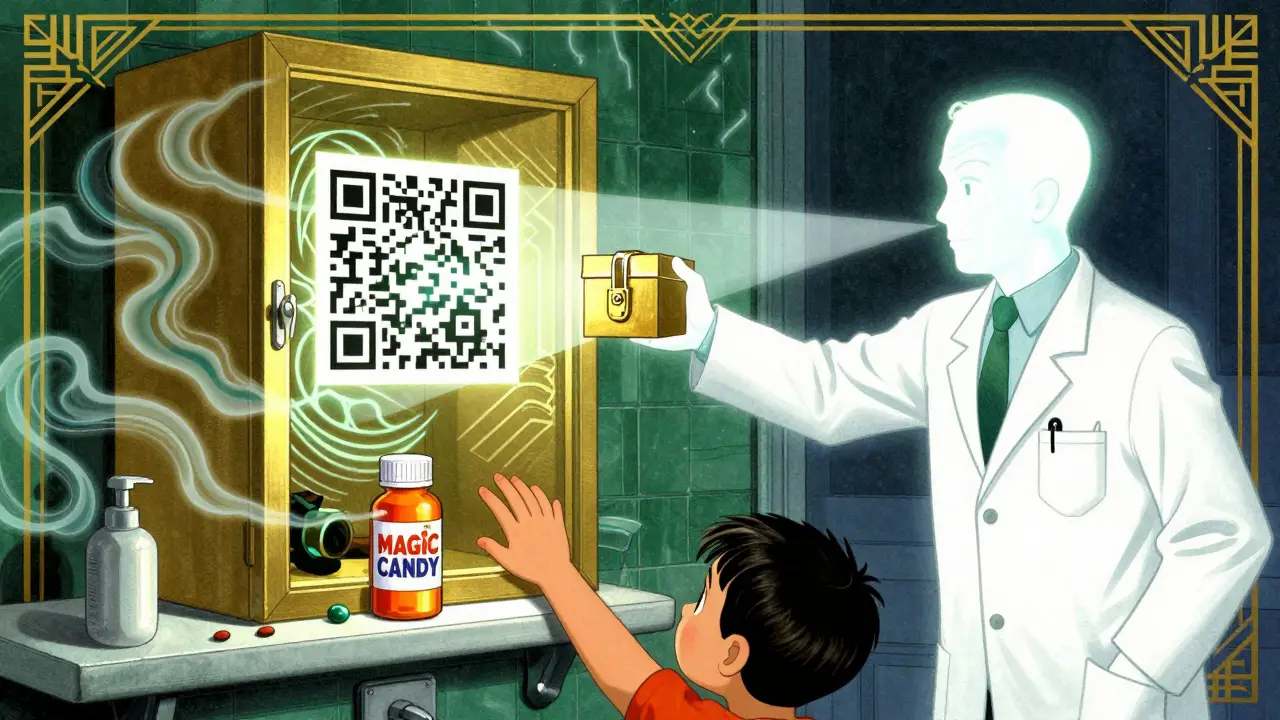
And kids? They’re drawn to colorful pills. A bottle that looks like candy can be deadly. That’s why locking up meds isn’t overkill-it’s essential.
What’s Next? Smarter Cabinets Are Coming
Technology is catching up. In 2024, Yale New Haven Health started testing QR code labels on medicine bottles. Scan the code with your phone, and it shows the expiration date and storage tips. Households using this system improved their checkup rates by 89%.
By 2025, smart medicine cabinets with humidity sensors will hit the market. They’ll alert you if your meds are getting too warm or damp. Amazon and Google are already testing them.
But you don’t need tech to stay safe. You just need to look. Once every six months. It takes 15 minutes. And it could save a life.
Can I still use medicine after the expiration date?
Some pills may still be safe after expiration, but you can’t count on it. The FDA says expired medications can lose strength or change composition. For critical drugs like insulin, epinephrine, antibiotics, or liquid medications, never use them past the date. Even for common pain relievers, potency drops over time. When in doubt, throw it out.
What should I do with empty pill bottles?
Scratch out your name and prescription info with a marker or sandpaper. Then recycle the bottle if your local facility accepts #1 or #2 plastic. If you’re unsure, toss it in the trash. Never leave personal info readable-it’s a privacy risk.
Is it safe to flush medications down the toilet?
Only if the label or FDA guide specifically says so. Most medications should not be flushed. Flushing pollutes water systems and harms wildlife. The only exceptions are certain high-risk opioids listed on the FDA’s flush list-like fentanyl patches. For everything else, use take-back programs or the coffee grounds method.
How often should I check my medicine cabinet?
Twice a year. Link it to daylight saving time changes-spring and fall. That’s when most people check smoke alarms, so it’s easy to remember. If you’ve had a major life change-like a new diagnosis or a child moving in-do a check right away.
What if I can’t find a drug take-back location near me?
Use the FDA-approved home disposal method: mix expired meds with used coffee grounds or cat litter (2:1 ratio), seal in a plastic bag, and throw it in the trash. Remove personal info from bottles first. Many pharmacies now offer free mail-back envelopes-CVS and Walgreens have them at over 14,000 locations nationwide.
Should I keep old prescriptions “just in case”?
No. Medications are prescribed for specific conditions and dosages. Taking an old antibiotic for a new infection can be dangerous-it might not work, or it could cause side effects. If you’re worried about future needs, talk to your doctor. Don’t self-medicate with leftovers.