Diabetes Technology Guide: CGMs, Smart Pens, and Apps Explained
 May, 7 2026
Imagine waking up without the dread of wondering if your blood sugar crashed in the middle of the night. For millions of people living with diabetes, a chronic condition affecting how the body processes blood sugar (glucose), that uncertainty used to be daily life. Today, it’s changing fast. The landscape of diabetes technology, which encompasses digital tools and devices designed to monitor and manage blood glucose levels has shifted from bulky, cumbersome gadgets to sleek, integrated systems that offer real-time insights.
If you’re navigating this tech-heavy world-whether you’ve just been diagnosed or have lived with Type 1 or Type 2 diabetes for years-you might feel overwhelmed by choices like Continuous Glucose Monitors (CGMs), smart insulin pens, and various management apps. This guide cuts through the noise. We’ll look at what these tools actually do, who they are for, and how they fit into your daily routine in 2026.
The Game Changer: Continuous Glucose Monitors (CGMs)
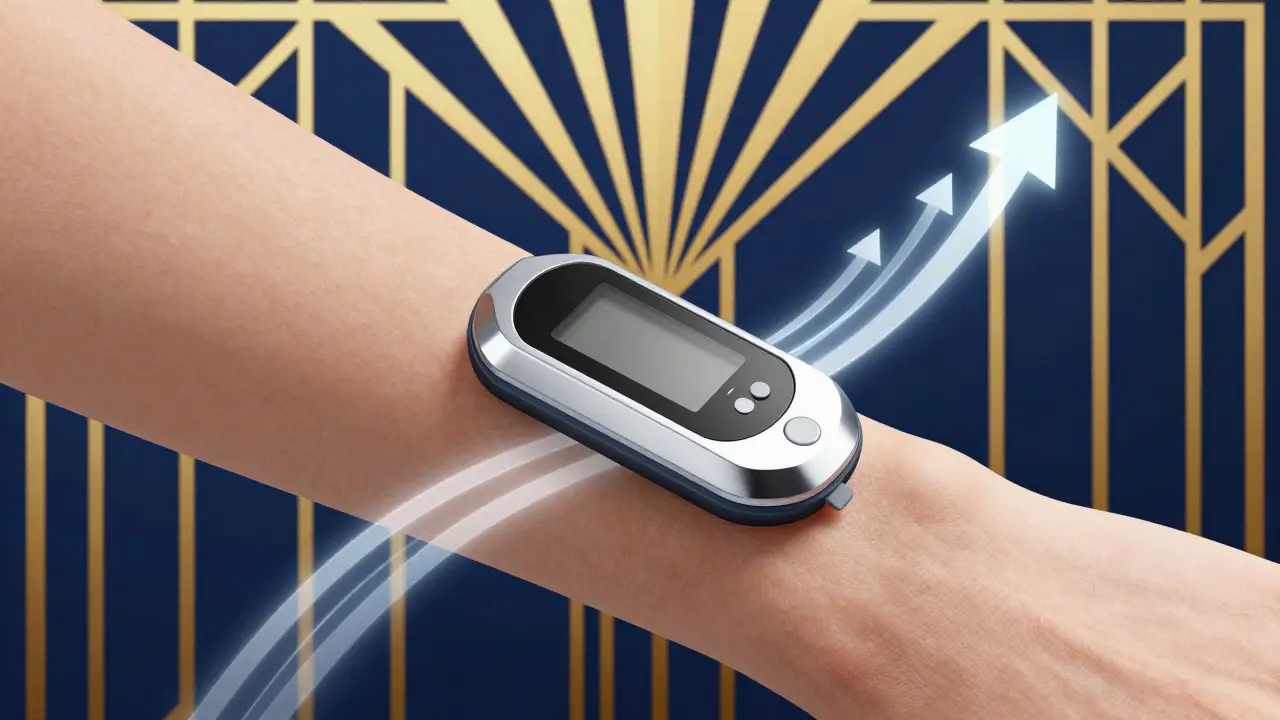
Let’s start with the biggest revolution in recent years: the Continuous Glucose Monitor, or CGM, is a wearable device that measures glucose levels in interstitial fluid continuously throughout the day and night. Unlike traditional fingerstick tests that give you one data point at one moment, a CGM provides a stream of data. It tells you not just where your blood sugar is, but where it’s going.
In 2025, the American Diabetes Association updated its Standards of Care to explicitly recommend CGMs for all individuals with Type 1 diabetes, those with Type 2 on insulin, pregnant individuals, older adults at risk for low blood sugar, and children from diagnosis. This isn’t just a suggestion; it’s becoming the standard of care.
Why the shift? Because HbA1c tests-the three-month average everyone knows-hide the truth. You could have an ‘average’ A1c while experiencing dangerous spikes and drops that cancel each other out. CGMs reveal your “Time in Range” (TIR). Studies show that for every 10% increase in time spent between 70-180 mg/dL, the risk of microvascular complications drops by 64%. That’s a massive difference in long-term health outcomes.
| Device | Sensor Life | Accuracy (MARD) | Key Feature |
|---|---|---|---|
| Dexcom G7 | 10 days | ~9% | Real-time alerts & wide app compatibility |
| Abbott FreeStyle Libre 3 | 14 days | 8.1% | Smallest sensor & reduced hospitalization link |
| Medtronic Guardian 4 | 7 days | ~9.4% | Integrated with Medtronic pumps |
Most external CGMs measure glucose in the fluid under your skin, not directly in the blood. This creates a small lag time of 5-15 minutes. While usually negligible, during rapid changes-like after eating or exercising-this delay can matter. Newer technologies like Glucotrack aim to fix this by measuring directly from blood via implantable sensors, though these are still in development phases as of early 2026.
Smart Insulin Pens: Closing the Loop
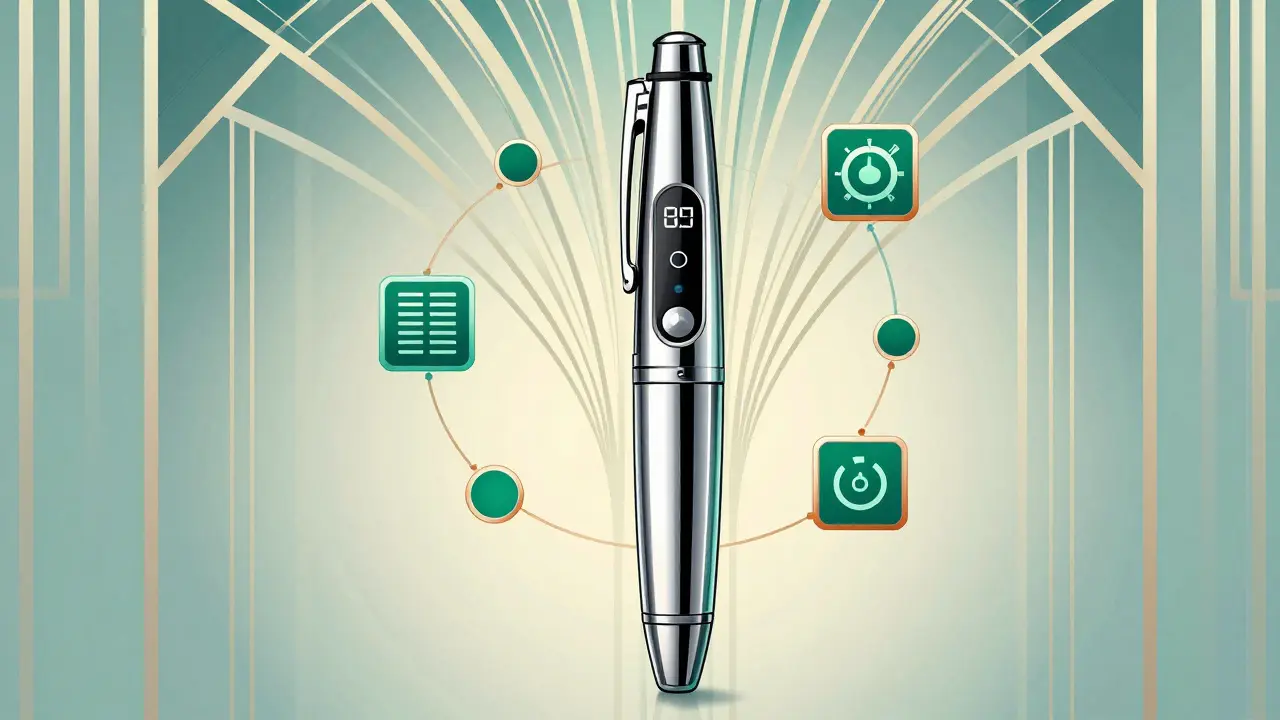
Monitoring is half the battle; treatment is the other. Enter smart insulin pens, which are electronic insulin delivery devices that digitally record dose amounts, timing, and sometimes suggest doses based on connected glucose data. If you inject insulin manually, you know the frustration of trying to remember how much you took and when, especially if your memory isn’t perfect or you’re managing multiple injections a day.
Devices like the InPen system by Medtronic pair with your smartphone. They log every dose automatically. Some advanced models even talk to your CGM. If your CGM shows your blood sugar is rising, the pen can calculate exactly how many units you need to correct it. This reduces math errors and helps prevent accidental double-dosing.
Despite their benefits, adoption is slower than you’d think. Only about 15% of insulin users utilized smart pen technology in 2025 surveys. Why? Cost and insurance hurdles remain significant barriers. Many patients find themselves paying out-of-pocket for features that seem basic. However, as more manufacturers enter the space, prices are expected to stabilize, making these tools more accessible.
Management Apps: Your Digital Command Center
You don’t have to rely solely on manufacturer-specific apps. Third-party diabetes management applications, such as mobile software platforms that aggregate glucose data, food logs, and medication records to provide holistic health insights like mySugr or One Drop offer different approaches. These apps act as a central hub, pulling data from your CGM, logging meals, and tracking exercise.
The challenge here is interoperability. Not all apps play nice with all devices. In 2025, only 43% of third-party apps successfully integrated seamlessly with every major CGM platform. Before downloading an app, check if it supports your specific hardware. Look for features like:
- Data visualization: Can you see trends over weeks or months easily?
- Food logging: Does it estimate carb impact accurately?
- Sharing capabilities: Can you share real-time data with family or doctors?
Apps also help combat “data overload.” When you first start using a CGM, the constant pinging can be stressful. Good apps let you customize alerts so you’re warned only when necessary, reducing alarm fatigue-a complaint reported by nearly 70% of new CGM users initially.
Future Tech: What’s Coming Next?
The pace of innovation is breathtaking. By late 2026 and beyond, we expect to see more predictive analytics. Machine learning models are already predicting glucose fluctuations up to 30 minutes in advance with high accuracy. Imagine getting an alert saying, “Your blood sugar will drop in 20 minutes,” allowing you to eat a snack before you even feel symptoms.
We’re also looking toward needle-free delivery systems. Companies like Vaxess Technologies are developing patches for semaglutide (the active ingredient in Ozempic), potentially eliminating injection anxiety entirely. Meanwhile, implantable sensors like Eversense E3, which lasts six months, and the experimental Glucotrack, aiming for multi-year use, promise a future where you rarely think about changing sensors.
Practical Tips for Getting Started
Jumping into diabetes tech doesn’t have to be daunting. Here’s how to make the transition smooth:
- Start with education: Don’t just apply the sensor. Spend 3-5 hours learning how it works. Formal training programs lead to higher success rates.
- Customize your alerts: Work with your doctor to set thresholds that make sense for your lifestyle. Night-shift workers need different settings than daytime office workers.
- Check adhesion: Sensor failure often comes from poor sticking. Use adhesive sleeves or tapes, especially if you sweat heavily or work out.
- Review data weekly: Don’t obsess over every minute spike. Look at patterns over days and weeks to adjust diet or medication.
Remember, technology is a tool, not a cure. It gives you information. How you use that information-through diet, movement, and medication adherence-is what drives results. But having accurate, real-time data makes informed decisions infinitely easier.
Are CGMs covered by insurance in 2026?
Coverage varies significantly by provider and plan. In the US, Medicare coverage expanded greatly for Type 2 diabetics on insulin between 2019 and 2024. Many private insurers now cover them, but prior authorization denials still occur for about 37% of commercially insured patients. Always check your specific policy details and consider patient assistance programs offered by manufacturers like Dexcom or Abbott if you face coverage issues.
Do I need a prescription for a CGM?
Traditionally, yes. However, following FDA approvals in 2024, some CGM devices are now available over-the-counter (OTC). While this increases accessibility, experts warn that self-monitoring without medical guidance can lead to misinterpretation of data. OTC purchasers often miss formal training, which is crucial for safe usage.
How accurate are CGMs compared to fingersticks?
Modern CGMs are highly accurate, measured by MARD (Mean Absolute Relative Difference) values. Lower is better. The Abbott FreeStyle Libre 3 has a MARD of 8.1%, meaning its readings are very close to lab results. However, remember the 5-15 minute lag time. If your blood sugar is changing rapidly, a fingerstick may be more immediately accurate for critical decisions.
Can smart pens work with any insulin brand?
No. Smart pens are proprietary. An InPen works only with Novolog FlexPen cartridges, for example. You cannot swap in just any insulin cartridge. Check compatibility with your current insulin prescription before purchasing a smart pen to avoid unexpected costs or supply issues.
Is my data secure on these devices?
Security is a growing concern. A 2025 study found vulnerabilities in 63% of tested CGM systems regarding wireless transmission. While no widespread malicious attacks have been reported, it’s important to keep your apps updated, use strong passwords, and enable two-factor authentication where possible. Manufacturers are actively working to patch these security gaps.