Ephedrine and MAO Inhibitors: Why This Combination Causes Hypertensive Crisis
 Jul, 11 2026
MAOI & Ephedrine Interaction Checker
Input Parameters
Enter details above
To see your specific risk assessment.
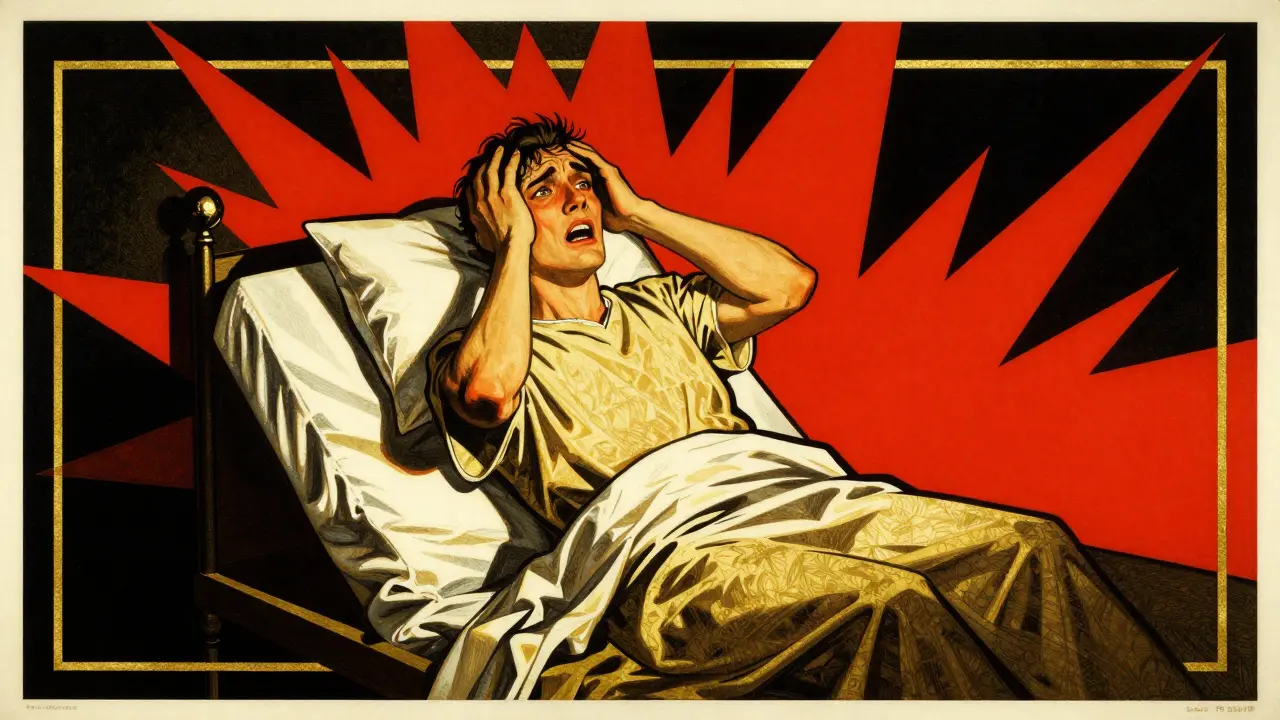
Imagine taking a simple over-the-counter cold pill to clear your sinuses, only to wake up in an emergency room with a blood pressure reading that could kill you. This isn't a hypothetical scenario; it is the reality for patients who combine Ephedrine, a common decongestant, with MAO inhibitors (MAOIs), a class of antidepressants. The result is a hypertensive crisis, defined as a sudden, severe spike in blood pressure that can cause stroke, heart attack, or death.
This specific drug interaction is one of the most dangerous in modern pharmacology. It was first identified in the late 1950s, shortly after MAOIs were introduced for treating depression. A landmark 1965 case report by Dr. M.S. Hirsch in JAMA detailed a woman who suffered a subarachnoid hemorrhage-a bleeding on the surface of the brain-after taking just one dose of ephedrine while on an MAOI. Despite this being well-documented history, the risk persists today because many people do not realize that "cold medicine" contains ingredients that clash violently with their psychiatric medication.
How the Interaction Works
To understand why this combination is so deadly, you need to look at what these drugs do inside your body. Your body naturally produces neurotransmitters like norepinephrine, which helps regulate alertness and blood pressure. Normally, an enzyme called monoamine oxidase breaks down excess norepinephrine to keep levels stable.
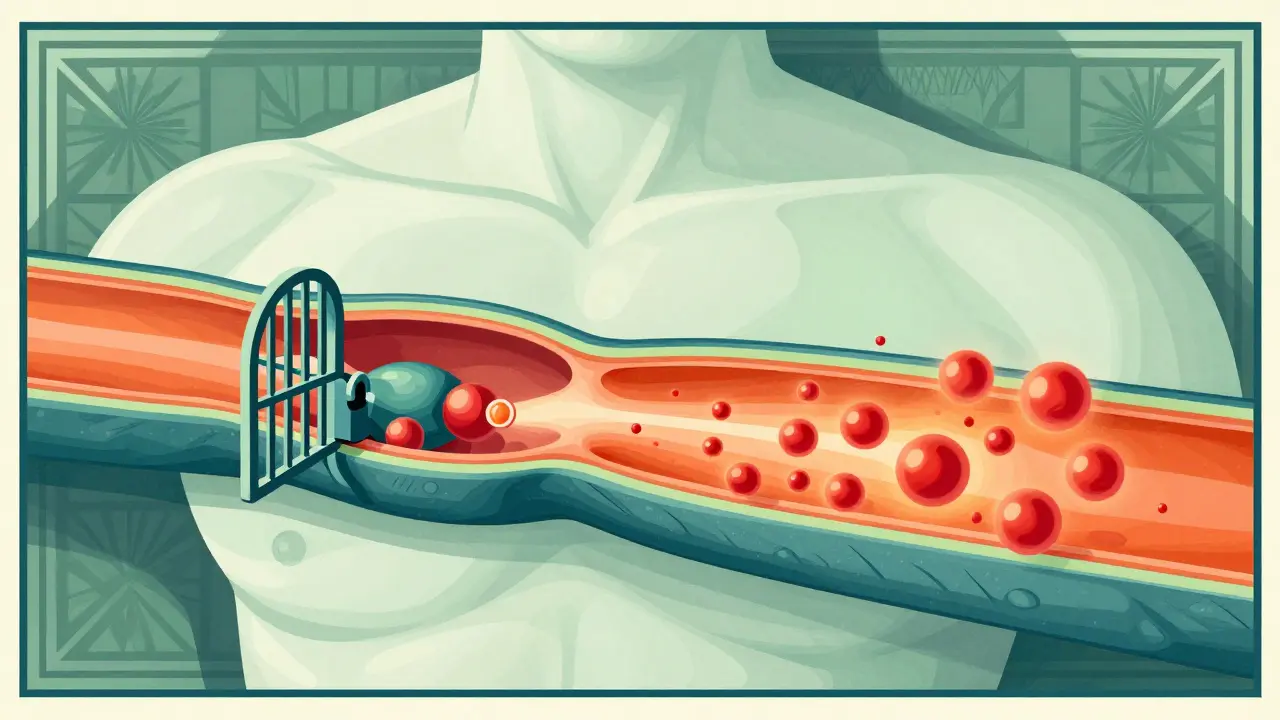
MAO inhibitors, such as phenelzine (Nardil) or tranylcypromine (Parnate), work by blocking this enzyme. This allows more norepinephrine to stay active, which improves mood in depressed patients. However, when you add Ephedrine, a sympathomimetic agent, the situation changes drastically. Ephedrine forces your nerve cells to release even more stored norepinephrine into your bloodstream.
Because the MAOI has blocked the cleanup crew (the enzyme), there is no way to remove this surge of norepinephrine. The result is a massive accumulation of catecholamines. Blood pressure can skyrocket past 200 mmHg systolic within minutes. This isn't just a mild increase; it is a physiological storm that puts extreme stress on blood vessels throughout the body.
Symptoms of a Hypertensive Crisis
You cannot always predict exactly how high your blood pressure will go, but the symptoms are usually intense and unmistakable. If you are on an MAOI and accidentally ingest ephedrine, watch for these signs:
- Severe Headache: Often described as occipital (starting at the back of the head) and radiating forward. Patients frequently describe it as "explosive" or feeling like their head might burst.
- Neck Stiffness: A classic sign of meningeal irritation or severe vascular stress.
- Palpitations: Your heart may race, skip beats, or feel like it is pounding out of your chest.
- Vision Changes: Blurred vision, dilated pupils, or seeing white spots (photophobia).
- Nausea and Vomiting: Caused by the sudden shift in internal pressure.
- Diaphoresis: Profuse sweating despite feeling cold or normal temperature.
In severe cases, this leads to acute end-organ damage. This means the high pressure causes physical injury to vital organs, such as intracranial hemorrhage (bleeding in the brain), retinal detachment, or kidney failure. According to FDA data from 2015 to 2020, there were 37 reported cases of hypertensive crisis linked to MAOI-ephedrine interactions, including 9 fatalities.
Which Medications Are Involved?
Not all MAOIs carry the same level of risk, but the danger is present across the board. The most dangerous interactions occur with irreversible MAOIs. These drugs bind permanently to the enzyme, meaning your body needs two to three weeks to regenerate enough enzymes to function normally again. Even after you stop taking the medication, the risk remains for this entire period.
| Drug Name | Type | Risk Level | Washout Period Before Ephedrine |
|---|---|---|---|
| Phenelzine (Nardil) | Irreversible | High | 14 days |
| Tranylcypromine (Parnate) | Irreversible | High | 14 days |
| Isocarboxazid (Marplan) | Irreversible | High | 14 days |
| Moclobemide | Reversible | Moderate | 24-48 hours |
| Selegiline (Emsam) Patch | Selective MAO-B (low dose) | Low (at 6mg) | Consult Doctor |
It is crucial to note that the minimum dose of ephedrine capable of triggering a crisis while on an MAOI is estimated at just 12.5 to 25 mg. Most over-the-counter cold medications contain between 25 and 120 mg per dose. You do not need to take a large amount to be in danger; a single pill is often enough.
Hidden Sources of Ephedrine
The biggest challenge for patients is that ephedrine doesn't always come in a bottle labeled "Ephedrine." It is hidden in many products designed to treat congestion, allergies, or asthma. You must check labels for these specific ingredients:
- Ephedrine hydrochloride
- Pseudoephedrine (found in Sudafex and many generic brands)
- Phenylephrine (often found in newer formulations after pseudoephedrine restrictions)
- Phenylpropanolamine
- Decongestants listed generally without specifying the ingredient
Even herbal supplements can be risky. Some weight-loss pills or energy boosters contain ephedra alkaloids, which act similarly to ephedrine. If you are on an MAOI, assume any stimulant or decongestant is off-limits unless your doctor explicitly confirms it is safe.
Emergency Management and Treatment
If you suspect you have taken ephedrine while on an MAOI, seek emergency medical attention immediately. Do not wait to see if symptoms develop. Time is critical.
In the hospital, doctors will monitor your blood pressure closely. The standard treatment involves administering Phentolamine, an alpha-adrenergic blocker intravenously. Phentolamine works by relaxing the blood vessels, counteracting the constriction caused by the excess norepinephrine. Typical doses range from 5 to 15 mg.
A critical warning: Doctors should avoid using sublingual nifedipine. While this drug lowers blood pressure, it can cause a precipitous drop, leading to stroke or other complications due to poor blood flow to the brain. The goal is controlled reduction, not a crash.
Prevention Strategies
Prevention is the only reliable way to avoid this crisis. Since MAOIs are still prescribed to approximately 500,000 Americans for treatment-resistant depression, safety protocols are essential.
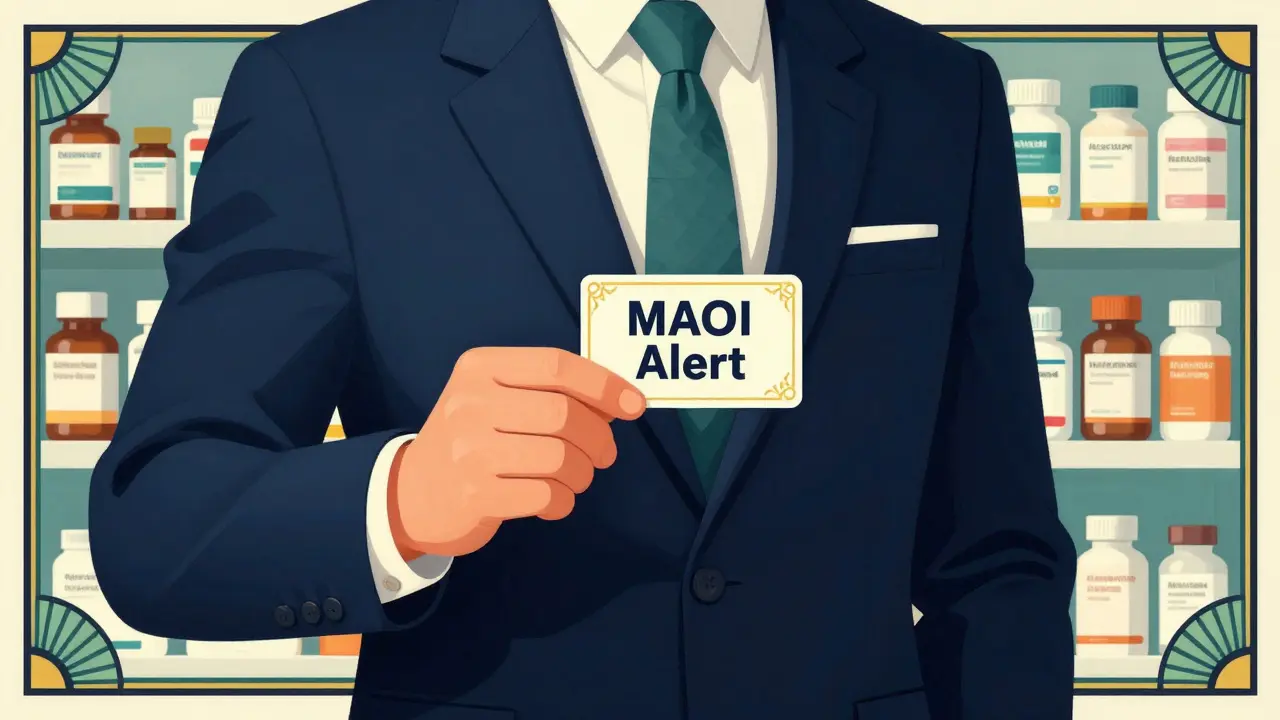
- Carry an Alert Card: Many clinics provide an "MAOI Alert Card." Carry this in your wallet at all times. It lists contraindicated foods and medications. Studies show that 87% of patients who carry these cards successfully avoid accidental exposure.
- Educate All Providers: When visiting a dentist, primary care physician, or urgent care clinic, state clearly: "I am on an MAOI inhibitor. I cannot take decongestants or certain painkillers." Non-psychiatric providers often overlook this restriction.
- Read Every Label: Before buying any new medication, supplement, or herbal remedy, read the active ingredients list. If you are unsure, call your pharmacist.
- Respect the Washout Period: If you stop taking an irreversible MAOI, wait at least 14 days before taking any sympathomimetic agents. For reversible MAOIs like moclobemide, wait at least 24 to 48 hours.
Despite these guidelines, medication errors remain common. Research published in JAMA Internal Medicine found that 22% of patients prescribed MAOIs received at least one contraindicated medication within 30 days of starting treatment. This highlights the importance of patient advocacy-you must be the final checkpoint in your own healthcare.
Future Outlook and Alternatives
The landscape of MAOI treatment is slowly evolving. Traditional MAOIs now represent less than 1% of antidepressant prescriptions in the United States, down from 15% in the 1980s. This decline is largely due to the emergence of SSRIs and SNRIs, which do not carry this dietary or drug interaction risk.
However, MAOIs remain the gold standard for atypical depression. Newer developments aim to reduce the risk. For example, the transdermal patch Selegiline (Emsam) bypasses the liver initially, allowing for selective MAO-B inhibition at lower doses (6 mg/24hr), which significantly reduces the risk of hypertensive crisis compared to oral forms.
In 2023, the FDA approved Befloxatone, a new reversible MAOI. Preliminary studies suggest it has a 90% lower risk of hypertensive crisis due to its short half-life (6 hours) and selective binding. This represents a significant step forward in making MAOI therapy safer for patients who need it.
Can I take Sudafed if I am on Nardil?
No. Sudafed contains pseudoephedrine, which is chemically similar to ephedrine and acts as a sympathomimetic agent. Combining it with Nardil (phenelzine), an irreversible MAOI, can trigger a life-threatening hypertensive crisis. You must avoid all decongestants containing pseudoephedrine, phenylephrine, or ephedrine.
How long does the risk last after stopping MAOIs?
For irreversible MAOIs like Nardil, Parnate, and Marplan, the risk lasts for 14 days after your last dose. This is because your body needs time to regenerate the monoamine oxidase enzymes. For reversible MAOIs like moclobemide, the risk subsides much faster, typically within 24 to 48 hours.
What are the first signs of a hypertensive crisis?
The most common early signs include a severe headache (often at the back of the head), neck stiffness, palpitations, sweating, nausea, and blurred vision. If you experience these symptoms after taking a new medication, seek emergency care immediately.
Is Emsam patch safe with decongestants?
At the lowest dose (6 mg/24hr), Emsam primarily inhibits MAO-B and carries a significantly lower risk of hypertensive crisis compared to oral MAOIs. However, at higher doses (9 mg and above), it begins to inhibit MAO-A systemically, reintroducing the risk. Always consult your prescriber before taking any decongestant while using Emsam.
Why is this interaction so dangerous compared to other drug pairs?
This interaction creates a synergistic effect where both drugs increase norepinephrine levels through different mechanisms. The MAOI prevents breakdown, while ephedrine forces release. This dual action can raise blood pressure to lethal levels (>200 mmHg) within minutes, causing immediate damage to blood vessels in the brain and heart.