Fiber for Weight Control: How Soluble and Insoluble Fiber Really Help You Lose Weight
 Dec, 27 2025
Want to lose weight without starving yourself or counting every calorie? The answer might be simpler than you think-fiber. Not just any fiber, but the right kind. Two types-soluble and insoluble-do very different things in your body, and only one of them truly helps you shed pounds. If you’ve tried fiber supplements and seen little change, you’re not alone. Most people don’t know the difference between the two, and that’s why they’re wasting time and money.
What Soluble Fiber Actually Does for Weight Loss
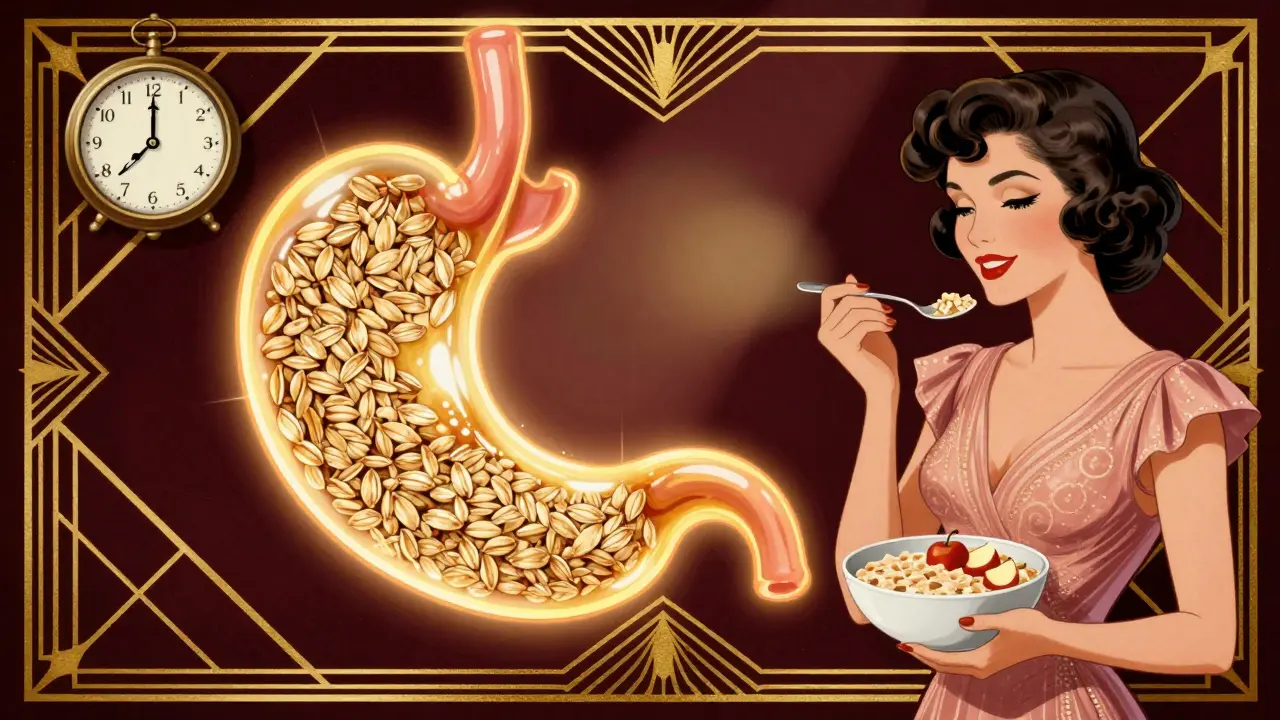
Soluble fiber doesn’t just pass through your system-it transforms. When it hits water, it turns into a thick, gel-like substance. Think of it like oatmeal soaking up milk, but inside your gut. This gel slows down digestion, which means food stays in your stomach longer. That’s why you feel full after eating oats, beans, or apples-even if you didn’t eat a huge meal.
Studies show that viscous soluble fibers like psyllium, beta-glucans, and glucomannan can delay gastric emptying by 25-30%. That’s not a small thing. It means your brain gets the signal that you’re full earlier and keeps it longer. One 2023 study found that people who took 5-10 grams of psyllium daily before meals lost an average of 3.2% of their body weight in just eight weeks. Compare that to the placebo group, who lost only 1.1%. That’s not magic-it’s physics and biology working together.
Here’s the kicker: soluble fiber also blocks about 15-20% of dietary fat from being absorbed. It doesn’t burn fat-it just makes it harder for your body to store it. And it doesn’t stop there. These fibers feed good gut bacteria, which produce short-chain fatty acids that help regulate appetite hormones like ghrelin and peptide YY. In plain terms: less hunger, fewer cravings.
Insoluble Fiber: The Unsung Hero of Digestion
Insoluble fiber doesn’t dissolve. It doesn’t turn to gel. It just moves through your system like a broom, sweeping things along. You’ll find it in whole wheat bread, bran, nuts, and vegetables like celery and carrots. It adds bulk to your stool-about 3-5 grams of bulk for every 10 grams you eat-and speeds up transit time by a day or two.
So does it help with weight loss? Indirectly. If you’re constipated, your body holds onto waste, which can make you feel bloated and heavier. Insoluble fiber fixes that. But it doesn’t reduce appetite, lower blood sugar spikes, or block fat absorption. It’s not a weight-loss tool-it’s a digestive cleaner. And that’s still valuable. A healthy gut means better nutrient absorption, less inflammation, and fewer cravings triggered by gut imbalances.
Think of it this way: soluble fiber is the chef who makes you feel full. Insoluble fiber is the janitor who cleans up afterward. You need both, but only one is doing the heavy lifting for weight control.
The Numbers Don’t Lie: What Works Best
Let’s cut through the noise. If you want real results, here’s what the data says:
- 7 grams of viscous soluble fiber per day = average loss of 0.75 pounds and 0.25 inches off your waist in 10 weeks
- Psyllium husk = most effective supplement for weight loss in clinical trials
- Beta-glucans = reduce blood sugar spikes by 12-15%, helping prevent fat storage
- Inulin = helps lower triglycerides but has weak effects on appetite
- Insoluble fiber = no measurable impact on weight or hunger hormones
Here’s the truth most supplement ads won’t tell you: the average weight loss from fiber supplements is small. Three-quarters of a pound isn’t life-changing. But when you combine fiber with eating fewer processed foods and drinking more water? That’s when the scale starts moving.

Whole Foods Beat Supplements-Every Time
You can buy psyllium in a bottle. You can buy inulin powder. But here’s what research consistently shows: people who get their fiber from food stick with it longer and lose more weight.
Why? Because food comes with everything else your body needs. An apple doesn’t just have pectin-it has water, antioxidants, and natural sugars that don’t spike insulin. A bowl of lentils has fiber, protein, iron, and magnesium. Supplements give you one thing. Food gives you a team.
Real people in real studies report their best results from:
- Beans and lentils (28% of successful users)
- Oats (22%)
- Apples (19%)
- Chia seeds and flaxseeds (15%)
These aren’t trendy superfoods. They’re affordable, shelf-stable, and packed with nutrients that work together. One study found that people who ate two high-fiber meals a day (at least 8 grams each) kept up their habit 82% of the time after six months. Supplement users? Only 54% stuck with it.
How to Use Fiber Without the Bloat
Here’s why most people quit fiber: they go from zero to hero overnight. One day they’re eating white toast. The next, they’re chugging psyllium and eating a pound of broccoli. Result? Bloating, gas, and feeling like their stomach is a balloon.
Here’s how to avoid that:
- Start slow. Add 5 grams of extra fiber per week. If you’re eating 10 grams now, aim for 15 in a week, then 20 the next.
- Drink water. For every 5 grams of fiber you add, drink 16-24 ounces of water. No water? Fiber turns into a cement block in your gut.
- Take soluble fiber 15-30 minutes before meals. A tablespoon of chia seeds in water or half a cup of oats before lunch can cut your calorie intake by 10-15%.
- Balance your types. Aim for a 3:1 ratio of insoluble to soluble fiber. Whole grains, veggies, and fruits naturally give you this mix.
And here’s a pro tip: don’t rely on fiber bars or shakes. They’re often loaded with sugar, artificial sweeteners, and fillers. Stick to real food. If you use a supplement, choose psyllium husk powder-it’s the most studied and least likely to cause issues when used right.

The Bigger Picture: Fiber Isn’t a Magic Bullet
Fiber won’t turn you into a different person. It won’t erase years of processed food habits overnight. But it’s one of the most reliable, low-cost, side-effect-free tools we have for weight management.
People who eat 25+ grams of fiber daily have 27% lower obesity rates than those eating under 15 grams-even when everything else is the same. That’s not because fiber burns calories. It’s because it changes how you eat. You snack less. You eat slower. You feel satisfied with less.
The goal isn’t to take a pill and lose weight. It’s to build a way of eating that makes weight loss natural. Fiber helps you do that. Not by forcing you to eat less, but by making you want to eat less.
Start with one change: swap your morning cereal for oatmeal. Add a serving of beans to your lunch. Eat an apple instead of a cookie. Do that for a week. Then add another. You won’t see a miracle on the scale-but you’ll start feeling different. And that’s where real change begins.
Does soluble fiber really help you lose weight?
Yes, but only certain types-viscous soluble fibers like psyllium, beta-glucans, and glucomannan. These form a gel in your gut that slows digestion, reduces appetite, and blocks some fat absorption. Studies show people lose 0.75 pounds and 0.25 inches off their waist over 10 weeks with 7 grams daily. Insoluble fiber doesn’t have the same effect.
Is psyllium husk the best fiber supplement for weight loss?
According to clinical trials, yes. Psyllium husk has shown the strongest results in weight loss, BMI reduction, and visceral fat loss compared to other supplements. In one study, participants lost 3.2% body weight with psyllium versus 1.1% with a placebo. It’s also the most widely studied and generally well-tolerated when taken with enough water.
Can I just take fiber pills instead of eating more vegetables?
You can, but you won’t get the same results. Whole foods provide fiber plus vitamins, minerals, antioxidants, and phytochemicals that work together to support metabolism and gut health. Supplements give you one thing-fiber. Food gives you a full package. People who rely on whole foods stick with healthy habits longer and lose more weight over time.
Why does fiber make me bloated?
You’re likely increasing your intake too fast or not drinking enough water. Fiber needs water to work properly. If you add 10 grams of fiber without more water, it can cause constipation and gas. Start slow-add 5 grams per week-and drink at least 16-24 ounces of water for every 5 grams of fiber. Your gut needs time to adjust.
How much fiber should I eat daily for weight control?
Aim for 25-38 grams of total fiber per day, with at least 10-15 grams coming from soluble fiber-especially viscous types. Most people only get about 15 grams. Focus on beans, oats, apples, chia seeds, and vegetables. You don’t need to hit 38 grams right away. Gradual increases work better and are easier to maintain.
Should I take fiber before or after meals?
Take soluble fiber 15-30 minutes before meals to maximize its appetite-suppressing effect. This gives the gel time to form in your stomach and slow digestion before you eat. Taking it after meals won’t help as much with reducing hunger or calorie intake during that meal.
What to Do Next
Don’t buy a supplement today. Don’t start a detox. Start with one meal.
Replace your morning toast with a bowl of oatmeal. Add a spoon of ground flaxseed. Drink a glass of water with it. That’s it. Do that for seven days. Then add a side of beans to lunch. Then swap your afternoon snack for an apple.
You’re not trying to fix everything at once. You’re building a habit that makes weight loss easier-not harder. Fiber isn’t the whole answer, but it’s the quiet, reliable foundation most people ignore. Start there. The rest will follow.
Samantha Hobbs
December 28, 2025 AT 10:34Okay but have you tried chia seeds in your smoothie? I put a tablespoon in every morning and I swear I don’t even think about snacks by 11am. No magic, just gel.
James Hilton
December 29, 2025 AT 04:03So fiber’s the new keto? Cool. I’ll stick with my bacon and eggs thanks. 🤷♂️
Ellen-Cathryn Nash
December 31, 2025 AT 03:07People still think supplements are a substitute for real food? 😒
Let me guess-you think a psyllium capsule is the same as eating a bowl of lentils with roasted veggies and an apple on the side? No. One is nutrition. The other is corporate marketing wrapped in a plastic bottle.
I used to buy those fiber powders too-until I realized I was paying $30 a month to feel like a balloon filled with regret. Then I ate beans. Real beans. From a can, even. And guess what? My gut stopped staging rebellions.
It’s not about the fiber. It’s about the rhythm. The rhythm of eating food that doesn’t come with a barcode and a 12-ingredient label.
You don’t need a PhD to understand this. You just need to stop trusting ads and start trusting your grandmother’s kitchen.
And no, I don’t care if you ‘don’t have time.’ You have time to scroll. You have time to microwave. You have time to eat garbage. You just don’t have time to care enough to change.
It’s not hard. It’s just inconvenient. And convenience is the enemy of health.
Start with one meal. Not tomorrow. Today. One. Bowl. Of. Oatmeal.
And if you can’t even do that? Then maybe the problem isn’t your gut. It’s your will.
Vu L
December 31, 2025 AT 10:13Studies say psyllium works? Cool. I’ve been eating raw oats for 12 years and I’m still 40 lbs overweight. So either the science is fake or I’m just cursed.
Julius Hader
December 31, 2025 AT 10:59Hey, I get where you’re coming from, Vu. But I think it’s less about being cursed and more about consistency. Psyllium’s not a magic wand-it’s a tool. You gotta pair it with less sugar, more sleep, and movement. I lost 12 lbs just by swapping my afternoon chips for an apple + peanut butter. No supplements. Just food. 😊
Mimi Bos
January 1, 2026 AT 00:46i jsut started eatin oatmeal n i think my stomach is gonna explode 😭 but my poop is way better so maybe its worth it??
Nicole Beasley
January 1, 2026 AT 14:36OMG YES 🙌 I started putting flaxseed in my yogurt and now I don’t crave sweets anymore!! I thought I was addicted to sugar but turns out I was just fiber deficient 😅
Also, chia pudding is life. Try it with almond milk and a dash of cinnamon. You’ll thank me later. 🌱✨
sonam gupta
January 2, 2026 AT 00:03Why do Americans always make everything so complicated? In India we eat dal and roti every day and we don’t need studies to tell us fiber works. Your body knows. Just eat real food. Stop buying pills. 🇮🇳
Sydney Lee
January 2, 2026 AT 20:56How is it even possible that this article doesn’t mention the role of the gut-brain axis in fiber-mediated satiety? The reduction in ghrelin is not merely a function of gastric distension-it’s mediated by vagal afferent signaling triggered by SCFA production from microbial fermentation of soluble fiber. This is basic physiology. Yet here we are, reduced to ‘eat an apple’ as if we’re all toddlers who need spoon-feeding. The oversimplification is not just lazy-it’s ethically irresponsible for a platform that claims to inform.
And for the love of science, please stop conflating correlation with causation. The 27% lower obesity rate? That’s from observational data. Confounding variables include socioeconomic status, access to healthcare, and physical activity levels. Fiber isn’t the hero-it’s a proxy for a healthier lifestyle. To reduce it to a single nutrient is to misunderstand nutrition entirely.
But I suppose if you’re going to peddle pseudoscience, you might as well make it sound like a self-help mantra. ‘Start with one meal.’ How quaint. How patronizing. How utterly devoid of nuance.
At least the psyllium data is solid. But even that should be framed within the context of dietary patterns, not sold as a silver bullet. The author’s tone is dangerously reductive. And for that, I’m disappointed.
oluwarotimi w alaka
January 4, 2026 AT 14:54fiber is a big pharma trick to sell you fake food. they want you to eat mush so you dont get strong. real men eat meat. real men dont drink chia water. they lift weights and eat eggs. this whole thing is a distraction. the government wants you weak. dont fall for it.