Food Labels and Allergies: Hidden Allergens and Safety in 2026
 Jan, 4 2026
Every time you pick up a packaged snack, cereal, or soup, you’re making a decision based on what’s written on the label. But for the 32 million Americans with food allergies - and millions more around the world - that label might not tell the whole story. What looks like a simple ingredient list can hide dangerous surprises. In 2025, the FDA updated its guidance on food allergen labeling, and these changes matter more than ever. If you or someone you care about avoids certain foods because of allergies, understanding what’s changed - and what’s still missing - could keep you safe.
What’s Actually in Your Food? The New Rules
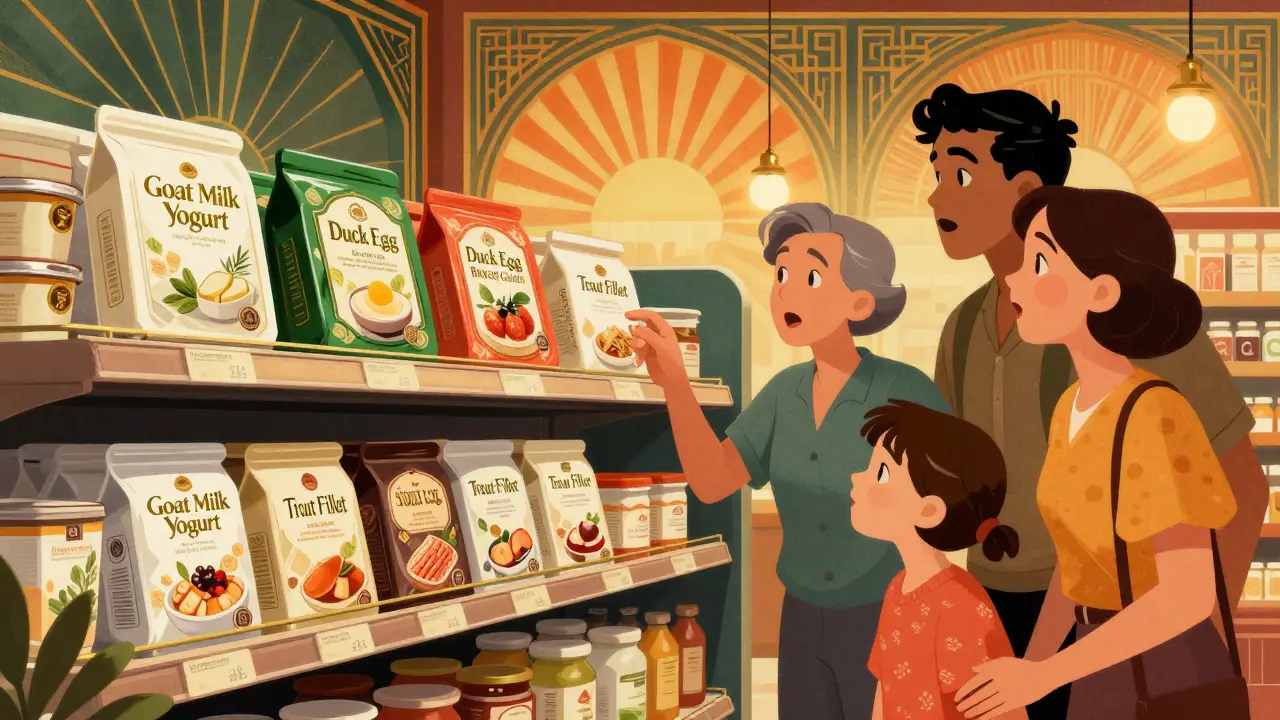
The biggest shift in the 2025 FDA guidance is specificity. You can no longer just see "milk" or "egg" on a label. Now, if a product contains goat milk, it must say "goat milk." Duck eggs? That’s not just "egg" anymore - it’s "duck egg." This isn’t bureaucracy. It’s life-saving clarity. People allergic to cow’s milk can often tolerate goat or sheep milk. Same with eggs - someone might react to chicken eggs but be fine with quail. Before this rule, families had to call manufacturers just to find out what kind of milk was in their yogurt. Now, the answer is right on the package. Fish labeling got a major upgrade too. It’s no longer enough to say "fish." You now need to know if it’s trout, shark, or lamprey eel. That’s because allergies to different types of fish aren’t always cross-reactive. Someone might be fine with salmon but go into anaphylaxis from tuna. Clear species names help people avoid only what they need to.Coconut Is No Longer a Tree Nut - Here’s Why
Coconut used to be grouped with almonds, cashews, and walnuts on food labels. That’s changed. As of 2025, coconut is no longer classified as a tree nut under federal labeling rules. Why? Because it’s not a botanical nut - it’s a fruit. More importantly, research shows that people with tree nut allergies rarely react to coconut. For years, families avoided coconut milk, granola, and even baby wipes labeled "contains tree nuts" - even when their child could safely eat coconut. Now, labels are more accurate. This reduces unnecessary fear and expands food choices for millions.Shellfish Just Got More Confusing
But not all changes are good news. Shellfish labeling now only covers crustaceans: shrimp, crab, and lobster. Mollusks - oysters, clams, mussels, scallops - are no longer required to be listed as allergens. That’s a problem. Around 1.5 million Americans are allergic to mollusks. Many of them assumed "shellfish" meant all types. Now, if a soup says "contains shellfish," it could mean shrimp - and you’re safe. But if it says nothing at all, and the soup has clam broth? You’re at risk. There’s no warning. No "may contain" statement. Just silence. People with mollusk allergies are now forced to call companies, check websites, or avoid anything that even smells like the ocean.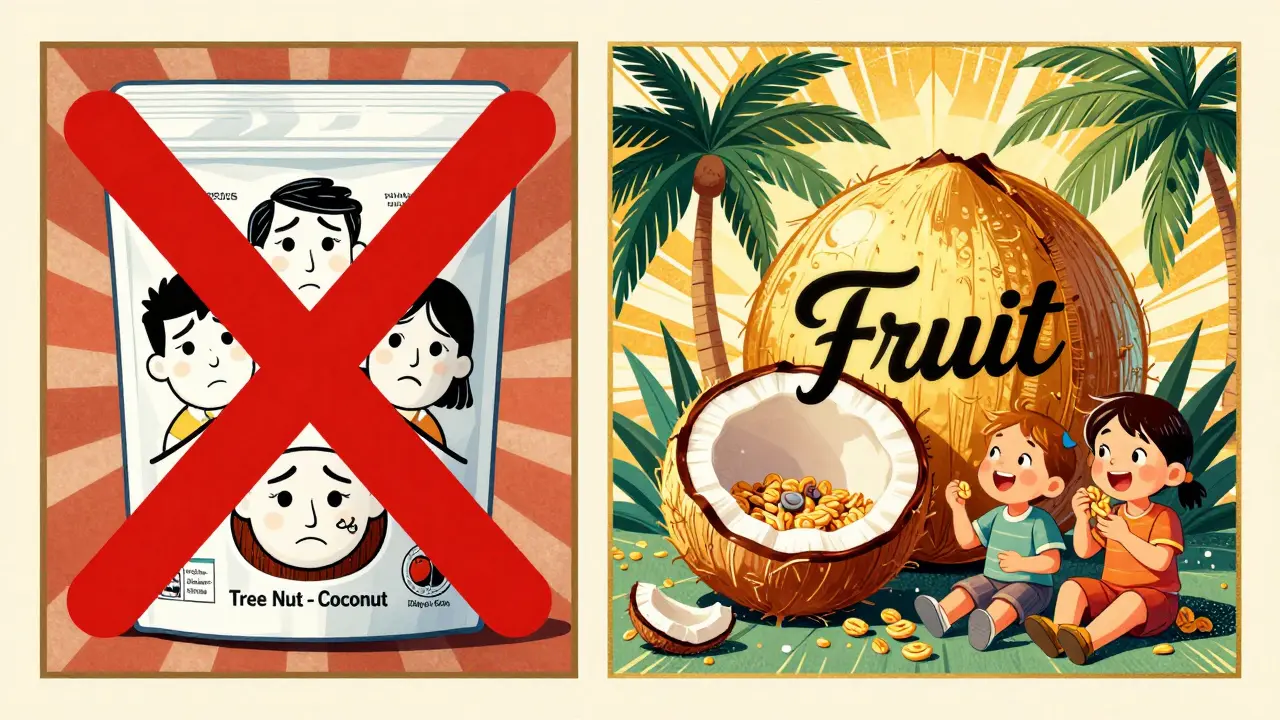
"Free-From" and "May Contain" Can’t Coexist
You’ve seen it: a box that says "Milk-Free" at the top - but then, in tiny print at the bottom: "May contain traces of milk." That contradiction used to be common. Now, it’s not allowed. If a product claims to be free of an allergen, it can’t also say it might contain it. This sounds simple, but it’s huge. Before, consumers were stuck: Is this safe? Is the company lying? Or just careless? The new rule forces manufacturers to pick one path. Either they’ve controlled cross-contact thoroughly and can say "milk-free," or they can’t make that claim at all. This reduces guesswork and builds trust.What About Cross-Contact? The Gray Area
Cross-contact - when a tiny bit of an allergen gets into a food that wasn’t meant to have it - is still a wild west. The FDA says advisory labels like "Made in a facility with peanuts" are voluntary. They’re not required. And they’re not regulated. That means one brand might say "May contain nuts," while another, with the same production line, says nothing. There’s no standard for how much allergen triggers a reaction, so companies use whatever wording they want. Some say "processed on shared equipment." Others say "produced in a plant that also handles tree nuts." It’s inconsistent. And it’s exhausting. For people with severe allergies, this uncertainty means they often skip products with any advisory label - even if the risk is low. That limits choices. Experts say the best way to handle cross-contact is through manufacturing controls - cleaning protocols, scheduling, and testing - not vague warnings. But until those controls are mandatory, consumers are left to interpret risk on their own.Who’s Affected? Real Numbers, Real Risks
About 1 in 10 adults and 1 in 13 children in the U.S. have a food allergy. That’s 32 million people. Milk and egg allergies are the most common in kids - affecting 4.5 million and 2 million respectively. Sesame, added as a major allergen in 2023, now affects 1.6 million Americans. But behind those numbers are daily struggles: parents reading 10 labels before buying a single granola bar, teens avoiding school lunches, adults skipping restaurants because the menu doesn’t list ingredients. The 2025 changes help. But they don’t fix everything. Mollusk allergies are ignored. Soybean oil and highly refined peanut oil are still exempt from labeling, even though some people react to them. And what about mustard, celery, or lupin? Those are major allergens in Europe - but not in the U.S. The FDA is studying whether to add more, but right now, if it’s not on the list of nine, it doesn’t have to be labeled.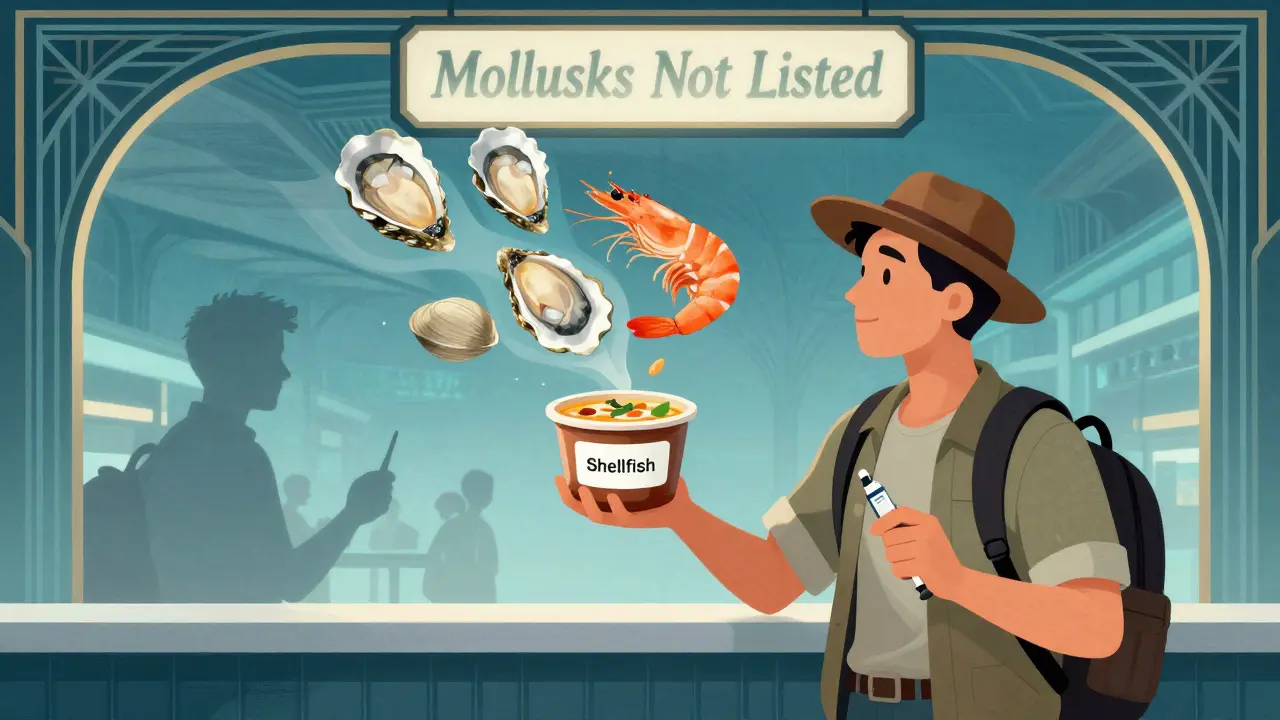
What You Can Do Right Now
Even with better labeling, you still need to be your own advocate.- Always read the full ingredient list - not just the "Contains" box.
- Learn what "natural flavors," "spices," or "modified food starch" could hide - they’re often sources of allergens.
- When in doubt, contact the manufacturer. Ask: "Is this product made on shared equipment with [allergen]?" Get their answer in writing.
- Don’t assume "gluten-free" means "nut-free" or "dairy-free." They’re unrelated claims.
- Carry two epinephrine auto-injectors. One might not be enough if you’re far from help.
Why This Matters Beyond the U.S.
The U.S. is now ahead of most countries in allergen labeling detail. The EU still just says "milk" or "egg." Canada doesn’t require species-level detail for fish. Australia and New Zealand have stricter rules for sesame but still don’t require mollusk labeling. That means if you travel, you can’t rely on what you know from home. A product labeled "contains milk" in the U.S. might be labeled "contains dairy" in the UK - and you won’t know if it’s cow, goat, or sheep unless you ask. The global food supply chain makes this even trickier. Ingredients are sourced worldwide. A chocolate bar made in Belgium might use soy from Brazil and coconut from the Philippines. Labels need to reflect every source - and right now, they often don’t.What’s Next?
The FDA says this guidance may change again. They’re already studying whether to add mustard, sesame oil, or lupin as major allergens. Industry analysts predict that by 2027, most big brands will follow the new rules - not because they have to, but because customers demand it. Small producers? They’re struggling. The cost to retool labels and retrain staff can run $10,000 per product line. Some may just stop making certain items. The real win isn’t just better labels. It’s awareness. More schools, restaurants, and airlines are training staff on allergen safety. More parents are teaching kids to ask questions. More people are speaking up. The 2025 changes are a step - not the finish line. But for families who’ve spent years guessing, reading every line, and calling every company - this is progress.Food shouldn’t be a gamble. Labels should give you confidence - not confusion. The rules are getting clearer. Now it’s up to you to use them.
Are food labels now required to say what kind of milk is used?
Yes. As of January 2025, the FDA requires labels to specify the animal source of milk - such as "goat milk," "sheep milk," or "cow milk" - not just "milk." This helps people allergic to one type of milk but not others make safer choices.
Is coconut still considered a tree nut on food labels?
No. Coconut was removed from the list of major tree nut allergens in the 2025 FDA guidance. It’s now classified as a fruit, and products don’t need to list it under "tree nuts" unless it’s added as an ingredient on its own. This change helps people with tree nut allergies who can safely eat coconut.
Why are oysters and clams not listed as allergens on food labels?
The FDA now defines "shellfish" allergens as only crustaceans - shrimp, crab, and lobster. Mollusks like oysters, clams, and mussels are no longer required to be labeled as allergens. This creates a safety gap for the 1.5 million Americans allergic to mollusks, who may not realize these foods are different from shrimp.
Can a product say "milk-free" and also say "may contain milk"?
No. The 2025 FDA guidance explicitly bans this contradiction. If a product claims to be free of an allergen, it cannot also include a voluntary advisory statement like "may contain." This ensures claims are truthful and reduces consumer confusion.
Are food manufacturers required to follow the new labeling rules?
The FDA’s 2025 guidance is not legally binding - it’s a recommendation. Manufacturers are encouraged to follow it, but not required. That means some companies will update labels, while others may not. Consumers still need to verify ingredients and contact manufacturers when unsure.
What should I do if I have a mollusk allergy and the label doesn’t mention it?
Always contact the manufacturer directly and ask if the product contains mollusks like oysters, clams, or scallops. Do not assume "shellfish-free" means "mollusk-free." If you’re unsure, avoid the product. Carry your epinephrine injector and have a safety plan when eating out or trying new foods.
Kelly Beck
January 5, 2026 AT 21:58OMG this is LIFE-CHANGING 😭 I used to spend HOURS calling companies just to find out if their yogurt had goat milk. Now I can just glance at the label and breathe. My kid with cow’s milk allergy finally gets to eat yogurt without me having a panic attack. Thank you, FDA, for actually listening to us. 🙌❤️
Katie Schoen
January 6, 2026 AT 09:36Coconut being taken off tree nuts? Finally. My aunt’s coconut milk smoothie was banned from her house for 5 years because of a label that said ‘may contain tree nuts.’ Turns out she could’ve been drinking it the whole time. 😅
Beth Templeton
January 7, 2026 AT 05:49Shellfish still doesn’t include mollusks? Great. So now I’m supposed to guess if ‘seafood’ means shrimp or clam broth? Brilliant. 🤡
Cam Jane
January 8, 2026 AT 05:41Don’t forget the real win here: more people are learning to read labels properly. I taught my 8-year-old to spot ‘modified food starch’ and ‘natural flavors’-now she asks questions before eating anything. That’s the real safety net. Keep teaching, keep asking, keep advocating. You’re not overreacting-you’re being smart.
Wesley Pereira
January 9, 2026 AT 09:26Yeah the FDA guidance is just a suggestion so technically no one has to follow it. So like… what’s the point? I’ve seen products with ‘gluten-free’ and ‘may contain wheat’ on the same box. 😒
Pavan Vora
January 9, 2026 AT 09:48Wow, this is so important! In India, we have no such rules-people just say ‘contains nuts’ and that’s it. I had a friend have a reaction to sesame in a curry because it wasn’t labeled. We need this here too. 🙏
Tiffany Adjei - Opong
January 11, 2026 AT 02:14Wait so coconut is a fruit now? Cool. So I guess I can start calling my almond butter ‘fruit spread’ and charge $20 more? 😏 The real issue is that companies still get to decide what ‘may contain’ means. One guy’s ‘trace’ is my kid’s ER visit. This isn’t progress-it’s corporate loophole bingo.
Dana Termini
January 11, 2026 AT 04:22It’s frustrating that mollusks aren’t covered. My cousin has a severe clam allergy and just had to cancel a trip because she couldn’t trust any seafood restaurants. Labels should be comprehensive, not convenient. I hope the FDA revisits this soon.
Ryan Barr
January 11, 2026 AT 17:06Regulation is a joke. The FDA doesn’t have the authority. This is performative policy. Real safety requires mandatory testing, not semantic tweaks to labels.
Molly McLane
January 13, 2026 AT 01:52I’m a parent of a child with multiple allergies, and I can tell you-this is the most meaningful change in years. The specificity around milk and egg types? Huge. I used to have to cross-reference every product with a spreadsheet. Now I can just read it. And the ‘milk-free’ vs ‘may contain’ rule? That’s the kind of clarity that saves lives. Thank you to everyone who pushed for this.
Isaac Jules
January 14, 2026 AT 04:17Oh great, now we’re going to get a flood of ‘coconut-free’ labels because people are scared of fruit. Meanwhile, mollusks? Silent. You’re protecting the wrong people. This isn’t safety-it’s optics. And the fact that soybean oil is still exempt? That’s just criminal. People are dying because of loopholes. 🚨
Amy Le
January 15, 2026 AT 01:37USA still leads the world in this. Europe? Still saying ‘milk.’ Canada? Still saying ‘fish.’ We’re not just updating labels-we’re setting the global standard. If you can’t keep up, that’s your problem. 🇺🇸