Gender-Affirming Hormone Therapy: Managing Interactions and Safety with Other Drugs
 Mar, 26 2026
Hormone Therapy Medication Interaction Checker
How to Use This Tool
Select your hormone therapy type and any other medications you're currently taking. The tool will analyze potential interactions and provide monitoring recommendations.
(HIV - Integrase)
(HIV - NNRTI)
(PI Booster)
(HIV Prevention)
(SSRI Antidepressant)
(SSRI Antidepressant)
(Mood Stabilizer)
(Anti-androgen)
Interaction Results
Select your hormone therapy and medications above, then click "Check Interactions" to see potential risks and monitoring recommendations.
Starting gender-affirming hormone therapy is a major step toward aligning your body with your identity, but it shouldn't come at the cost of your overall health. Many people navigating this process are already managing other conditions, such as HIV or mental health concerns. This means balancing multiple prescriptions becomes critical.
When different medications meet inside your body, they don't always play nicely. Some combinations can lower the effectiveness of your hormones, while others might cause dangerous spikes in concentration. Understanding these dynamics isn't just academic-it's about protecting your long-term well-being.
We are seeing more data than ever before on this topic. Recent analysis from 2024 shows that while many interactions are manageable, specific drug pairs require strict monitoring. By the end of this guide, you'll know exactly which medications need attention and how to discuss them safely with your provider.
Understanding How Hormones Are Processed
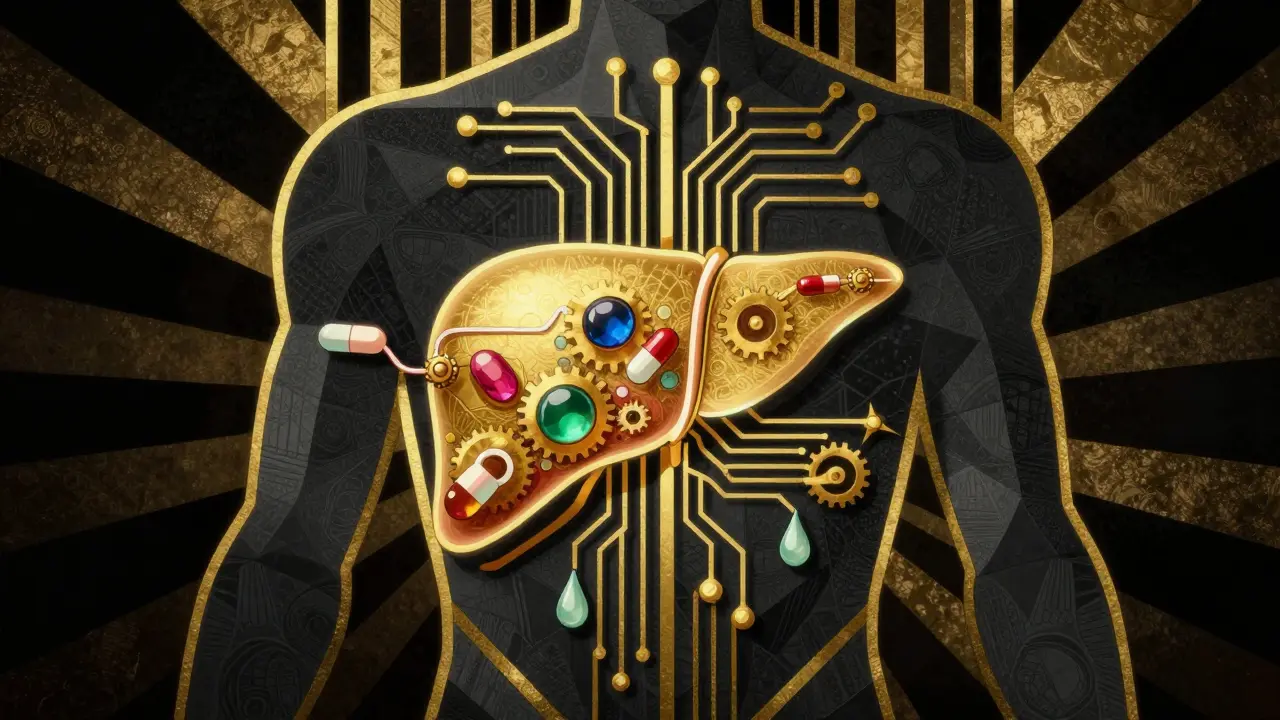
To understand why certain drugs interfere with Gender-Affirming Hormone Therapy, you first need to see where they go once you take them. Your body uses a system called metabolic pathways to break down almost every substance you ingest. Think of this as your liver's cleanup crew.
The most important cleanup crew for hormones involves a family of enzymes called CYP450. Specifically, the CYP3A4 enzyme handles a huge chunk of hormone metabolism. If another drug messes with this enzyme, your hormone levels could swing wildly.
Feminizing Hormone Therapy typically uses estradiol and anti-androgens to suppress masculine characteristics. Estrogen is processed heavily by the liver.In contrast, Testosterone masculinizing therapy relies on aromatase and 5-alpha reductase pathways. Because the chemical structures differ, their vulnerability to interaction varies. For instance, feminizing regimens involving oral estradiol are far more prone to interference than injectable forms, which bypass some initial liver processing.
This distinction matters because the route of administration dictates how much a second medication can alter the outcome. A patch delivers hormones directly through the skin, reducing reliance on those liver enzymes compared to a pill. However, even patches are not immune to systemic enzyme induction.
The High-Stakes Zone: HIV Medications and HRT
If you live with HIV, keeping your viral load suppressed is non-negotiable. This creates a situation where Antiretroviral Therapy (ART) and HRT overlap. You might wonder if your HIV meds will stop your transition progress or if your hormones will make the HIV meds less effective.
Recent systematic reviews have clarified this relationship significantly. Research published in the British Journal of Clinical Pharmacology in 2024 analyzed over 1,800 transgender patients taking both treatments. They found that while many combinations are safe, specific enzyme-inducing ART drugs can be problematic.
| Drug Class | Specific Example | Effect on HRT | Clinical Action |
|---|---|---|---|
| NRTI (Integrase Inhibitors) | Dolutegravir | May increase estradiol by 25-35% | No dose adjustment needed; monitor symptoms |
| NNRTI (Enzyme Inducers) | Efavirenz | Can decrease hormones by 30-50% | Check levels; consider boosting dose |
| Bocilester-Based Boosters | Cobicistat | Increases estradiol by up to 60% | Risk of clotting; requires close monitoring |
| GnRH Agonists | Leuprolide | No significant interaction | Safe to combine |
Looking at the table above, you can see that integrase inhibitors like dolutegravir are generally the safest bet for those on feminizing therapy. They don't trigger the liver enzymes aggressively. On the other hand, older NNRTI options like efavirenz act as "inducers." An inducer tells your liver to clean up the estrogen faster, potentially rendering your HRT ineffective within weeks.
The inverse risk exists with boosters. Protease inhibitor regimens often include cobicistat. This is a potent inhibitor of the CYP3A4 pathway. If you take this with oral estradiol, your blood levels of estrogen can skyrocket by 60%. That level of exposure puts you at increased risk for thrombosis (blood clots). The takeaway here isn't to avoid HIV treatment, but to choose a regimen that balances viral suppression with hormonal stability.
Mental Health Medications and Hormonal Balance
Psychiatric conditions are highly prevalent in transgender populations, and it is common to be on antidepressants while starting HRT. Most people want to know if their anxiety or depression meds will interfere with their physical transition.
For Selective Serotonin Reuptake Inhibitors (SSRIs), the news is mostly positive. Drugs like fluoxetine or sertraline metabolize differently than hormones and usually don't share the same hepatic pathway bottlenecks. However, there are nuances. Fluoxetine has been shown to inhibit CYP2D6. Since estradiol metabolism partially relies on this pathway, taking high doses of fluoxetine can theoretically raise estrogen levels slightly.
The bigger red flag appears with mood stabilizers used for bipolar disorder or epilepsy. Medications like carbamazepine are heavy-duty enzyme inducers. They rev up the liver machinery to the point where it burns through testosterone or estradiol much faster than normal. This doesn't mean you can't be treated for mood disorders, but if you switch from a stable SSRI to a carbamazepine-based treatment, your hormone dosage may need adjustment.
Data suggests that about 0.14% of patients experienced reduced efficacy in their psychiatric meds after starting testosterone therapy. The hormone itself can impact neurotransmitter sensitivity. This is why regular mental health check-ins during HRT initiation are standard care-your therapist and prescriber need to talk.
PrEP: The Safe Bet for Prevention
Pre-exposure prophylaxis (PrEP) has become a vital tool for HIV prevention, especially among gay, bisexual, and transgender men who have sex with men. A landmark study from the Conference on Retroviruses and Opportunistic Infections (CROI) in 2022 looked specifically at whether PrEP interacts with GAHT.
They studied 172 participants taking tenofovir disoproxil fumarate/emtricitabine (Truvada or Descovy) alongside various forms of hormone therapy. The results were reassuring: there were no clinically meaningful bidirectional effects. Serum hormone levels shifted by less than 5%, which is well within the natural daily fluctuation of hormones.
This effectively means that if you are on PrEP, you generally do not need to change your hormone prescription, nor does your hormone therapy compromise the protection offered by PrEP. Tenofovir levels in dried blood spots remained protective, staying above the 700 fmol/punch threshold required for efficacy.
Management Protocols and Monitoring
Knowing the risks is one thing; managing them is another. If you are prescribed a medication known to interact with CYP3A4, simply stopping your HRT is rarely necessary. Instead, therapeutic drug monitoring takes over.
Clinicians should measure serum hormone levels before you start the interacting drug and again 2 to 4 weeks after. For feminizing therapy using cyprotestrone acetate or spironolactone, potassium levels should also be checked frequently to guard against electrolyte imbalances.
The World Professional Association for Transgender Health (WPATH) Standards of Care version 8 explicitly recommends individualized monitoring when combining GAHT with CYP3A4-modulating medications. Don't assume silence equals safety. Just because you feel fine doesn't mean your thyroid or liver enzymes aren't under stress.
If you are managing multiple prescriptions, create a shared medication list that includes dosages, times of day, and formulation types (gel, patch, injection). Show this list to every specialist you see. Gaps in communication between your endocrinologist and primary care physician are where errors happen.

Summary of Practical Steps
Navigating these complex intersections requires vigilance, but it is entirely possible. Here is a checklist to keep on hand:
- Avoid self-adjustment: Do not change your hormone dose without blood work confirmation.
- Verify ART status: If you take HIV meds, ask your provider if your specific regimen affects CYP3A4.
- Monitor mood changes: Report shifts in mood stability immediately after starting new hormones.
- Schedule labs: Prioritize lipid panels, liver function tests, and hormone level draws during medication transitions.
- Keep records: Track all symptom changes in a journal to help your doctor distinguish between side effects and underlying conditions.
Frequently Asked Questions
Will PrEP affect my hormone levels?
No. Studies involving over 170 transgender participants showed that taking tenofovir/emtricitabine for PrEP had no clinically significant effect on estradiol or testosterone levels, nor did HRT impact PrEP efficacy.
Can I take antidepressants while on HRT?
Yes, most commonly. SSRIs like sertraline or fluoxetine generally do not require dose adjustments. However, mood stabilizers like carbamazepine may reduce hormone efficacy and should be monitored closely.
Which HIV medications are risky with estrogen?
Non-Nucleoside Reverse Transcriptase Inhibitors (NNRTIs) like efavirenz can lower estrogen levels. Conversely, protease inhibitor boosters (like cobicistat) can raise estrogen to dangerous levels. Integrase inhibitors are typically safe.
Does testosterone affect mental health meds?
Testosterone can alter the efficacy of psychiatric medications in roughly 0.14% of patients. You may need a dosage tweak in your psychiatric meds when starting masculinizing therapy, so report any mood shifts to your provider.
Are injections safer than pills regarding interactions?
Generally, yes. Oral medications pass through the liver first (first-pass metabolism), making them more susceptible to enzyme interactions. Injectables and gels bypass this initial phase, though systemic interactions can still occur.
Monique Ball
March 27, 2026 AT 05:58It is so important to know about these liver enzymes because they do such heavy lifting for us all 😊.
Your body chemistry is really complex and amazing sometimes! 🌈
We have to protect our own health while we transition into our true selves.
Many people forget that the pill is different from the patch regarding absorption 🚫.
Oral stuff goes through the gut first so that changes everything! 💊
You really need to track your blood work closely if you take HIV meds too 💉.
I always tell friends to write down every single thing they take 📝.
Doctors appreciate having a clear list so they don't mix things up 😇.
Communication is key when managing multiple prescriptions daily 🗣️.
You cannot assume that safety is guaranteed just because you feel fine inside 🛑.
There is a risk of clots if levels get too high unexpectedly 😱.
Please read the table carefully before you decide on next steps 📋.
Monitoring potassium levels is another huge thing that gets overlooked often 🧪.
It is better to be safe than sorry when balancing these systems together ❤️.
Taking care of yourself means checking labs regularly without fail! 🏥.
walker texaxsranger
March 28, 2026 AT 15:53Big pharma wants everyone dependent on their cocktail of suppressants and CYP inhibitors hide the real toxicity data from patients
They push integrase inhibitors as safe but who checks the downstream endocrine disruption properly
Enzyme induction isn't just theory it's biological warfare against natural hormone production cycles
Most guidelines ignore the mitochondrial stress caused by simultaneous ART and GAHT regimens
You are essentially trusting a system designed for profit margins over actual physiological homeostasis
Eva Maes
March 30, 2026 AT 04:05Your paranoia is unhelpful and distracts from the genuine metabolic risks discussed in the text
Efavirenz does induce clearance rates significantly regardless of what you think pharmaceutical companies want
Ignoring established pharmacokinetics does nobody any favors except fear mongering online
Stick to the science and maybe read the WPATH standards instead of guessing
Clinical evidence trumps conspiracy theories every single time
Poppy Jackson
March 31, 2026 AT 04:47Monitoring serum levels prevents catastrophic clotting events
Richard Kubíček
March 31, 2026 AT 15:55We must acknowledge the human element in medical compliance strategies
Knowledge empowers individuals to advocate for themselves effectively
Transparency between providers fosters better long term health outcomes
Community wisdom supplements clinical guidance meaningfully
Trust is built through consistent and verified information sharing
Shawn Sauve
April 2, 2026 AT 09:49Safety protocols are essential for maintaining stability during transitions (:)
Everyone deserves access to accurate medication guidance resources
Respecting boundaries helps prevent dangerous prescription overlaps
Stay vigilant and informed while pursuing your health goals (:)
Tommy Nguyen
April 4, 2026 AT 08:48Priorities matter deeply in healthcare decisions
Keeping calm helps process complex medical data
Kameron Hacker
April 5, 2026 AT 07:21Medical negligence creates avoidable suffering across vulnerable demographics
The systemic oversight in prescribing practices remains dangerously negligent
Patients bear the burden of vigilance within flawed frameworks
Institutional responsibility requires rigorous auditing of interaction profiles
We demand accountability for preventable adverse events
Jordan Marx
April 5, 2026 AT 08:10Cytochrome pathways dictate therapeutic efficacy throughout the regimen
Correct regarding polypharmacy management protocols involving major metabolizers
Therapeutic drug monitoring remains the current gold standard of care
Endocrinologists require precise pharmacological data for dosing adjustments
Maintaining steady state concentrations prevents breakthrough symptoms