Grapefruit and Grapefruit Juice: Which Medications Are Affected and Why
 Mar, 18 2026
Grapefruit Medication Interaction Checker
Check if your medication interacts with grapefruit juice. Based on the article, grapefruit contains furanocoumarins that inhibit the CYP3A4 enzyme, which can lead to dangerously high medication levels in your bloodstream.
One small glass of grapefruit juice can turn a safe medication into a dangerous one. It’s not a myth. It’s not rare. It’s happening right now to thousands of people who have no idea their morning routine could be putting them at risk. If you’re taking any kind of prescription drug - especially if you’re over 45 - this isn’t something you can afford to ignore.
What’s in grapefruit that makes it so dangerous?
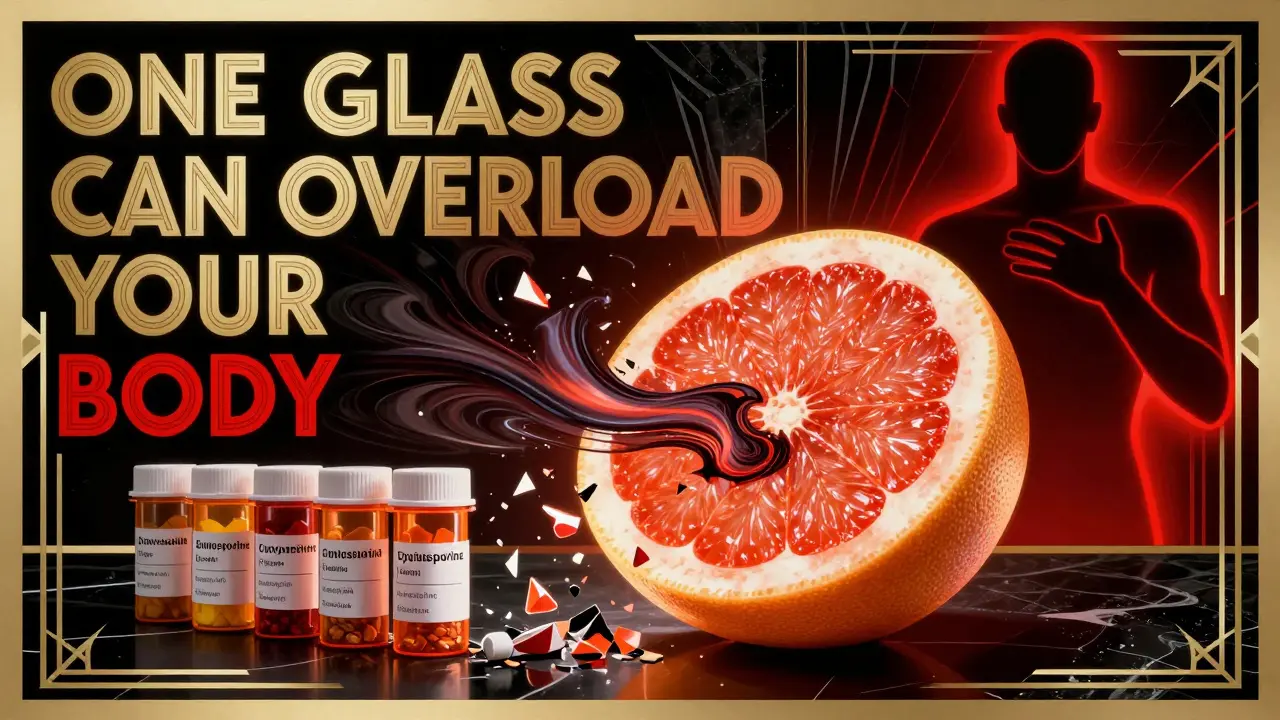
Grapefruit doesn’t interact with medications because it’s acidic or sugary. The problem lies in a group of natural chemicals called furanocoumarins, including bergamottin and 6',7'-dihydroxybergamottin. These compounds are found in the pulp and juice of grapefruit, and they do something shocking: they permanently disable an enzyme in your gut called CYP3A4.
This enzyme is your body’s first line of defense against many drugs. Normally, when you swallow a pill, CYP3A4 breaks down a portion of it before it even enters your bloodstream. That’s a good thing - it keeps drug levels from getting too high. But when grapefruit juice shuts down CYP3A4, up to 90% of the drug can slip through untouched. The result? Blood levels of the medication can spike by 30% to over 1,000%. That’s not a little extra. That’s a toxic overload.
And here’s the worst part: the effect lasts for days. One glass of juice can knock out your CYP3A4 enzymes for 24 to 72 hours. That means even if you take your pill at night and drink grapefruit juice in the morning, you’re still at risk. There’s no safe time gap. The only way to avoid it is to stop eating or drinking grapefruit entirely while you’re on the medication.
Which medications are affected?
Over 85 medications are known to interact with grapefruit. The most dangerous ones fall into a few key categories.
Statins - drugs used to lower cholesterol - are among the most common offenders. Simvastatin (Zocor) is the worst. Just 200 milliliters (about 6.7 ounces) of grapefruit juice taken daily for three days can triple your blood levels of simvastatin. That raises your risk of rhabdomyolysis - a condition where muscle tissue breaks down and floods your kidneys with toxic proteins. Lovastatin (Mevacor) and atorvastatin (Lipitor) also show dangerous increases. But not all statins are risky. Pravastatin (Pravachol) and rosuvastatin (Crestor) are processed differently and don’t interact with grapefruit. If you’re on a statin and love grapefruit, ask your doctor if you can switch.
Calcium channel blockers - used for high blood pressure and heart conditions - are another major concern. Felodipine (Plendil) can cause a 355% increase in blood levels. Nifedipine (Procardia) jumps by 274%. Amlodipine (Norvasc) increases by 150%. These spikes can lead to dangerously low blood pressure, dizziness, fainting, or even heart failure.
Immunosuppressants are perhaps the most terrifying. People who’ve had organ transplants take these drugs to prevent rejection. But grapefruit turns them into poison. Cyclosporine (Sandimmune, Neoral) levels rise by 50-60%. Tacrolimus (Prograf, Envarsus XR) can jump 300-500%. Sirolimus (Rapamune) increases by over 1,100%. These drugs already carry risks of kidney damage and infection. Grapefruit can push them into life-threatening territory.
Other high-risk categories include certain anti-anxiety drugs like buspirone, some anti-arrhythmics like amiodarone, and even some pain medications like fentanyl and oxycodone.
Why don’t all citrus fruits do this?
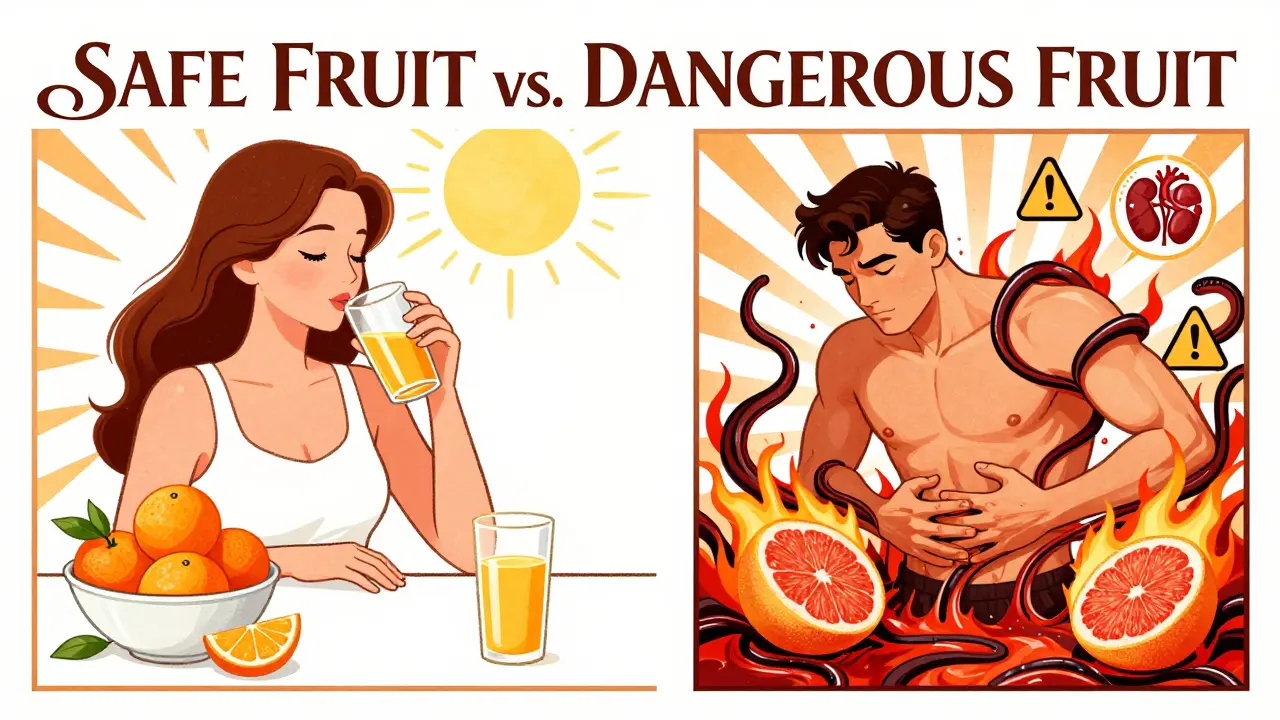
Not every orange or lemon is dangerous. Seville oranges - the kind used in marmalade - contain the same furanocoumarins as grapefruit and should be avoided. Pomelos are close relatives of grapefruit and carry the same risk. Even limes (especially Persian limes) have been shown to have some interaction potential.
But sweet oranges - the kind you eat for breakfast - are safe. So are tangerines, clementines, and lemons (unless they’re the bitter, unprocessed kind). The key is the type of citrus. If it’s not grapefruit or its close cousins, you’re likely fine.
One surprising exception: pomegranate. A single case report in 2010 suggested it might also interfere with CYP3A4. While the evidence isn’t strong yet, it’s worth being cautious if you’re on a high-risk medication.
Who’s most at risk?
You don’t have to be elderly to be affected - but if you are, your risk is much higher. The CDC reports that 52.3% of Americans aged 65 and older take five or more prescription drugs daily. That means they’re far more likely to be on one of these dangerous combinations.
And it’s not just about quantity. Older adults metabolize drugs more slowly. Their liver and kidney function declines. Their gut enzymes are already more vulnerable. Combine that with regular grapefruit consumption - which 42.7% of seniors do weekly, according to NHANES data - and you’ve got a perfect storm.
Even younger people aren’t safe. If you’re taking statins for high cholesterol, blood pressure meds, or an immunosuppressant after a transplant, you’re in the danger zone. The interaction doesn’t care how old you are. It only cares whether you’re taking a drug that CYP3A4 breaks down - and whether you’ve had grapefruit.
What should you do?
Step one: Check your meds. If you’re on any of the drugs listed above - especially simvastatin, felodipine, cyclosporine, or tacrolimus - stop eating or drinking grapefruit immediately.
Step two: Ask your doctor or pharmacist three questions:
- Does my specific drug interact with grapefruit?
- How much grapefruit, if any, can I safely consume?
- What other fruits or juices might affect my medication?
Pharmacists are trained to catch this. A 2022 survey found that 78.4% of community pharmacists routinely screen for grapefruit interactions during medication reviews. Don’t be shy. Bring your pill bottle. Show them your juice carton. They’ve seen this before.
Step three: Consider alternatives. For many drugs, there’s a safer version. Instead of simvastatin, switch to pravastatin or rosuvastatin. Instead of amlodipine, try diltiazem. Instead of cyclosporine, ask about newer immunosuppressants with lower interaction risks. Your doctor can help you find an option that works without the danger.

What about grapefruit supplements or flavored products?
Yes, they count too. Grapefruit-flavored sodas, candies, teas, and even some dietary supplements contain concentrated grapefruit extract. These can be just as dangerous - sometimes worse - because the furanocoumarin content isn’t labeled. If it says "grapefruit flavor" or "grapefruit extract," assume it’s risky unless your doctor says otherwise.
Even grapefruit essential oils applied topically may be absorbed through the skin and affect drug metabolism. While the evidence is limited, it’s not worth the gamble.
What if you accidentally had grapefruit?
If you took your medication and then drank grapefruit juice - or vice versa - don’t panic. But don’t ignore it either. Watch for symptoms like muscle pain, weakness, dark urine, dizziness, fainting, or irregular heartbeat. Call your doctor or go to urgent care if you feel unwell. You don’t need to stop your medication unless told to. But you should avoid grapefruit from now on.
Electronic health records now flag these interactions. Most U.S. hospitals use systems that alert doctors if a patient on a risky drug is prescribed grapefruit juice. That’s good - but it’s not foolproof. You’re still your own best protector.
Is there any hope for the future?
Scientists are working on solutions. A 2021 study showed that people with a specific genetic variation (CYP3A4*22) experience 40% more severe interactions. That means some people are naturally more vulnerable. Researchers are also testing genetically modified grapefruit with 85-90% less furanocoumarin. Early results are promising. But until those varieties are widely available and proven safe, the advice remains simple: avoid grapefruit entirely if you’re on a high-risk medication.
The American Heart Association and the FDA both agree: until we have clearer safety data, complete avoidance is the only safe choice. No amount of grapefruit is worth the risk if you’re on one of these drugs.
Can I drink grapefruit juice if I take my medication at night and juice in the morning?
No. The enzyme inhibition from grapefruit lasts 24 to 72 hours. Even if you separate the two by hours or days, the enzyme is still disabled. The only safe option is to stop consuming grapefruit completely while taking the medication.
Are all grapefruit products equally dangerous?
Yes. Fresh fruit, juice, extracts, and even flavored products (like sodas or teas) contain the same active compounds. Supplements and essential oils may also pose risks. Avoid all forms unless your doctor confirms it’s safe.
Why don’t drug labels always warn about grapefruit?
The FDA requires warnings on 17 specific medications, but many others have interactions listed only in the prescribing information, not on the outer label. Some drugs have partial warnings, and others rely on pharmacist alerts. Always ask your doctor or pharmacist - don’t assume the label tells you everything.
Can I switch to orange juice instead?
Yes. Sweet oranges, tangerines, and clementines do not contain furanocoumarins and are safe. Avoid Seville oranges, pomelos, and limes. Stick to regular orange juice if you’re unsure.
What if I’ve been drinking grapefruit juice for years and taking my meds - am I in danger?
You may have already experienced side effects without realizing it. Muscle pain, fatigue, dizziness, or unexplained kidney issues could be linked. Stop grapefruit now and talk to your doctor about checking your drug levels or switching medications. It’s better to be safe than sorry.
If you’re on medication and you love grapefruit, you don’t have to give up your health. But you do have to give up the juice. It’s a small change - but it could save your life.
David Robinson
March 19, 2026 AT 18:32gemeika hernandez
March 21, 2026 AT 00:20Nicole Blain
March 22, 2026 AT 22:22Kathy Underhill
March 23, 2026 AT 19:02Srividhya Srinivasan
March 25, 2026 AT 05:42Prathamesh Ghodke
March 25, 2026 AT 07:32Stephen Habegger
March 25, 2026 AT 21:04Justin Archuletta
March 26, 2026 AT 07:36Sanjana Rajan
March 27, 2026 AT 21:46Ryan Voeltner
March 28, 2026 AT 20:37