Hashimoto’s Thyroiditis: Autoimmune Hypothyroidism and TSH Monitoring
 Aug, 15 2026
Imagine waking up every day feeling like you’re wading through mud. Your hair falls out in clumps, your clothes feel tighter despite eating less, and no amount of coffee seems to spark any energy. If this sounds familiar, you might not just be tired-you could be dealing with Hashimoto’s thyroiditis, a condition where your immune system mistakenly attacks your own thyroid gland. It is the leading cause of hypothyroidism (underactive thyroid) in developed countries, affecting roughly 4% of adults in the United States. But here is the good news: once diagnosed, it is highly manageable. The key lies in understanding how to monitor your thyroid-stimulating hormone (TSH) levels accurately and sticking to a consistent treatment plan.
Understanding Hashimoto’s: More Than Just Fatigue
First described by Japanese physician Hakaru Hashimoto in 1912, this autoimmune disorder isn’t just about low energy. It is a systemic issue where your body produces antibodies that target the thyroid tissue, causing chronic inflammation. Over time, this damage reduces the gland’s ability to produce essential hormones like thyroxine (T4) and triiodothyronine (T3). These hormones act as your body’s metabolic engine, regulating everything from heart rate to digestion to mood.
When the engine slows down, symptoms pile up. Beyond fatigue and weight gain, many people experience brain fog, depression, dry skin, constipation, and sensitivity to cold. Women are five to ten times more likely to develop Hashimoto’s than men, often noticing symptoms during major hormonal shifts like pregnancy, postpartum, or perimenopause. Recognizing these signs early can prevent years of unnecessary struggle.
The Diagnostic Process: What Tests Do You Need?
Diagnosing Hashimoto’s isn’t done with a single test. It requires a combination of blood work to confirm both the autoimmune nature of the disease and the resulting thyroid function status. According to guidelines from the American Academy of Family Physicians (AAFP), the process typically starts with measuring your TSH level.
- TSH (Thyroid-Stimulating Hormone): This is the primary screening tool. A high TSH indicates your pituitary gland is screaming at your thyroid to work harder because it’s not producing enough hormone. Levels above 4.5 mIU/L usually trigger further testing.
- Free T4 (FT4): This measures the actual amount of active thyroid hormone in your blood. In primary hypothyroidism, TSH will be high while Free T4 is low or low-normal.
- TPO Antibodies (TPOAb): This confirms the autoimmune component. Elevated levels (typically >35 IU/mL) indicate your immune system is attacking thyroid peroxidase, an enzyme critical for hormone production. Positive antibodies confirm Hashimoto’s, even if your TSH is still normal (a stage known as subclinical hypothyroidism).
If your TSH is elevated but your Free T4 is normal, you have subclinical hypothyroidism. If both TSH is high and Free T4 is low, you have overt hypothyroidism. Both stages may require treatment, depending on your symptoms and antibody status.
TSH Monitoring: The Gold Standard for Treatment
Once diagnosed, the standard treatment is levothyroxine (LT4), a synthetic form of T4. The goal of therapy is not just to lower TSH, but to achieve clinical euthyroidism-meaning you feel well and your lab values are stable. The American Thyroid Association (ATA) identifies TSH as the most reliable marker for monitoring treatment efficacy in primary hypothyroidism.
| Age Group | Target TSH Range (mIU/L) | Notes |
|---|---|---|
| Under 65 years | 0.4 - 4.0 | Standard range for most adults; some experts prefer 0.4-2.5 for symptomatic patients. |
| 65 years and older | 4.0 - 6.0 | Slightly higher targets reduce risk of atrial fibrillation and bone loss. |
| Pregnant (1st Trimester) | 0.1 - 2.5 | Critical for fetal brain development; requires frequent monitoring. |
It is crucial to understand that “normal” ranges vary by laboratory and age. For most adults under 65, a TSH between 0.4 and 4.0 mIU/L is considered optimal. However, if you remain symptomatic despite being in this range, your doctor might aim for the lower end (0.4-2.5 mIU/L). Conversely, older adults may tolerate slightly higher TSH levels to avoid side effects like heart palpitations or osteoporosis.

Timing Is Everything: When to Test and Adjust
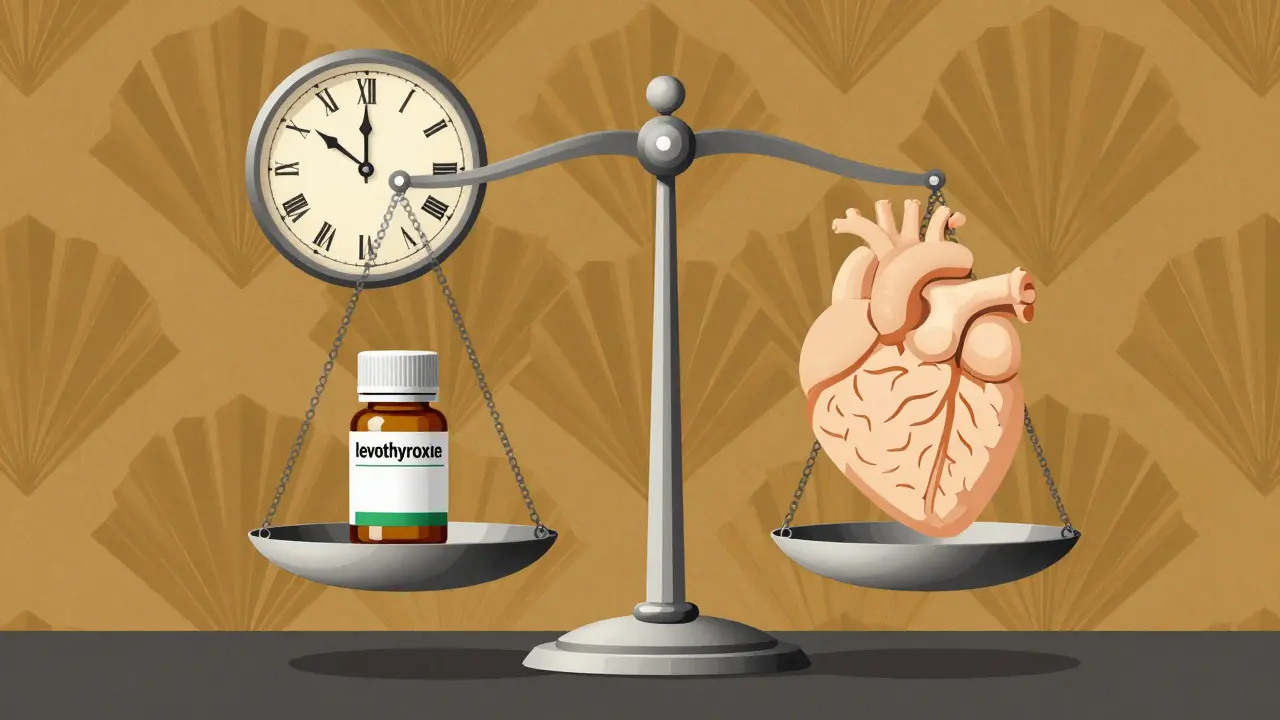
One of the biggest frustrations for patients is the waiting game. Why do doctors wait so long to adjust medication? The answer lies in biology. Levothyroxine has a half-life of about seven days. It takes approximately six to eight weeks for your body to reach a new steady state after starting therapy or changing a dose. Testing sooner than that provides inaccurate data, potentially leading to over-correction.
- Initial Diagnosis: Start levothyroxine. Typical starting doses range from 25-50 mcg/day for those with subclinical disease or preserved thyroid function, up to 1.4-1.8 mcg/kg for severe cases.
- First Follow-Up: Retest TSH 6-8 weeks after starting or adjusting the dose. This window allows the hypothalamus-pituitary-thyroid axis to stabilize.
- Dose Adjustment: If TSH is off-target, adjust the dose by small increments (12.5-25 mcg) and repeat testing in another 6-8 weeks.
- Maintenance: Once stable, annual TSH monitoring is sufficient for most patients. Some clinicians recommend every 6 months initially to ensure stability.
Be patient during this titration phase. It is common to need multiple adjustments before finding your “sweet spot.” Symptoms like anxiety, insomnia, and rapid heartbeat suggest your dose is too high (suppressed TSH), while persistent fatigue and weight gain suggest it is too low (elevated TSH).
Factors That Mess With Your TSH Levels
Your TSH isn’t static. Several lifestyle and medical factors can interfere with absorption or alter your requirements, necessitating more frequent monitoring.
- Medications and Supplements: Iron supplements, calcium, proton pump inhibitors (like omeprazole), and estrogen-containing birth control can block levothyroxine absorption. Take your thyroid medication on an empty stomach, ideally 30-60 minutes before breakfast, and separate it from other meds by at least four hours.
- Weight Changes: Significant weight loss or gain (>10% of body weight) changes your dosage needs. Heavier bodies generally require more hormone.
- Pregnancy: Pregnancy increases demand for thyroid hormone by 20-50%. Women with positive TPO antibodies should monitor TSH every four weeks until 20 weeks gestation to prevent miscarriage or preterm birth.
- Lab Variability: Different labs use different assays. Try to stick with one laboratory for consistency. While TSH has a diurnal rhythm (highest in the evening), current guidelines state that morning testing is not strictly required for accuracy, though consistency in timing helps.
Special Considerations: Pregnancy and Genetic Factors
Pregnancy adds a layer of complexity. The fetus relies entirely on maternal thyroid hormone for brain development in the first trimester. Untreated hypothyroidism increases the risk of cognitive impairment in the child and complications like preeclampsia for the mother. The ATA recommends trimester-specific TSH targets: 0.1-2.5 mIU/L in the first trimester, 0.2-3.0 in the second, and 0.3-3.0 in the third. If you are planning a pregnancy, discuss your TSH goals with your endocrinologist beforehand.
Emerging research also highlights genetic variations, such as DIO2 gene polymorphisms, which affect how efficiently cells convert T4 to T3. A 2023 study in JAMA Internal Medicine found that patients with these variants might feel better with TSH targets in the lower half of the normal range (0.4-2.0 mIU/L). While routine genetic testing isn’t standard yet, discussing persistent symptoms with your doctor could reveal personalized targeting strategies.
Living Well with Hashimoto’s
Managing Hashimoto’s is a marathon, not a sprint. Consistency is key. Take your medication at the same time daily, avoid skipping doses, and keep a symptom diary to share with your provider. Remember that antibody levels (TPOAb) do not need to be monitored regularly-they don’t guide treatment. Focus on your TSH and how you feel. With proper monitoring and adjustment, most people live full, energetic lives without limitations.
How often should I get my TSH checked?
Initially, check TSH 6-8 weeks after starting levothyroxine or changing your dose. Once your levels are stable and you feel well, annual testing is usually sufficient. Pregnant women or those with significant health changes may need testing every 4-6 weeks.
Can I take my thyroid medication with food?
Ideally, no. Levothyroxine is best absorbed on an empty stomach. Take it with water at least 30-60 minutes before eating or drinking anything else (except water). Coffee, calcium, and iron can significantly reduce absorption.
Why do I still feel tired if my TSH is normal?
Some patients remain symptomatic despite normal TSH levels. This could indicate a need for a lower TSH target (e.g., 0.4-2.5 mIU/L), poor conversion of T4 to T3 due to genetic factors, or unrelated health issues like sleep apnea or vitamin deficiencies. Discuss these concerns with your doctor rather than self-adjusting.
Do I need to monitor my antibody levels regularly?
No. The American Thyroid Association states that repeating thyroid antibody tests is not needed for treatment management. Antibody levels fluctuate and do not correlate directly with symptoms or treatment success. Focus on TSH and clinical symptoms instead.
Is there a diet that cures Hashimoto’s?
No diet cures Hashimoto’s, as it is an autoimmune condition requiring hormone replacement. However, maintaining a balanced diet rich in selenium and zinc may support thyroid function. Avoid extreme diets that cause rapid weight loss, as this can destabilize your TSH levels. Always consult a healthcare provider before making drastic dietary changes.