Herbal Supplements That Interact with Common Prescription Drugs
 Dec, 21 2025
Many people think herbal supplements are safe because they’re natural. But that’s a dangerous assumption. If you’re taking prescription drugs - even something as common as blood thinners, antidepressants, or high blood pressure medicine - mixing them with herbal supplements can lead to serious, even life-threatening problems. You might not feel anything right away, but the damage can build up quietly until it’s too late.
Why Herbal Supplements Aren’t Always Safe
Herbal supplements don’t go through the same testing as prescription drugs. They’re not required to prove they’re safe before hitting store shelves. Under the Dietary Supplement Health and Education Act (DSHEA) of 1994, manufacturers can sell these products without showing they won’t interfere with medications. The FDA only steps in after someone gets hurt. That means you’re essentially part of an uncontrolled experiment. Around half of all U.S. adults take at least one supplement. For people over 65, that number jumps to nearly 70%. Many of these people are also on multiple prescription drugs. Yet only about one in four of them tell their doctor what they’re taking. That gap in communication is where the real danger lies.St. John’s Wort: The Silent Drug Neutralizer
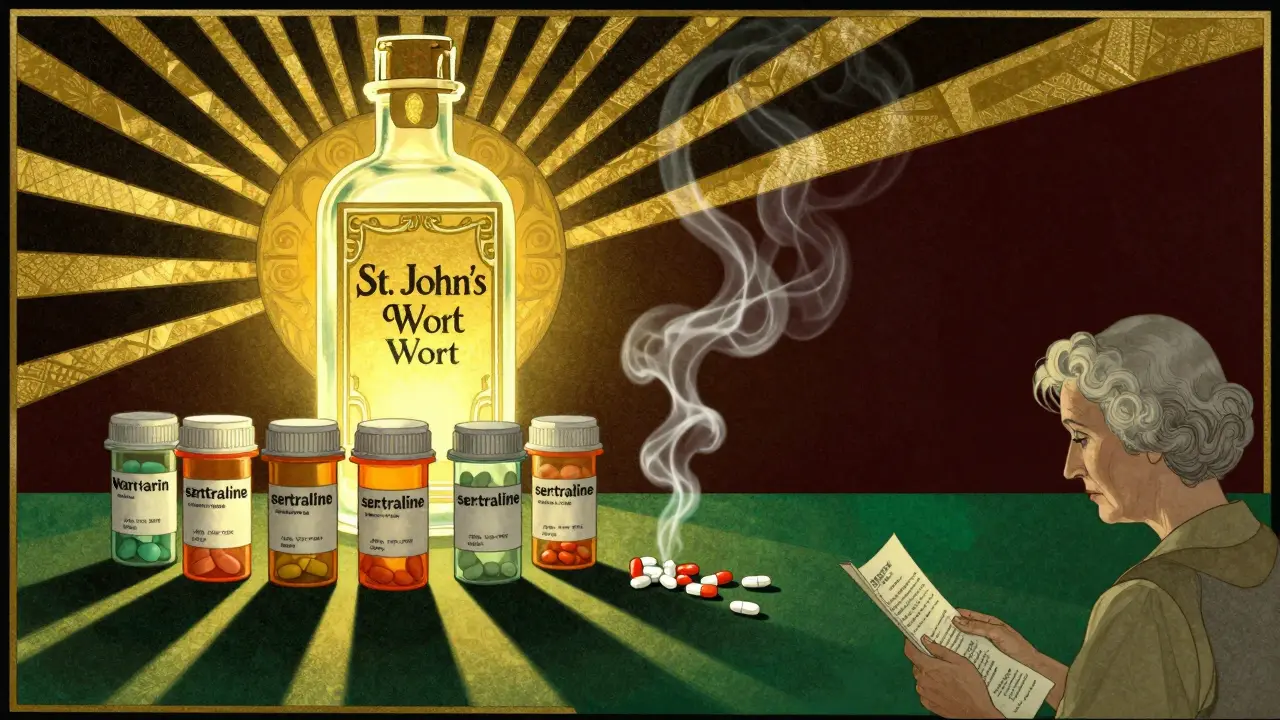
St. John’s Wort is one of the most dangerous herbs when mixed with prescription meds. It doesn’t just cause mild side effects - it can completely shut down how your body processes key medications. Studies show it reduces the concentration of cyclosporine (used after organ transplants) by 50-60%. That means your body might reject the new organ without warning. It also messes with antidepressants. If you’re on an SSRI like sertraline or fluoxetine, adding St. John’s Wort can trigger serotonin syndrome - a condition that causes fever, muscle stiffness, confusion, and even death. The American Academy of Family Physicians warns: avoid it entirely if you’re taking any antidepressant. Even birth control pills aren’t safe. Research shows St. John’s Wort can lower hormone levels by 15-30%, leading to unintended pregnancies. On online forums, 78% of users who combined it with oral contraceptives reported contraceptive failure. That’s not a coincidence - it’s a predictable drug interaction.Ginkgo Biloba: The Hidden Bleeding Risk
Ginkgo biloba is marketed for memory and brain health. It’s in 73% of supplements labeled as “cognitive support.” But if you’re on warfarin, apixaban, or even aspirin, ginkgo can turn a minor cut into a life-threatening bleed. Between 2010 and 2020, the Mayo Clinic documented 23 major bleeding cases linked to ginkgo and blood thinners - three of them fatal. In one documented case, a 72-year-old man on apixaban took a ginkgo supplement for “mental clarity.” His INR (a blood clotting measure) spiked to 8.2 - over double the safe range. He ended up in the ER with severe rectal bleeding. The risk isn’t theoretical. A 2019 meta-analysis found ginkgo increases bleeding risk by 300% when combined with anticoagulants. There’s no safe dose if you’re on these drugs. Stop it. Period.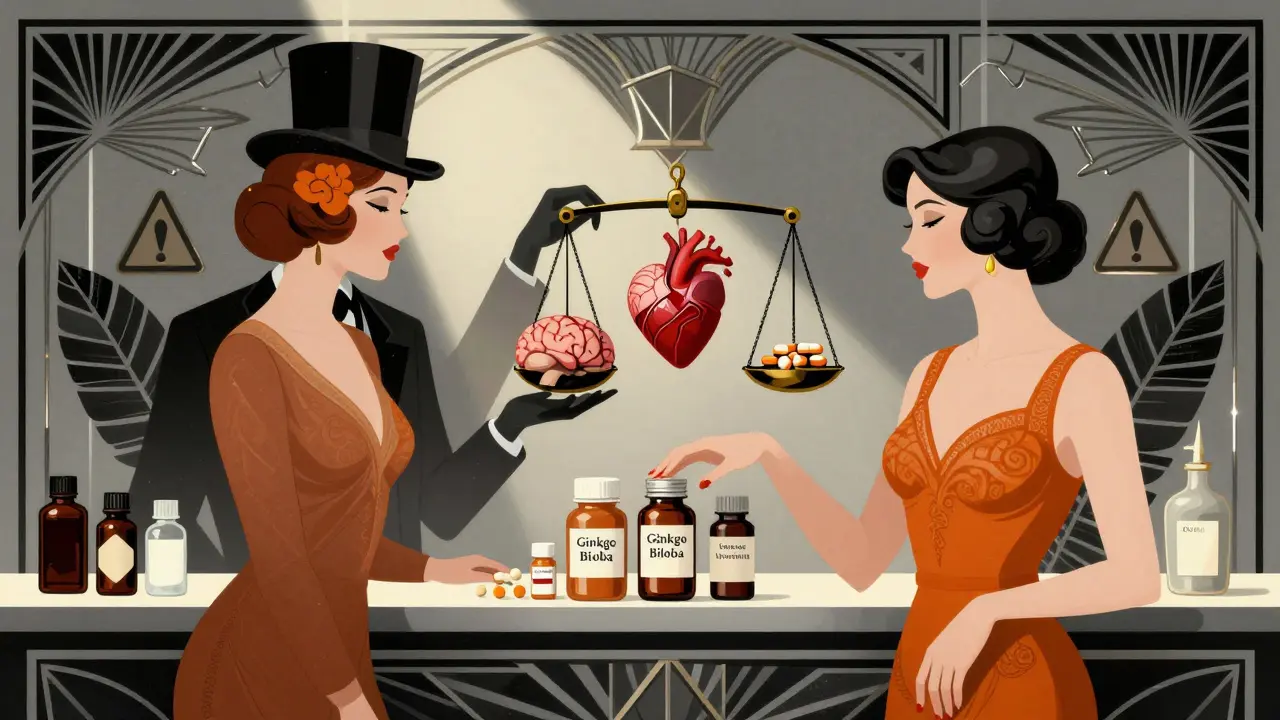
Garlic, Ginseng, and Goldenseal: The Hidden Enzyme Killers
Your liver uses enzymes - especially CYP3A4 - to break down most prescription drugs. Some herbs shut these enzymes down or speed them up, changing how fast or slow your meds work. Goldenseal is a major offender. A 2018 study showed it cuts the clearance of midazolam (a sedative) by 40%. That means if you’re on any drug processed by CYP3A4 - like statins, certain antibiotics, or even some cancer drugs - goldenseal can cause toxic buildup in your body. Garlic supplements are worse than you think. A clinical trial found they reduce the blood levels of saquinavir (an HIV drug) by 51%. That’s enough to let the virus rebound. For someone managing HIV, that could mean treatment failure. Ginseng is tricky. Some studies suggest it might lower blood pressure too much when taken with calcium channel blockers. Others show it can reduce warfarin’s effect by 25-30%, making your blood clot more easily. The uncertainty is the problem. You can’t gamble with your health when the science is mixed.Coenzyme Q10 and Cranberry: The Gray Zone
Not all interactions are black and white. Coenzyme Q10 (CoQ10) is often taken with statins to reduce muscle pain. But research from Mayo Clinic shows it can weaken warfarin’s effect by 25-30%. If you’re on warfarin and start CoQ10, your INR could drop - increasing your risk of stroke. Weekly INR checks are recommended if you take both. Cranberry juice is another gray area. Some studies say it has no effect on warfarin. Others show it can raise INR by up to 1.8 units. A 2020 meta-analysis of 12 studies found inconsistent results across different populations. Why? Because cranberry products vary wildly in concentration. One brand’s juice might be safe. Another’s could be dangerous. If you’re on warfarin, avoid cranberry juice entirely. Don’t risk it.What You Need to Do Right Now
You don’t need to stop all supplements. But you do need to take control. Here’s what to do:- Make a list of every supplement you take - including vitamins, teas, and powders. Don’t leave anything out.
- Bring it to every doctor’s visit. Don’t wait to be asked. Say: “I’m taking these - are they safe with my meds?”
- Check your labels. Look for ginkgo, St. John’s Wort, garlic, goldenseal, and ginseng. They’re hiding in “immune boosters,” “mood support,” and “brain health” blends.
- Know the warning signs: Unusual bruising, bleeding gums, dizziness, confusion, rapid heartbeat, or sudden muscle stiffness could mean a dangerous interaction is happening.
- Use trusted tools. The National Center for Complementary and Integrative Health (NCCIH) has a free, updated herb-drug interaction checker. Use it before you buy anything.

Tony Du bled
December 22, 2025 AT 21:36Man, I took that St. John’s Wort for a month last year thinking it’d fix my low mood. Turned out my anxiety got worse and my Lexapro stopped working. Didn’t connect the dots till my doctor asked if I was on anything else. Learned the hard way.
Don’t assume ‘natural’ means harmless. It just means nobody’s checked if it’ll kill you yet.
Sai Keerthan Reddy Proddatoori
December 23, 2025 AT 10:34Government lets this happen because Big Pharma owns everything. They don’t want you curing depression with a leaf when they can sell you a pill for $500 a month. They’re scared of herbs because herbs don’t need patents.
Johnnie R. Bailey
December 25, 2025 AT 07:31There’s a beautiful irony here: we’ve spent centuries using plants as medicine, then turned them into unregulated junk food for the soul. The problem isn’t herbs - it’s the lack of respect for their potency.
Our ancestors didn’t toss ginkgo into a ‘brain booster’ blend with 17 other unknowns. They knew the dose, the timing, the contraindications. We outsourced wisdom to Amazon reviews.
Nader Bsyouni
December 26, 2025 AT 23:45So what you’re saying is we’re all lab rats and the FDA is just a PR department for pharmaceutical lobbyists
And you think telling people to ‘ask their doctor’ is a solution
When most doctors don’t even know what St John’s Wort does
And they’re paid to sell pills not to read studies
So why are we pretending this system works
Herman Rousseau
December 28, 2025 AT 18:59Big thank you for this. I’ve been taking CoQ10 with my statin for years thinking it was ‘safe’ - now I’m getting my INR checked weekly. Also dropped the cranberry juice cold turkey. I used to drink it like water.
Knowledge is power. You’re not being paranoid - you’re being smart. 💪
Vikrant Sura
December 30, 2025 AT 13:31So you’re telling me to stop taking supplements because some people get hurt?
That’s not a reason. That’s just statistics.
Jeremy Hendriks
December 31, 2025 AT 15:22Who decided ‘natural’ means safe anyway
That’s like saying ‘wild’ means edible
Ever heard of poison ivy
Or hemlock
Or the fact that arsenic is a mineral
Nothing is safe until you understand its chemistry
And most people don’t even know what a cytochrome is
They just see ‘organic’ on the bottle and feel better
Ajay Brahmandam
January 2, 2026 AT 05:08I’m from India and we’ve used turmeric and ashwagandha for centuries - but we also knew when not to use them. My grandma would say, ‘If you’re on blood pressure medicine, skip the ginseng.’
It’s not about banning herbs. It’s about respecting them. And talking to your doctor like they’re a person, not a vending machine.
jenny guachamboza
January 3, 2026 AT 11:17OMG I JUST REALIZED I’VE BEEN TAKING GINKGO WITH WARFARIN FOR 3 YEARS 😱 I THOUGHT IT WAS FOR ‘MEMORY’ 😭 I’M GONNA DIE IN MY SLEEP ARE YOU KIDDING ME THIS IS A TRAP I KNEW THE GOVT WAS LYING ABOUT SUPPLEMENTS 🤯💀 #herbalconspiracy #fdaisacult