How Generic Drugs Are Made: The Full Manufacturing Process Explained
 Dec, 15 2025
When you pick up a prescription for metformin or lisinopril, there’s a 90% chance it’s a generic drug. These pills look different from the brand-name versions, cost a fraction of the price, and work just as well. But how exactly are they made? It’s not just copying a pill. It’s a highly regulated, science-driven process that takes years, millions of dollars, and precision engineering to get right.
Starting with the Original: Reverse Engineering the Brand-Name Drug
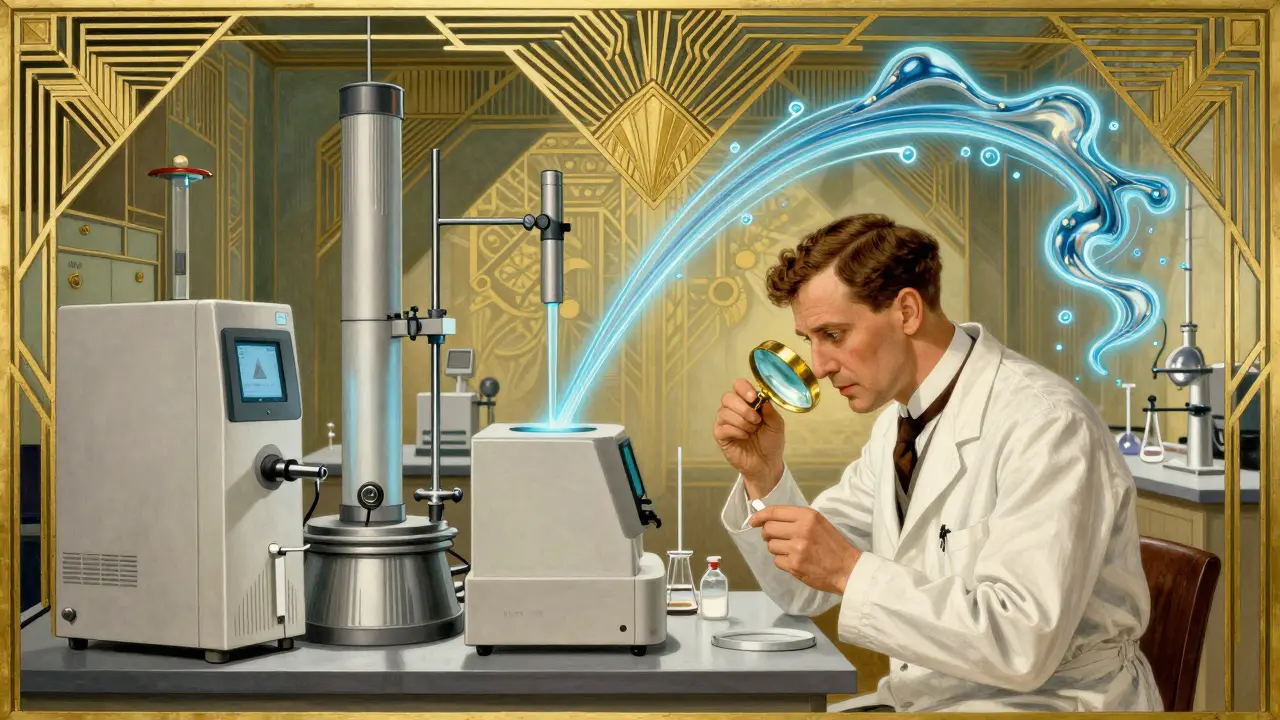
The journey of a generic drug begins with the brand-name product - called the Reference Listed Drug (RLD). Manufacturers don’t just buy a bottle and try to replicate it. They take it apart, chemically analyze every component, and map out exactly what’s inside. This includes the active pharmaceutical ingredient (API), the filler materials (excipients), the coating, and even the shape and size of the tablet. This isn’t guesswork. It’s analytical chemistry at its most detailed. Labs use tools like HPLC (High-Performance Liquid Chromatography) and mass spectrometry to identify the exact chemical structure of the API. They test how the drug dissolves in water, how fast it’s absorbed into the bloodstream, and how stable it is under heat and humidity. All of this data becomes the blueprint for the generic version. The goal? Match the original’s performance - not its appearance. U.S. trademark law actually requires generics to look different. So while the pill might be blue instead of green, or oval instead of round, its behavior inside your body must be identical.Designing the Formula: Quality by Design (QbD)
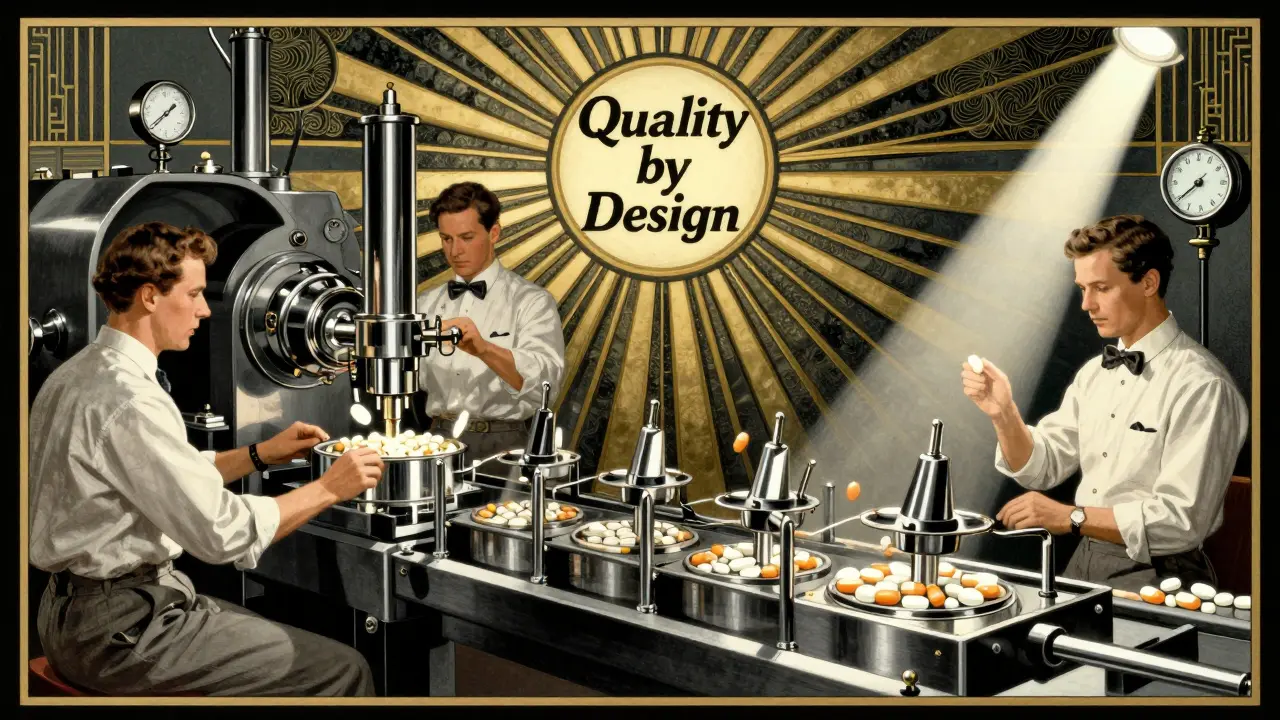
Once the RLD is understood, manufacturers start building the formula using a method called Quality by Design (QbD). This isn’t just mixing chemicals. It’s a scientific framework developed by the International Council for Harmonisation (ICH) to ensure every batch of the drug performs the same way, every time. QbD focuses on three key things:- Critical Quality Attributes (CQAs): These are the measurable properties that affect safety and effectiveness - like how fast the drug dissolves or how strong the tablet is.
- Critical Material Attributes (CMAs): The characteristics of the raw materials. For example, the particle size of lactose (a common filler) can change how the tablet holds together.
- Critical Process Parameters (CPPs): The exact settings used during manufacturing - temperature, mixing speed, pressure during compression.
The Seven Steps of Manufacturing
Once the formula is locked in, production begins. Here’s how it actually happens in a real facility:- Formulation: The API and excipients are weighed with extreme precision - often down to milligrams. Even a 1% error can make the drug ineffective or unsafe.
- Mixing and Granulation: Powders are blended in large tumblers. For some drugs, they’re turned into granules using a wet or dry process. This ensures the active ingredient spreads evenly so every tablet has the same dose.
- Drying: If moisture was added during granulation, the granules are dried in ovens. Too much moisture? The tablet might crumble. Too little? It might not bind properly.
- Compression and Encapsulation: Dry granules are pressed into tablets using high-speed machines that can make 1,000 pills per minute. Capsules are filled with powder using automated systems. Tablet weight must stay within ±5% for pills under 130mg, or ±7.5% for larger ones - strict FDA rules.
- Coating: Tablets get a thin outer layer. This can mask bitterness, protect the drug from stomach acid, or control how fast it releases in the body. Some coatings are designed to dissolve only in the intestine, not the stomach.
- Quality Control: Every batch is tested. They check for identity (is it the right drug?), strength (does it have the right amount?), purity (are there harmful impurities?), and dissolution (does it break down at the right speed?). Dissolution testing is critical - if the drug doesn’t dissolve properly, your body won’t absorb it.
- Packaging and Labeling: Bottles or blister packs are filled, sealed, and labeled with lot numbers, expiration dates, and usage instructions. Every label must match the FDA-approved version - no shortcuts.
Regulatory Hurdles: The ANDA Pathway
You can’t just make a generic and sell it. You need approval from the FDA. That means submitting an Abbreviated New Drug Application (ANDA). The word “abbreviated” is key - you don’t repeat the 10-year clinical trials the brand-name company did. Instead, you prove your version works the same way. The ANDA process has five steps:- Submission: You file thousands of pages of data - analytical methods, manufacturing details, stability studies, and bioequivalence results.
- Bioequivalence Testing: 24 to 36 healthy volunteers take both your generic and the brand-name drug. Blood samples are taken over hours to measure how much of the drug enters the bloodstream and how fast. Your drug’s absorption must fall within 80%-125% of the brand’s. This is called the 90% confidence interval. If it’s outside that range, the FDA rejects it.
- Facility Inspection: The FDA sends inspectors to your plant. They check cleanroom conditions, equipment calibration, training records, and whether your processes are actually followed. In 2023, 37% of warning letters cited poor investigation of failed tests.
- Labeling Approval: Your package insert must match the brand’s in all key details - dosing, warnings, side effects.
- Post-Approval Monitoring: Even after approval, the FDA keeps watching. You must report any adverse events, and you’re subject to unannounced inspections.
Why Some Generics Are Harder to Make Than Others
Not all generics are created equal. Simple pills like atorvastatin or amoxicillin are easy to copy. But complex drugs? That’s where things get messy. Topical creams, inhalers, eye drops, and extended-release tablets are much harder. Why? Because their effect depends on how they’re delivered - not just what’s inside. For example, a generic version of a steroid cream needs to match the brand’s ability to penetrate skin. That’s not something you can test with a lab machine. You need human trials. One manufacturer spent 7 years and $47 million to copy a single topical corticosteroid. The FDA now has a special program for these complex generics - 127 product-specific guidances have been published since 2022. Even then, issues pop up. In 2021, Teva recalled 14 generic products due to contamination and poor quality control at their Puerto Rico plant. That’s why pharmacists are trained to watch for changes - if a patient says their new generic makes them feel different, it’s worth investigating.
Quality Control: The Real Secret to Safe Generics
The biggest myth about generics is that they’re cheaper because they’re lower quality. That’s not true. The FDA holds them to the same standards as brand-name drugs. Every facility must follow Current Good Manufacturing Practices (CGMP). That means:- Temperature-controlled rooms (20-25°C)
- Humidity kept between 45%-65%
- Cleanrooms with particle filters (ISO Class 5-8)
- Staff trained in GMP for at least 160 hours before working on the floor
The Bigger Picture: Why Generics Matter
In the U.S., 9 out of 10 prescriptions are filled with generics. Over the past decade, they’ve saved the healthcare system more than $1.7 trillion. Globally, they make up 56% of all prescriptions but only 19% of spending. That’s not just economics - it’s public health. Without generics, millions of people couldn’t afford their medications. A diabetic on insulin, a heart patient on blood pressure pills, a cancer survivor on maintenance therapy - they all rely on these affordable options. The future is getting even more interesting. The FDA is now approving continuous manufacturing lines - where drugs are made in one unbroken flow instead of in batches. This reduces errors and cuts production time from weeks to hours. Pfizer’s AI-powered inspection system cut visual defects by 40% in trials. But challenges remain. Over 78% of the active ingredients in U.S. generics come from just two countries: China and India. Supply chain disruptions can cause shortages. And as more complex drugs go generic, the pressure to cut costs may tempt some manufacturers to cut corners. That’s why oversight matters. The FDA’s GDUFA IV rules, updated in 2022, now require 90% of applications to be reviewed within 10 months - faster than ever. And inspections are more frequent.What You Should Know as a Patient
You don’t need to be scared of generics. They’re safe, effective, and rigorously tested. The FDA says they’re just as good as brand-name drugs. But if you notice a change - like new side effects or a different way the pill works - talk to your pharmacist. Sometimes, switching between generic manufacturers can cause small differences in how the drug is absorbed, especially for drugs with a narrow therapeutic index (like warfarin or levothyroxine). Always check the label. If your prescription changes, ask if it’s the same generic you took before. Pharmacists can tell you if it’s from a different maker. And remember: the reason generics exist isn’t to save money for corporations. It’s to save lives for people.Are generic drugs as effective as brand-name drugs?
Yes. The FDA requires generic drugs to have the same active ingredient, strength, dosage form, and route of administration as the brand-name version. They must also prove bioequivalence - meaning they’re absorbed into the bloodstream at the same rate and to the same extent. Studies show no meaningful difference in clinical outcomes for the vast majority of patients.
Why do generic pills look different from brand-name ones?
U.S. trademark law prohibits generic drugs from looking identical to brand-name versions. So manufacturers change the color, shape, or markings to avoid confusion. But the active ingredient and how it works in your body are exactly the same. The differences are only cosmetic.
Can generic drugs cause different side effects?
The active ingredient causes side effects - not the fillers. But some people may react to different inactive ingredients (like dyes or lactose). If you notice new side effects after switching to a generic, talk to your doctor or pharmacist. It’s rare, but possible. For drugs with a narrow therapeutic index (like thyroid meds or blood thinners), even small differences in absorption can matter.
How does the FDA ensure generic drug quality?
The FDA inspects every manufacturing facility before approving a generic drug and conducts unannounced inspections afterward. They require strict adherence to Current Good Manufacturing Practices (CGMP), including controlled environments, detailed documentation, and rigorous testing of every batch. If a company fails an inspection, their product can be blocked from sale.
Why are some generic drugs more expensive than others?
Price depends on competition. If 10 companies make the same generic, prices drop fast - sometimes by 80% in two years. But if only one or two companies can make a complex generic (like an inhaler or extended-release tablet), there’s less competition, so prices stay higher. Manufacturing complexity, raw material costs, and regulatory hurdles also affect pricing.
Where are generic drugs made?
Most active ingredients come from China and India, but final manufacturing happens in facilities worldwide - including the U.S., Europe, and other countries. The FDA inspects all facilities that supply drugs to the U.S., regardless of location. Over 78% of active pharmaceutical ingredients (APIs) in U.S. generics come from just these two countries, according to FDA data from 2023.
Marie Mee
December 15, 2025 AT 23:32they put microchips in the fillers so they can track who takes what
my cousin's neighbor's dog got sick after a generic and now the gov owns his thoughts
Meghan O'Shaughnessy
December 17, 2025 AT 08:08same results, saved him $300 a month
weird how something so simple feels like magic
Kaylee Esdale
December 19, 2025 AT 03:00no fanfare no trophies just quiet science keeping millions alive
we call it generic but it's anything but
Radhika M
December 20, 2025 AT 11:13we test every batch like our lives depend on it
because they do
Philippa Skiadopoulou
December 21, 2025 AT 04:37the bioequivalence thresholds are scientifically sound
quality control is non-negotiable
Pawan Chaudhary
December 22, 2025 AT 14:51people think it's just pills but it's hope in a bottle
keep doing the good work
Jonathan Morris
December 23, 2025 AT 17:50the data is cherry-picked
the dissolution curves are smoothed
the 80-125% bioequivalence window is a loophole designed for failure
they're not testing for long-term effects just immediate absorption
you think you're getting the same drug
you're getting what they say you're getting
CAROL MUTISO
December 25, 2025 AT 12:00and we call this innovation
the real innovation is pretending we need to spend $10 million to copy something
the system is a beautiful farce
we're all just playing along so we can feel safe taking blue pills instead of green ones
Erik J
December 25, 2025 AT 23:02why do some patients report differences in side effects or efficacy?
is it psychological or is there something in the excipients we're not measuring properly?