How the FDA Ensures Generic Drug Quality During Manufacturing
 Dec, 1 2025
Every year, Americans fill over 6.8 billion prescriptions. Nearly 90% of them are for generic drugs. That’s not because people are trying to save money-though they do-but because they trust these drugs to work just like the brand-name versions. The question isn’t whether generics work. It’s how the FDA makes sure they’re safe, effective, and consistent-every single batch, from a factory in India to a pharmacy in Ohio.
It’s Not About the Final Pill-It’s About the Process
For decades, drug makers tested pills one by one at the end of production. If a sample passed, the whole batch shipped. But in the 1960s, the FDA tested 4,600 drugs and found that 8% were either too weak or too strong. That’s not a small error. That’s dangerous. So they changed everything. Instead of checking the finished product, they started controlling how it was made. That’s the core of Current Good Manufacturing Practices, or cGMP. It’s not a suggestion. It’s the law. And it’s the only reason you can trust that the generic ibuprofen you buy today is the same as last month’s.The Five Pillars of FDA Quality Control
The FDA doesn’t guess. It doesn’t hope. It enforces five non-negotiable systems that every generic drug maker must follow-no exceptions.- Control of Materials: Every ingredient, from the active drug to the coating, must be tracked from the moment it arrives. Suppliers are vetted. Labels are checked. Storage conditions are logged. If a batch of raw material doesn’t meet purity specs, it’s rejected-even if it came from a trusted vendor.
- Production and Process Controls: Every step in making the drug has a written procedure. Temperature, mixing time, pressure-everything is monitored in real time. If a machine runs 2 degrees too hot for 10 minutes, the batch is quarantined. Not because it’s definitely bad, but because the process wasn’t followed. That’s how you catch problems before they become recalls.
- Quality Control and Laboratory Testing: Every batch is tested for identity, strength, purity, and dissolution. The FDA doesn’t just accept lab reports. They require the data to be ALCOA+: attributable, legible, contemporaneously recorded, original or true copy, accurate, complete, consistent, enduring, and available. That means no backdated logs, no erased files, no missing signatures. If a technician types a result into a system after the fact, it’s a violation.
- Packaging, Labeling, and Distribution: A mislabeled bottle of blood pressure medicine can kill. That’s why labels are checked against approved templates. Packaging is tested for light, moisture, and tampering. Even the shipping trucks must maintain specific temperatures. A generic drug that arrives warm in Florida is not the same as one that arrived cool in Minnesota.
- Documentation and Record Keeping: Every action, every test, every deviation, every training session-everything is documented. And it’s kept for years. Why? Because if something goes wrong, the FDA can trace it back to the exact shift, the exact machine, the exact person who signed off. Accountability isn’t optional.
Inspections Are Unannounced and Unforgiving
The FDA doesn’t call ahead. They show up when you least expect it. In 2023, inspectors conducted around 1,200 inspections across 1,700 global facilities that make drugs for the U.S. market. About 17% of foreign sites had serious cGMP violations. Domestic sites? 8%. That gap isn’t because U.S. factories are better-it’s because inspections are more frequent and more thorough. Inspectors don’t just look at paperwork. They walk the floor. They watch operators. They pull samples. They check if the equipment is cleaned properly between batches. They review computer logs for deleted files. They interview staff. And they stay as long as it takes. One inspection in 2022 lasted 19 days. The facility was shut down until the issues were fixed.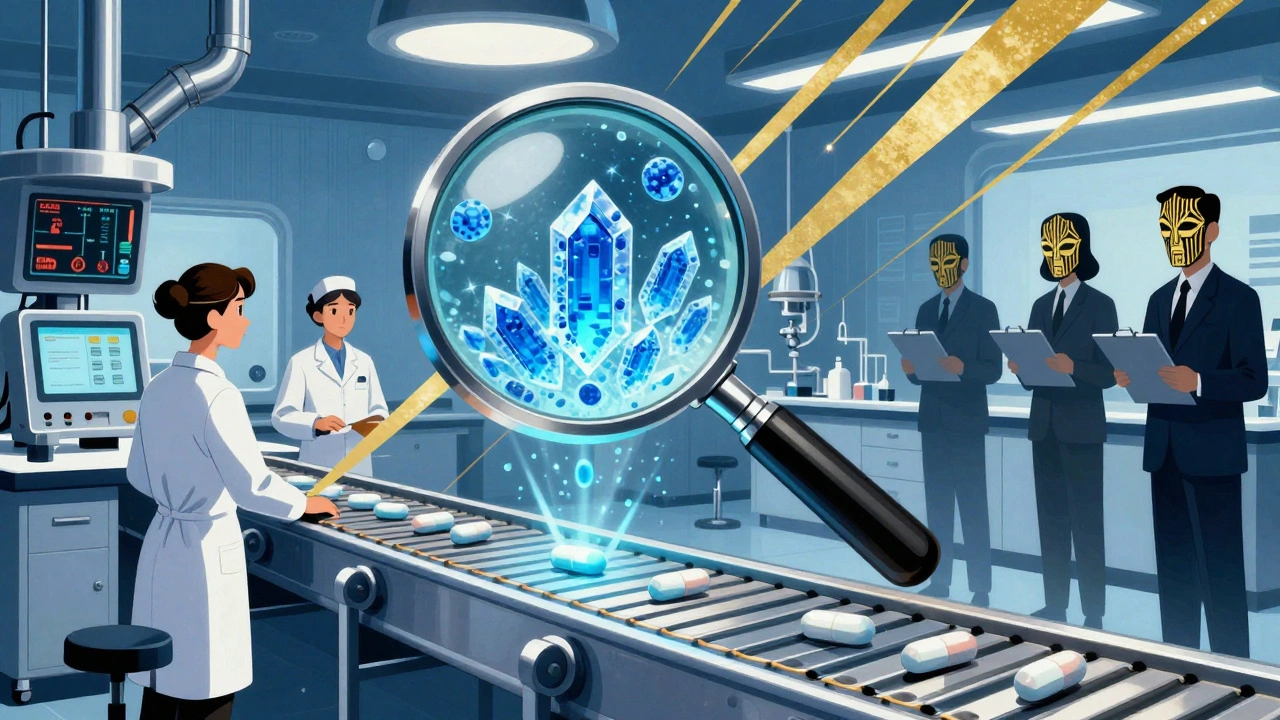
Three Batches, One Goal
When a company applies to make a generic drug, they don’t just submit one batch. They submit three. One for the standard strength. One for the lowest. One for the highest. All three must come from the same manufacturing process. Why? To prove the system works across the full range of doses. If the lowest dose is inconsistent, the whole application gets rejected. It’s not about cost. It’s about reliability.How It Compares to the Rest of the World
The European Medicines Agency (EMA) has similar rules. But the FDA is stricter. More inspections. Tighter documentation. Higher expectations for data integrity. While some countries rely on paper records and scheduled visits, the FDA demands digital trails and surprise checks. That’s why generic drugs made under FDA standards are trusted worldwide-even in countries with their own regulators.
Costs and Challenges
Getting FDA approval isn’t cheap. A small manufacturer might spend $2 to $5 million just to set up a compliant facility before submitting their first application. Documentation alone can eat up 30-40% of the development timeline. And the learning curve? 18 to 24 months for new teams to get it right. In 2022, 42% of FDA Form 483 observations-those are the official notices of violations-were about data integrity. Someone typed in a number after the fact. A log was missing. A signature wasn’t there. These aren’t minor errors. They’re red flags that the whole system might be compromised.What’s Changing Now?
The FDA isn’t resting. In 2023, they launched the Drug Quality Reporting System (DQRS), which makes it easier for manufacturers to report problems in real time. They’re using remote inspections more often-35% of inspections in 2022 were partially done online. And they’re pushing for new tech: continuous manufacturing, where drugs are made in one long, unbroken process instead of in batches. Real-time testing is coming too. Instead of waiting days to test a batch, sensors will check quality as it’s made. The Generic Drug User Fee Amendments (GDUFA) III, which started in 2022, gave the FDA $650 million over five years to hire more inspectors and improve oversight. That’s not just money. It’s a signal: the FDA is doubling down on quality.Why It Matters to You
You don’t need to know how cGMP works to take your medicine. But you should know that the system keeping your pills safe is one of the most rigorous in the world. Generic drugs cost 80-85% less than brand names. Yet they work just as well-98-99% of the time. That’s not luck. That’s regulation. That’s inspection. That’s data. That’s thousands of hours of work by scientists, inspectors, and manufacturers who understand that a single bad batch can cost lives. The FDA doesn’t promise perfection. But it does promise process. And when it comes to your health, that’s the only thing that matters.Are generic drugs really as safe as brand-name drugs?
Yes. The FDA requires generic drugs to have the same active ingredient, strength, dosage form, and route of administration as the brand-name version. They must also be bioequivalent-meaning they’re absorbed into the body at the same rate and extent. Every generic drug goes through the same rigorous quality controls as brand-name drugs, including inspections, testing, and documentation standards. The only differences are in inactive ingredients like fillers or dyes, which don’t affect how the drug works.
How often does the FDA inspect generic drug factories?
The FDA inspects about 1,200 facilities worldwide each year that make generic drugs for the U.S. market. Domestic facilities are inspected every two years on average. Foreign facilities are inspected every three years-but inspections are often unannounced and can be more frequent if there are concerns. High-risk facilities, like those with past violations or complex manufacturing processes, may be inspected more often.
What happens if a generic drug factory fails an FDA inspection?
If a facility has serious violations, the FDA can issue a Form 483 listing the problems. If those aren’t fixed, the agency can issue a warning letter or even block the facility from shipping drugs to the U.S. In extreme cases, the FDA can refuse to approve new applications from that company or ban existing products. Some factories have been shut down for months or years until they meet standards. The FDA doesn’t allow unsafe or non-compliant drugs to enter the market.
Do generic drugs come from the same factories as brand-name drugs?
Yes, sometimes. Many large pharmaceutical companies make both brand-name and generic versions of the same drug in the same facility. The FDA holds them to the same quality standards regardless of whether the drug has a brand name or not. Even if the packaging looks different, the manufacturing process, testing, and documentation are identical. The FDA doesn’t care about the label-it cares about the process.
Why do some people say generic drugs don’t work as well?
Most of the time, this belief comes from rare cases where a patient reacts differently to inactive ingredients, like dyes or fillers. These don’t affect the drug’s effectiveness but can cause minor side effects in sensitive individuals. In very rare cases, a manufacturing error might slip through-but the FDA’s system is designed to catch these before they reach patients. Studies show that 98-99% of generic drugs perform the same as their brand-name counterparts. If a patient feels a difference, they should talk to their doctor-not assume the generic is inferior.
Is the FDA’s system perfect?
No system is perfect. The FDA faces challenges like staffing shortages, the complexity of global supply chains, and pressure to approve drugs faster. Some experts argue that the agency relies too much on manufacturer-reported data. But despite these issues, the FDA’s system has prevented countless drug shortages and recalls. It’s the most comprehensive, science-based, and transparent system in the world for ensuring generic drug quality.
vinoth kumar
December 3, 2025 AT 02:06Wow, this is actually eye-opening. In India, we make a ton of generics, but most folks don’t realize how tight the FDA’s grip is. I’ve seen factories here cut corners - not because they’re evil, but because costs are insane. The ALCOA+ thing? That’s next level. We need this kind of discipline back home.
Ignacio Pacheco
December 4, 2025 AT 13:58So let me get this straight - you’re telling me the FDA checks if someone *deleted* a log file? Like, they’re basically digital detectives now? Cool. I just hope they’re also checking if the guy who signed off was actually awake during the shift.
Makenzie Keely
December 6, 2025 AT 09:37This is incredible! I mean, seriously - three batches? ALCOA+? Unannounced inspections? This isn’t just regulation - it’s a masterpiece of public health engineering. Someone should turn this into a TED Talk. Or a Netflix doc. Or both. We need to celebrate this kind of rigor - not take it for granted.
Vincent Soldja
December 6, 2025 AT 23:23Expensive. Overkill. We could save billions if we trusted manufacturers more
Francine Phillips
December 8, 2025 AT 13:46My aunt took a generic blood pressure med and felt weird. So yeah, they don’t always work the same
bobby chandra
December 8, 2025 AT 22:46Let me paint you a picture: imagine a factory in Hyderabad, 3 a.m., sweat dripping off a technician’s brow as he stares at a spectrometer reading. The machine hums. The data scrolls. He doesn’t just hit ‘save’ - he *owns* that number. Because if he doesn’t, someone’s grandkid might end up in the ER. This isn’t bureaucracy - it’s heroism in lab coats. The FDA didn’t just set standards - they turned manufacturing into a moral contract.
And yes, it’s expensive. But how much is a life? How much is peace of mind when you pop that little white pill? You don’t need a PhD to get it - you just need to remember that your body doesn’t care about the brand on the bottle. It only cares if the chemistry is right.
And it is. Because someone, somewhere, refused to cut corners. Because they knew - this isn’t just medicine. It’s trust.
So next time you grab a $4 generic, don’t just take it. Thank the system. Thank the inspectors. Thank the guy who didn’t delete the log.
And then go buy your next bottle of ibuprofen without a second thought. Because that’s the whole point.
Myson Jones
December 10, 2025 AT 07:25Thanks for laying this out so clearly. I work with patients who are skeptical of generics - mostly because they’ve heard horror stories. This kind of breakdown helps me explain why their meds are safe, even if the bottle looks different. It’s not magic - it’s method. And that’s worth celebrating.
Kidar Saleh
December 12, 2025 AT 03:17Interesting how the U.S. system is the gold standard - yet so many assume ‘Made in India’ means ‘lower quality.’ The truth? The same factory that makes your brand-name statin might be making the generic next door. The label changes. The price drops. The science? Stays flawless. We need more global awareness - and less stigma.
Chloe Madison
December 13, 2025 AT 04:23So… the FDA is basically the ultimate parent. No shortcuts. No lies. No ‘oops, I forgot to sign.’ And they show up unannounced - like a surprise math test you didn’t study for. And if you fail? You’re grounded. No drugs. No sales. No exceptions. Honestly? I’m glad they’re this strict. I’d rather pay a little more and know my pills aren’t playing Russian roulette.