How to Access FDA-Required Medication Guides for Your Prescription Drugs
 Dec, 12 2025
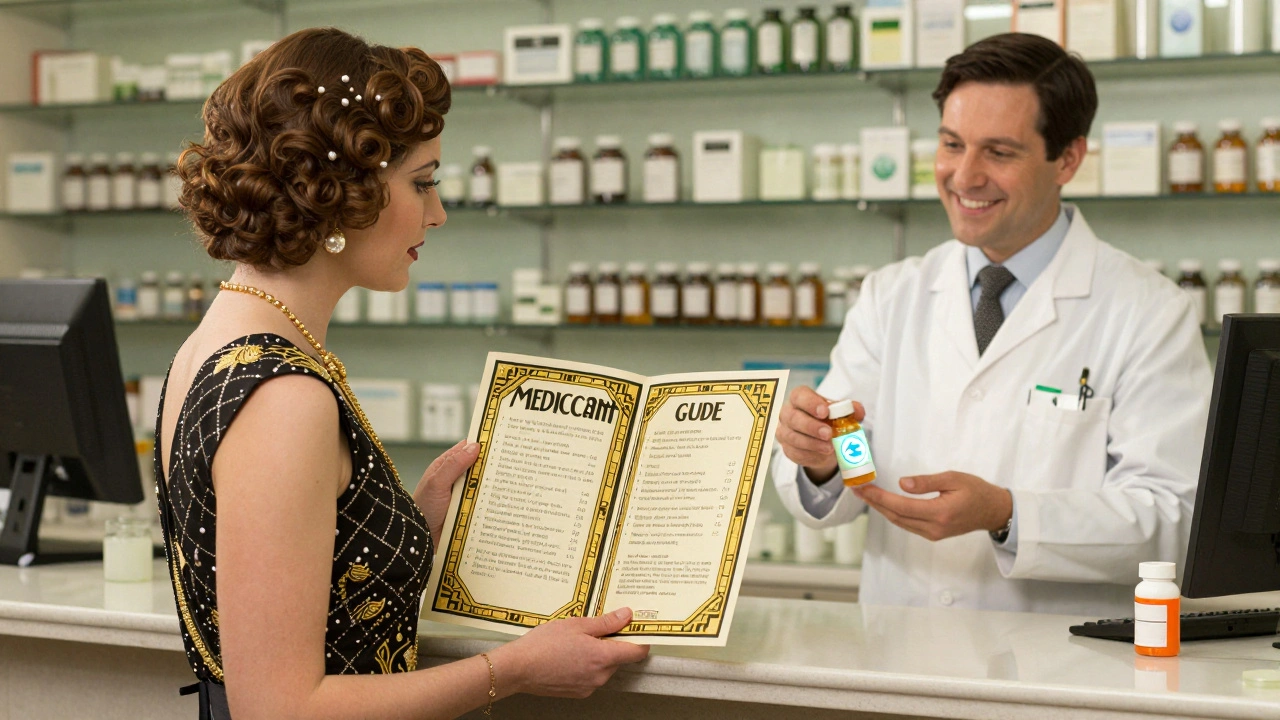
When you pick up a prescription at the pharmacy, you might notice a small printed sheet tucked into the bag. That’s a Medication Guide-an FDA-required document that explains serious risks and safety steps for certain drugs. These aren’t just extra paperwork. They’re designed to help you avoid dangerous side effects, understand when to call your doctor, and use your medicine correctly. But many people don’t know they exist, how to get them, or even that they have the right to ask for one.
What Are FDA Medication Guides?
Medication Guides are official patient information sheets approved by the U.S. Food and Drug Administration. They’re required for prescription drugs that carry serious safety risks-like life-threatening side effects, high potential for misuse, or risks that only patients can manage by following strict instructions. The FDA doesn’t require them for every drug. Only about 300 out of thousands of prescription medications need them, based on strict criteria: if the drug could cause serious harm if used incorrectly, if patient adherence is critical to its effectiveness, or if clear written instructions could prevent dangerous outcomes. These guides are written by drug manufacturers, but they must be reviewed and approved by the FDA before they’re distributed. The language must be simple, clear, and free of medical jargon. No fancy terms. No confusing charts. Just plain English that someone without a science background can understand. The FDA mandates this because studies show most patients don’t understand complex medical documents-and that’s dangerous when the stakes are high.When Are Medication Guides Required?
Pharmacists are required to give you a Medication Guide every time you fill a prescription for a drug that needs one-whether it’s your first time or your tenth refill. This applies in outpatient settings: community pharmacies, mail-order services, clinics, dialysis centers, or any place where you’re taking the medicine yourself without direct supervision from a nurse or doctor. There are exceptions. If you’re getting a drug in a hospital while admitted, you usually won’t get a printed guide because your care team is managing your treatment. But if you ask for one, they must give it to you. Also, some drugs require Medication Guides as part of a Risk Evaluation and Mitigation Strategy (REMS). These are stricter safety programs for drugs with the highest risks, like certain cancer treatments or blood thinners. In those cases, your doctor or pharmacist may need to review the guide with you before you can start the medication.How to Get a Medication Guide
The easiest way is to ask your pharmacist. When you hand over your prescription, say: “Do I need a Medication Guide for this?” Even if they don’t hand it to you automatically, they’re legally required to provide it if you ask. Don’t assume it’s not needed because it wasn’t offered. Many patients miss out simply because they didn’t know they could request it. You can also ask for it in electronic form. The FDA allows patients to choose between paper and digital copies. If you prefer to read it on your phone or tablet, just tell the pharmacist: “Can I get this as a PDF or email?” They must give you the option. Some pharmacies already offer this through their apps or patient portals. If they say they can’t, ask to speak to the pharmacist-in-charge-this is a federal requirement, not a store policy.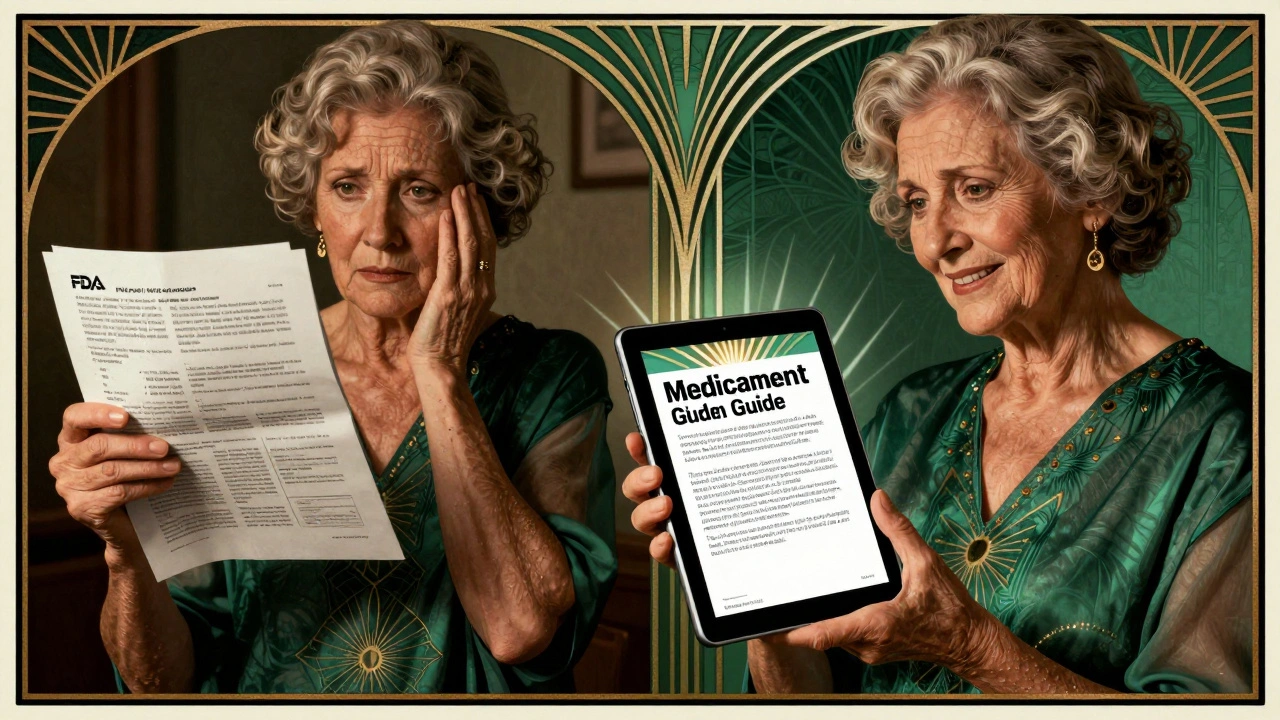
Where to Find Medication Guides Online
If you didn’t get one at the pharmacy, or if you lost it, you can find every approved Medication Guide on the FDA’s official website. Go to FDA’s Medication Guides page and search by drug name. The site lists all current guides in PDF format, updated as new ones are approved. This is especially helpful if you’re refilling a prescription and need to review safety info again. You can also check the drug manufacturer’s website. Most companies that make FDA-required medications link to the official guide on their product pages. Look for a section labeled “Patient Information,” “Safety,” or “Medication Guide.”What’s Inside a Medication Guide?
Every guide follows a basic structure so you know where to find critical info quickly:- Drug name-both brand and generic
- What the drug is used for-clear, simple purpose
- Important safety information-serious risks like allergic reactions, organ damage, or fatal side effects
- What to avoid-other drugs, alcohol, foods, or activities that could be dangerous
- Common side effects-what’s normal vs. what needs attention
- How to take it-dosage, timing, what to do if you miss a dose
- Storage instructions
- When to call your doctor-specific warning signs
Why the System Is Changing
The current Medication Guide system has major problems. A 2012 study found that most guides are too long, too dense, and written at a reading level far above what most adults can understand. Some are over 10 pages long. The FDA itself admitted they fall short of federal standards for patient education materials. That’s why the FDA is rolling out a new system called Patient Medication Information (PMI). By 2026, new drugs will need to come with a single-page, standardized guide-no more 12-page booklets. All PMIs will be stored in a free, public FDA database, searchable by drug name. This will make it easier to compare guides across drugs, update them faster, and ensure everyone gets the same clear, consistent info. The transition is happening in phases. Drugs approved after 2023 will follow the new rules immediately. Older drugs with existing guides have up to five years to switch over. But even before the change, you still have the right to get the current guide-and to ask for it in digital form.
What to Do If You’re Not Given a Guide
If you were prescribed a drug that requires a Medication Guide and you didn’t get one, here’s what to do:- Check the FDA’s website to confirm the drug requires one.
- Call your pharmacy and ask: “Is a Medication Guide required for [drug name]?”
- If they say no, ask them to check the FDA’s official list or contact the manufacturer.
- If they still refuse, ask to speak to the pharmacist-in-charge. Pharmacists are legally responsible for compliance.
- If the issue isn’t resolved, file a report with the FDA’s MedWatch program. You can do it online or by phone.
Who Should Always Ask for a Medication Guide?
Some patients should be especially proactive:- Those taking multiple medications-risk of dangerous interactions is higher
- Older adults-more likely to have reduced kidney or liver function
- Pregnant or breastfeeding people-many drugs carry unknown risks
- People with chronic conditions like diabetes, heart disease, or kidney failure
- Anyone who’s had a bad reaction to a drug before
Final Tips
- Save your Medication Guides in a folder or digital app. You’ll need them when you refill or see a new doctor. - Bring the guide to every appointment. It helps your provider understand what you’ve been told. - Don’t rely on Google searches. Only trust the official FDA-approved version. - If you can’t read the print, ask for a larger font version. Pharmacies can often print it in bigger type. - If you’re helping a family member, ask for a copy for yourself too. Caregivers need to know the risks too. The system isn’t perfect-but you have power in it. You don’t have to wait for someone to hand you a guide. You can ask for it. You can demand it. And you should.Are Medication Guides required for every prescription?
No. Only about 300 out of thousands of prescription drugs require a Medication Guide. The FDA mandates them only for drugs with serious safety risks-like those that can cause life-threatening side effects, require strict patient adherence to work, or where clear instructions could prevent harm. Your pharmacist can tell you if your drug is on the list.
Can I get a Medication Guide in digital form?
Yes. The FDA allows patients to choose between paper and electronic versions. You can ask your pharmacist to email you a PDF, send it through a patient portal, or provide a link to download it. Paper is the default, but you have the right to request digital. If they say they can’t, ask to speak to the pharmacist-in-charge-it’s a federal requirement.
What if I lost my Medication Guide?
You can download a new copy from the FDA’s official website at any time. Search for your drug name on the FDA’s Medication Guides page. You can also ask your pharmacy to print another copy for you. Many drug manufacturers also post the guide on their product websites.
Do I need a Medication Guide if I’m in the hospital?
Usually not. If you’re an inpatient and your medication is administered by nurses or doctors, you typically won’t receive a printed guide. But if you ask for one, the hospital must provide it. Also, if you’re being discharged with the same drug, you’ll get the guide before you leave.
Why are some Medication Guides so hard to read?
Many current guides are too long, use complex language, and don’t follow readability standards. A 2012 study found that most guides were written at a college reading level, while the average American reads at an 8th-grade level. The FDA is fixing this with a new system called Patient Medication Information (PMI), which will require all guides to be one page, standardized, and easier to understand.
Can I request a Medication Guide even if my doctor says I don’t need it?
Yes. Even if your doctor thinks you don’t need it, you have the legal right to request a Medication Guide. Pharmacists must provide it if you ask, regardless of what the prescriber says. The FDA says patients should always have access to this information, especially for high-risk drugs.
Lara Tobin
December 12, 2025 AT 12:42This made me cry. I lost my mom because no one told her about the guide for her blood thinner. She thought the dizziness was just aging. 😢 I wish I’d known then. Please, if you’re on meds, ask. It’s not extra-it’s life-saving.
Alvin Montanez
December 14, 2025 AT 07:47Let me tell you something, folks. The FDA’s Medication Guides aren’t just helpful-they’re a moral imperative. I’ve seen people die because they didn’t know that mixing their anticoagulant with ibuprofen could trigger internal bleeding. And yet, pharmacists still hand out pills like candy without a second thought. You think it’s inconvenient to ask for a guide? Try being the family member who has to clean up the bloodstains on the bathroom floor because someone didn’t read the one-page warning that was legally required to be handed to them. This isn’t about being ‘annoying.’ It’s about being alive. The system’s broken? Fix it by demanding your rights. Not tomorrow. Not next week. Today. Right now. Go to your pharmacy. Ask. If they hesitate, name the regulation. Cite 21 CFR 208. If they still refuse, file a MedWatch report. Don’t wait for someone else to do it. Your life isn’t a suggestion. It’s a requirement.
Keasha Trawick
December 14, 2025 AT 22:53OMG. I just realized my oncologist’s drug has a REMS program. That’s like the FDA’s version of a red alert 🚨. I got the guide last time but I skimmed it like it was a Terms of Service agreement. Turns out it said ‘DO NOT CONSUME GRAPEFRUIT OR ANY CITRUS’ in bold. I’ve been eating grapefruit smoothies every morning. I’m literally a walking pharmacokinetic disaster. 🤯 I just called my pharmacy to get the PDF. Also-why is it still 12 pages?! This is 2024, not 1999. Can we PLEASE get the PMI rollout accelerated? I want one page. One. Not a novella with footnotes written by a lawyer who failed biology.
Bruno Janssen
December 16, 2025 AT 16:26I used to think these guides were just corporate CYA. Then I got prescribed gabapentin. Didn’t ask for the guide. Two weeks later, I nearly drowned in my own vomit after mixing it with a glass of wine. Now I keep them all in a folder labeled ‘DO NOT IGNORE.’ I don’t trust doctors. I don’t trust pharmacists. I trust the paper. And I’m not sorry.
Scott Butler
December 16, 2025 AT 16:35Why are we even talking about this? In America, you get what you pay for. If you’re too lazy to read a one-page sheet, don’t blame the system. My cousin in Germany gets her meds with no guide, no hand-holding, and she’s fine. We’re coddling people into incompetence. Stop asking for handouts. Just take the pill and shut up.
Deborah Andrich
December 18, 2025 AT 01:18I’m a nurse. I’ve seen people die because they didn’t know their meds interacted with their supplements. I’ve seen grandparents forget doses because the instructions were in tiny font. I’ve seen caregivers who didn’t know the drug could cause hallucinations. So I don’t care how long the guide is. I make sure my patients get it. I print it in 18pt. I read it with them. I ask them to repeat it back. If you’re reading this and you’re healthy? Be grateful. And if you’re not? Ask. Always ask. You’re not being a pain. You’re being smart. And you’re not alone.
Richard Ayres
December 18, 2025 AT 03:13This is a well-researched and critically important overview. The transition to Patient Medication Information (PMI) is a necessary evolution in patient safety. Standardization, readability, and accessibility are not just best practices-they are ethical obligations. I commend the FDA for moving toward a single-page format and urge all stakeholders-pharmacies, manufacturers, and providers-to prioritize implementation timelines. Patients deserve clarity, not clutter. This is public health infrastructure at its most human.
Rawlson King
December 20, 2025 AT 02:08Canada doesn’t have this mess. We get a one-paragraph summary on the bottle. If you can’t read it, get glasses. If you don’t understand it, ask your pharmacist. But don’t turn every pill into a legal document. We’re not a lawsuit culture here. Keep it simple.
Casey Mellish
December 21, 2025 AT 23:25As an Aussie who’s lived in the US for 8 years, I’m blown away by how much you guys care about this stuff. Over here, we get a tiny leaflet with ‘Take with food’ and ‘May cause drowsiness.’ That’s it. No 12-page PDFs, no REMS, no MedWatch reports. But I’ve seen people here actually read these guides. And they live longer because of it. You’re not overdoing it-you’re doing it right. Keep pushing. We could learn a lot from your system.
Tyrone Marshall
December 22, 2025 AT 00:11I used to think these guides were just noise. Then my brother got prescribed clopidogrel after his stent. He didn’t ask for the guide. Three weeks later, he had a GI bleed. He didn’t know he couldn’t take aspirin with it. I found the guide in his drawer-unopened. Since then, I’ve made it my mission to hand out printed copies to every elderly neighbor on meds. I don’t care if they think I’m weird. I care that they’re alive. If you’re reading this and you’re not asking for your guide? Start today. Not because you’re scared. Because you’re worth it.
Emily Haworth
December 23, 2025 AT 07:30THEY’RE HIDING STUFF. 🕵️♀️ I looked up my antidepressant guide. It says ‘may cause suicidal thoughts’ but doesn’t mention the FDA’s 2018 internal memo about suppressed data on long-term serotonin toxicity. I found a leaked document on Reddit that says 17% of users had brain fog for over a year. They don’t want you to know. That’s why the guide is so long-to bury the truth. 🤫 I printed 3 copies. I’m mailing one to Congress. #MedicationGuideCoverup 🚨