How to Compare New Prescription Labels with Your Old Medication for Safety
 Dec, 29 2025
Every time you pick up a refill, your pills might look different. The color changes. The shape shifts. The letters stamped on them? Totally new. If you don’t check the label, you could think it’s a different medicine-when it’s actually the same one, just made by another company. That’s normal with generics. But it’s also where mistakes happen. In the U.S., 90% of prescriptions are filled with generic drugs. That means you’re likely getting a different-looking pill every few months. And if you’re taking something like warfarin, levothyroxine, or seizure meds, even tiny differences in how your body absorbs the drug can be dangerous.
What to Check on Every New Prescription Label
Don’t just grab the bottle and go. Stop. Open the label. Compare it to your last one. Here’s exactly what to look for, step by step.
- Patient name - Is it spelled right? Is it yours? Simple mix-ups happen. One wrong name, and someone else’s medicine could end up in your hand.
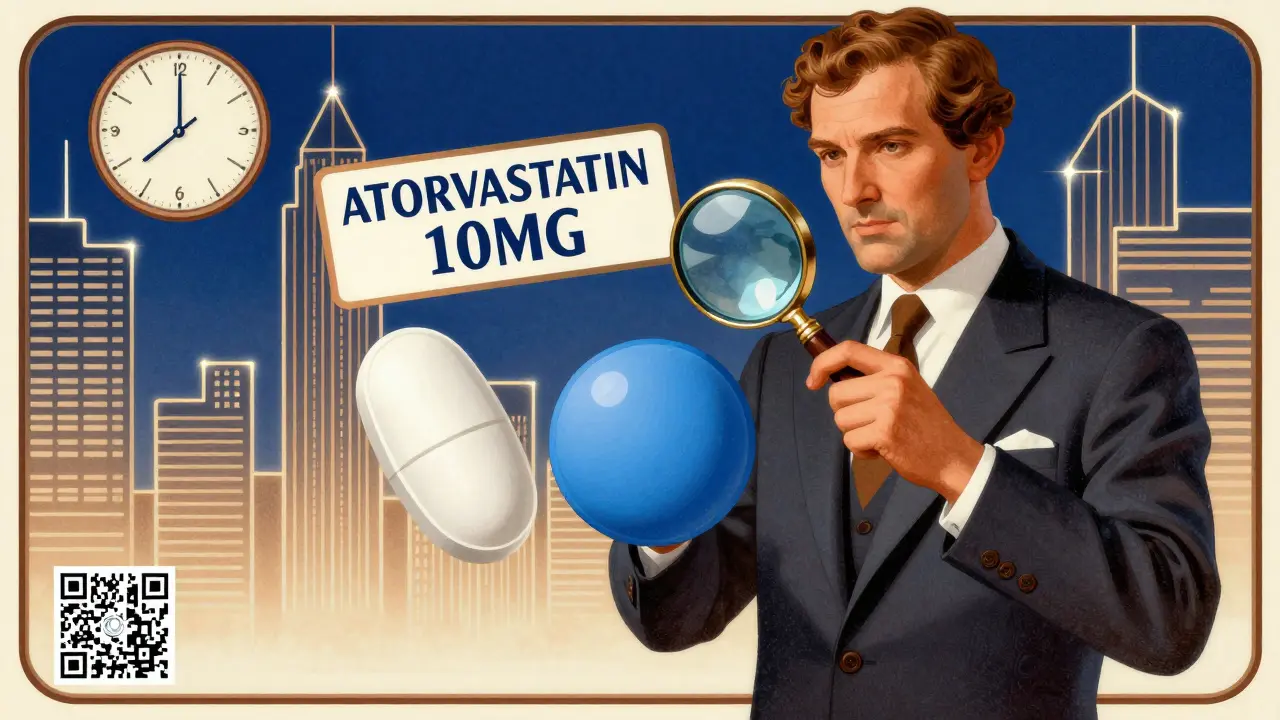
- Medication name - Look for both the brand name (like Lipitor) and the generic name (like atorvastatin). The generic name must match exactly. If your old label said atorvastatin 10mg and the new one says atorvastatin 20mg, that’s a red flag.
- Dosage strength - This is the number after the drug name. 5mg, 10mg, 25mg. It has to match your last fill. Even a small change can be risky, especially for blood thinners or thyroid meds.
- Manufacturer - Look for “Mfg:” or “Manufactured by.” If your last bottle said ACCORD HEALTHCARE and now it says TEVA, that’s normal for generics. But note it. If you’ve had problems with one maker before, ask your pharmacist if you can stick with the same one.
- Rx number - This is your unique prescription ID. It changes with every fill. Don’t worry if it’s different. Just make sure your name and drug match.
- Refills remaining - Check how many refills you have left. If your doctor only authorized two more, but the label says five, call the pharmacy. It could be a mistake.
- Date dispensed - Make sure the date isn’t way off. If your last fill was last week and this one says three months ago, something’s wrong.
- Prescriber name - Should be your doctor’s name. If it’s someone else’s, stop. Don’t take it.
Why Your Pills Look Different (And Why That’s Okay)
Generic drugs are not copies of brand-name pills in appearance. By law, they can’t be. The FDA lets generic manufacturers choose their own color, shape, and size-so long as the active ingredient, strength, and how the drug works in your body are identical. That’s why your metformin might be white and oval one time, then blue and round the next. It’s still metformin. Same dose. Same effect.
But here’s the catch: for certain drugs, even small differences in how the body absorbs the generic version can matter. These are called narrow-therapeutic-index drugs. They include:
- Warfarin (blood thinner)
- Levothyroxine (thyroid hormone)
- Phenytoin, carbamazepine (seizure meds)
- Lithium (mood stabilizer)
If you take one of these, your pharmacist should flag it. But they won’t always. So if you’ve had the same generic for months and suddenly get a new one, call your pharmacy. Ask: “Is this the same manufacturer as before?” If not, ask if you can stick with the one that worked for you. Some pharmacies let you request a specific brand of generic.
What to Do When You’re Not Sure
When in doubt, don’t guess. Use these tools.
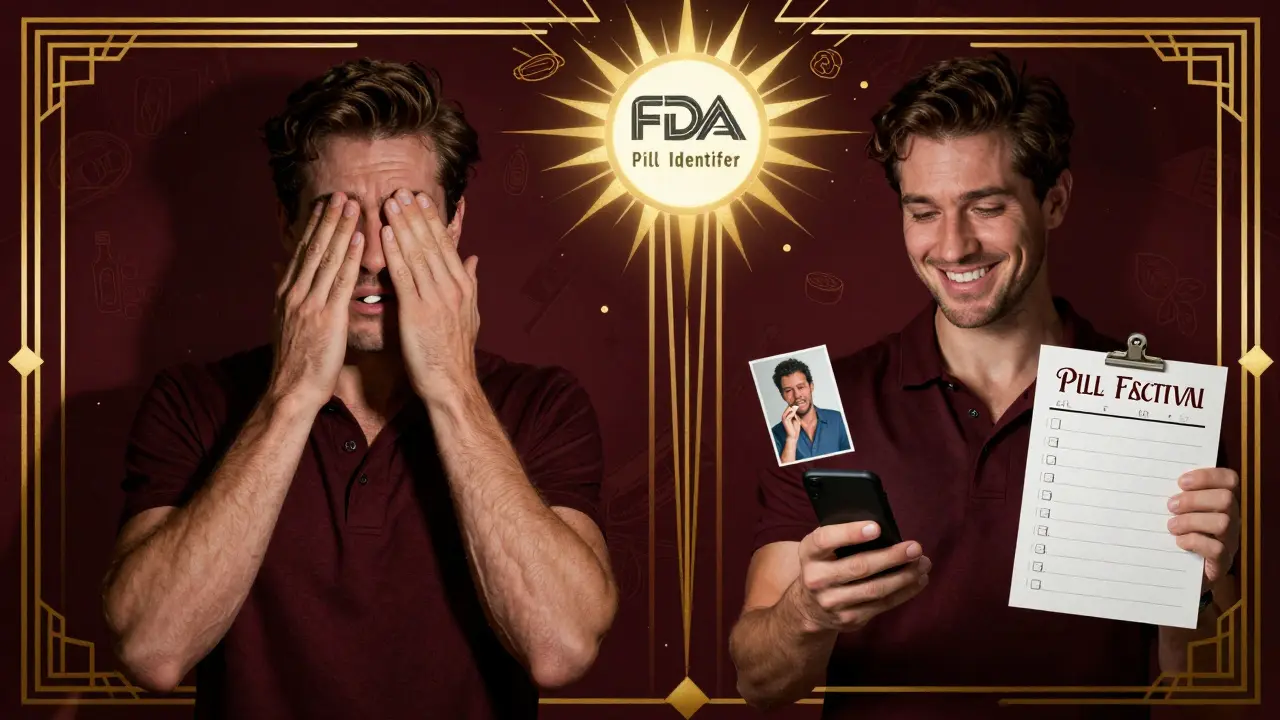
Use the FDA’s Pill Identifier - Go to www.fda.gov/drugs and search their Pill Box tool. You can enter the imprint (the letters or numbers on the pill), color, shape, and size. It’ll show you what drug it is and who makes it. If the pill you got doesn’t match what the tool says, call your pharmacist immediately.
Take a photo of each bottle - When you get a new prescription, snap a picture of the pill and the label. Store it on your phone. Next time you refill, pull up the photo and compare side by side. One Reddit user saved herself from a double dose by spotting that her new pills were twice as big-even though the label said the same dose. She’d never have noticed without the photo.
Ask your pharmacist - They’re trained to catch these things. Say: “I’ve taken this before. The pills looked different. Is this the same medicine?” Most will show you the manufacturer change and confirm it’s safe. If they seem rushed or dismissive, find another pharmacy.
Red Flags You Can’t Ignore
Some changes aren’t normal. If you see any of these, don’t take the pills. Call your doctor or pharmacy right away.
- The active ingredient is different. Example: Your old label said atorvastatin. New label says rosuvastatin. That’s a completely different drug.
- The dosage changed without your doctor’s approval. If you were on 5mg and now it’s 20mg, that’s dangerous.
- You see a “Brand Substitution Not Permitted” note on the label. That means your doctor specifically asked for the brand-name version. If the pharmacy gave you a generic anyway, they made a mistake.
- The expiration date is less than 3 months away. That’s too short. Ask for a fresher batch.
- The label has Latin abbreviations like “q.d.” or “b.i.d.” These mean “once daily” and “twice daily,” but many patients don’t know them. Modern labels should say “Take once daily.” If it doesn’t, ask for clarification.
How Technology Is Making This Easier
Most prescriptions today are sent electronically-85% as of 2023. That means fewer typos, fewer Latin codes, and fewer handwriting errors. Pharmacies use barcodes to scan prescriptions into their systems, which cuts down on misfills.
Some pharmacies now include QR codes on labels. Scan it with your phone, and you’ll get a video or PDF explaining how to take the drug, possible side effects, and even a picture of the pill. Kaiser Permanente started this in 2022. More chains are following.
Apps like MedSnap use your phone’s camera to identify pills by taking a picture. It’s not perfect, but it’s helpful when you’re unsure. Over 1.2 million people used it in early 2023.
Why This Matters More Than You Think
Every year, over 1.5 million people in the U.S. have preventable reactions to medications. Many of those happen because someone took the wrong pill-or the right pill at the wrong dose. Older adults are at highest risk. A 2022 survey found 42% of people over 65 rely on the pill’s color or shape to know what they’re taking. If that changes, they panic-or worse, they assume it’s the same.
It’s not about being paranoid. It’s about being smart. Medication errors don’t always cause immediate harm. Sometimes, they creep in slowly. You feel more tired. Your blood pressure spikes. Your mood drops. You think it’s aging-or stress. But it’s the wrong pill.
Checking your label takes 30 seconds. It might save your life.
Quick Checklist: Your Prescription Safety Routine
Before you leave the pharmacy, do this:
- Confirm your name is correct on the label.
- Match the drug name and strength to your last bottle.
- Check the manufacturer-if it changed, note it.
- Verify the refill count matches what your doctor ordered.
- Take a photo of the pill and label.
- If it looks different and you’re on a narrow-therapeutic drug, ask: “Can I get the same manufacturer as last time?”
- If anything feels off, call your doctor before taking it.
Keep this checklist on your phone or taped to your medicine cabinet. Make it a habit. Your body will thank you.
Henriette Barrows
December 30, 2025 AT 12:13I used to ignore the label changes until my grandma ended up on the wrong dose of levothyroxine. She thought the blue pill was the same as the white one. Took her three days to realize something was off-she was shaking, sweating, heart racing. Turned out the new batch had a different absorption rate. She’s fine now, but I swear I take a photo of every new bottle now. Never skip this step.
Alex Ronald
January 1, 2026 AT 06:35For narrows like warfarin, I always ask for the same manufacturer. My pharmacist knows me by name now. If they don’t have the same one, they call my doctor to check if it’s okay. It’s a pain, but I’d rather wait an extra day than risk a bleed. Also, the FDA pill identifier saved me once when my pill looked like a candy. Turns out it was a different generic. Scary stuff.
Teresa Rodriguez leon
January 3, 2026 AT 04:38People don’t realize how many lives are lost because someone didn’t check the label. I’ve seen it happen. It’s not paranoia. It’s survival. And if you’re on meds that affect your brain or heart, you’re not just risking your own life-you’re risking your family’s peace of mind too.
Himanshu Singh
January 3, 2026 AT 21:35so i just started taking metformin and the pills changed color like 3 times already? i thought i was going crazy. now i know its normal. but still kinda weird. i took a pic of each one now. also my pharmacist said if i want the same maker i have to ask. didnt know that. thanks for the post!
Jim Rice
January 5, 2026 AT 21:17Stop telling people to take photos. That’s not a solution, that’s a bandaid. The real problem is the FDA allowing generic manufacturers to change appearance at will. If the drug works the same, why does it have to look different? It’s a marketing gimmick disguised as regulation. And don’t get me started on pharmacies that don’t even tell you when the manufacturer changes. They’re profit-driven, not patient-focused.
Louis Paré
January 6, 2026 AT 11:58Let’s be real-this entire post is just fearmongering dressed up as public service. If you’re taking a generic, you’re already accepting variability. The body adapts. The FDA approves these drugs because they’re bioequivalent. You’re not saving lives by taking photos-you’re feeding anxiety. Most people who panic over pill color are just overmedicated and underinformed.
Marie-Pierre Gonzalez
January 6, 2026 AT 22:51Thank you for this comprehensive guide. I have printed this checklist and taped it beside my medicine cabinet. As a caregiver for my mother with multiple chronic conditions, I cannot stress enough how vital this practice is. Even a minor discrepancy can lead to catastrophic outcomes. I also use the MedSnap app-it’s not perfect, but it’s a reliable secondary check. Please, everyone, do not underestimate the power of verification.
Janette Martens
January 8, 2026 AT 13:59Why do we even allow American pharmacies to switch generics without telling us? In Canada, they have to notify you. This is why I’m done with U.S. healthcare. You can’t trust anyone. I had to fly to Toronto just to get my thyroid med from the same maker. Worth every penny.
Manan Pandya
January 9, 2026 AT 22:52Excellent breakdown. I work in a pharmacy in Delhi and we see this issue every day. Patients assume the pill looks the same, so it must be the same. We educate them to check the drug name and strength first, then manufacturer. We also keep a log of which generics work best for each patient. If someone had a bad reaction to Teva’s metformin, we avoid it unless absolutely necessary. Knowledge saves lives.
Aliza Efraimov
January 10, 2026 AT 02:11MY MOM DID THIS AND IT SAVED HER LIFE. She’s on warfarin. Got a new bottle. Pill was smaller, white instead of pink. She thought it was fine. I saw the photo she took last time-same dose, different manufacturer. Called the pharmacy. Turns out the new batch had a different filler that affected absorption. They switched her back. She’s been stable for 8 months now. DON’T TRUST THE LOOK. TRUST THE LABEL. AND TAKE THE PHOTO. I’M NOT KIDDING.
David Chase
January 11, 2026 AT 12:23THIS IS THE MOST IMPORTANT THING YOU’LL READ THIS YEAR. 🚨 I had a friend die from a pill mix-up. He thought the new blue pill was the same as the old red one. It wasn’t. It was a different drug entirely. His family is shattered. I now carry a pill identifier app on my phone. I take photos. I call the pharmacy. I scream at the pharmacist if they’re dismissive. You think this is overkill? No. It’s basic human survival. Don’t be the person who says "I didn’t know." You know now. Do better.