How to Use Text Message Reminders for Medication Schedules
 Feb, 3 2026
Why Text Message Reminders Work for Medication Schedules
Missing a pill might seem like a small thing-until it isn’t. Half of all people with chronic conditions like high blood pressure, diabetes, or HIV don’t take their meds as prescribed. That’s not laziness. It’s forgetfulness, busy lives, or just not thinking about it until it’s too late. Text message reminders cut through that noise. They’re simple, direct, and reach people where they already are: on their phones.
Studies show these reminders can boost adherence by up to 14 percentage points. That’s not just a number-it means fewer hospital visits, better control of conditions, and longer, healthier lives. A 2017 study tracking heart attack survivors found those who got daily texts were far more likely to take their meds consistently over a full year. The key? They weren’t just generic alerts. They were personal, timed right, and came at moments when people actually needed them.
How to Set Up Effective Text Reminders
Not all text reminders are created equal. A simple “Take your pill” at 9 AM won’t cut it if you take your meds at 7 PM. Here’s how to do it right.
- Match the timing to your routine. Set the reminder 15-30 minutes before your usual pill time. This gives you a nudge without rushing. Studies show reminders delivered more than two hours after the scheduled time lose most of their effect.
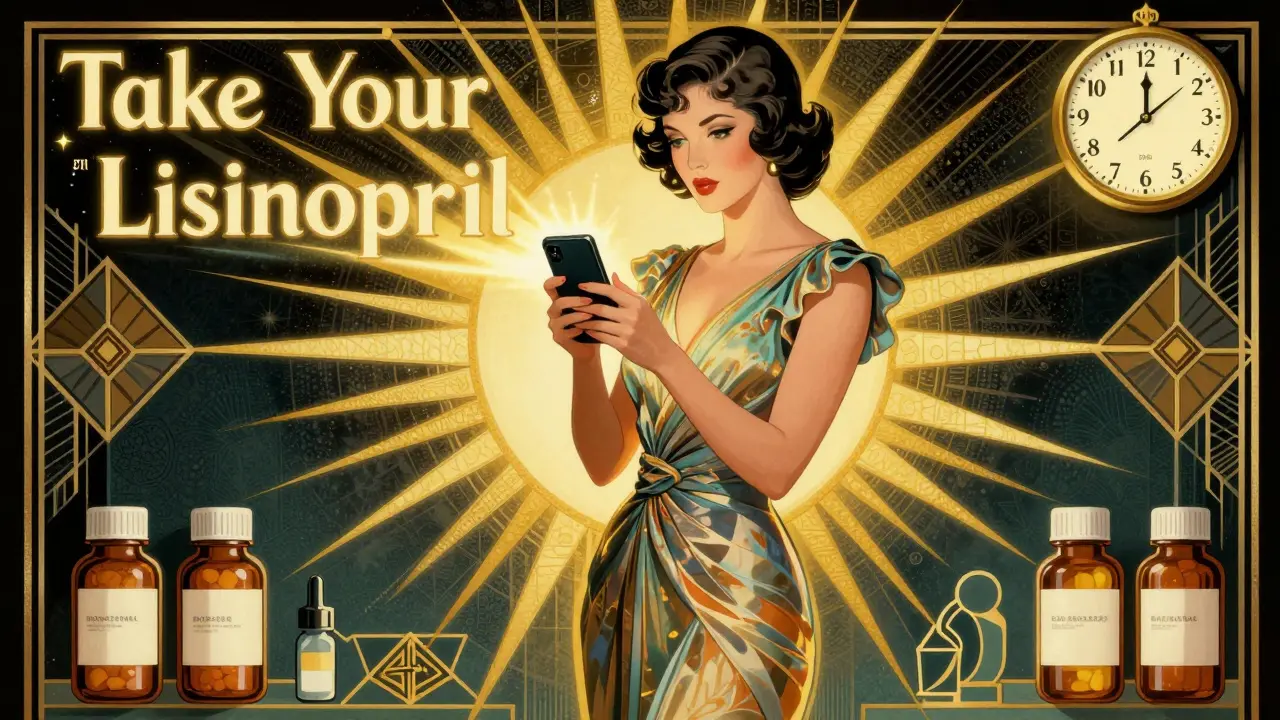
- Personalize the message. Instead of “Medication reminder,” try “Hi Maria, time for your lisinopril. Don’t forget to drink water!” Personalized messages are 40% more effective than generic ones, according to NIH research.
- Choose the right frequency. Daily for new prescriptions or complex regimens. Weekly for stable, long-term meds like statins. Too many texts? People tune out after 3-6 months.
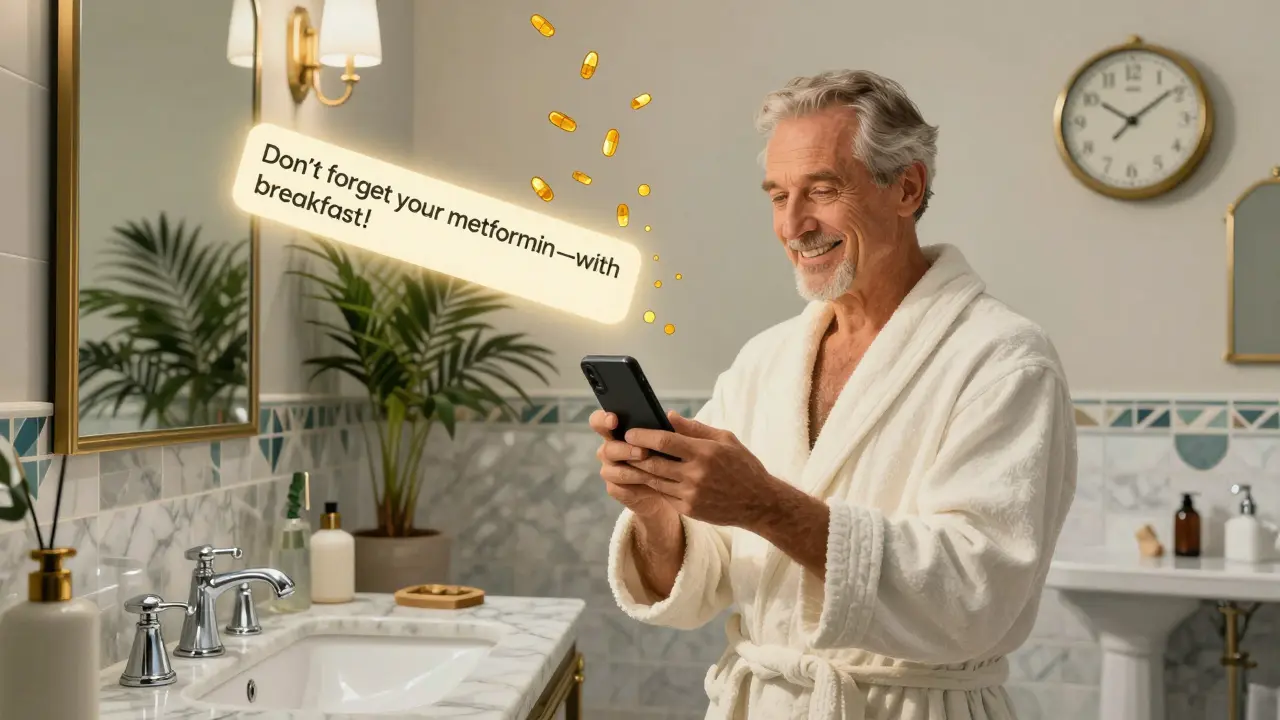
- Include clear instructions. Mention the drug name, dose, and purpose if needed: “Take 10mg metformin with breakfast.” Avoid medical jargon. Use plain language.
Tools and Apps That Make It Easy
You don’t need a tech degree to get started. Many free and low-cost tools exist.
- Medisafe lets you input your meds, set custom times, and sends texts or app alerts. Users report dropping missed doses from 30% to under 5%.
- Google Calendar or Apple Reminders can be set to send SMS alerts if you link them to your phone’s notification system.
- Pharmacy services like CVS or Walgreens offer free text reminders when you fill prescriptions. Just ask at pickup.
- Custom SMS platforms like Twilio or SimpleTexting are used by clinics to send bulk reminders tied to electronic health records.
For older adults or those less tech-savvy, family members can set up reminders on their behalf. Many caregivers use shared calendars or apps like CareClinic to track meds for loved ones.
What Doesn’t Work-and Why
Text reminders aren’t magic. They fail when they’re too vague, too frequent, or disconnected from real care.
A 2023 study of over 9,500 heart patients found no improvement in refill rates after a year-even with cleverly worded “nudge” messages. Why? Because the system didn’t connect to clinical support. If someone misses a dose, the text doesn’t trigger a call from a nurse or a refill alert to their pharmacy. It just sits there.
Another pitfall: sending reminders at the same time every day, regardless of schedule changes. If you travel, work nights, or skip a day, a rigid reminder becomes a frustration, not a help. The best systems adapt. Some newer apps learn your habits and adjust timing automatically.
Also, don’t assume everyone has a phone. About 1 in 10 older adults in the U.S. don’t own a smartphone. For them, voice calls or paper calendars with check boxes still work better.
When Text Reminders Shine the Brightest
These reminders aren’t equally effective for every condition. They work best when timing is critical and the stakes are high.
- HIV treatment: Missing even one dose can lead to drug resistance. Studies show text reminders improve adherence by over 70% in HIV care programs.
- Tuberculosis therapy: Patients often need to take meds daily for months. Texts helped reduce dropout rates by 58%, even if they didn’t improve pill counts.
- Diabetes and hypertension: Daily monitoring matters. Patients who got texts were twice as likely to keep their blood pressure or sugar levels in range.
- Post-surgery or transplant meds: Complex regimens with multiple drugs at different times benefit from structured, timed alerts.
For conditions like high cholesterol or osteoporosis, where missing a dose occasionally doesn’t cause immediate harm, reminders are less impactful. That doesn’t mean they’re useless-it just means they need to be part of a bigger plan.
Privacy, Safety, and Legal Rules
Texting health info isn’t as simple as sending a meme. In the U.S., HIPAA protects your medical data. That means:
- Don’t send full names, diagnoses, or detailed medical info in texts unless the system is encrypted and approved by your provider.
- Most clinics use secure platforms that send alerts like “Your medication is ready” or “Don’t forget your dose today” without revealing what it is.
- You always have the right to opt out. If texts become annoying or irrelevant, say so. You shouldn’t be pressured to stay on the list.
Outside the U.S., rules vary. In the EU, GDPR requires explicit consent. Always ask your provider how your data is handled before signing up.
What Comes Next: Smarter Reminders
The future isn’t just about sending more texts. It’s about sending the right text at the right time.
Some clinics are now using AI to predict when you’re likely to miss a dose. If you haven’t refilled your blood thinner in 10 days, the system doesn’t just remind you-it flags you for a nurse call. Other tools use your refill history, appointment attendance, and even weather data (yes, rain can affect adherence) to adjust messages.
Trials are underway to combine texts with automated voice calls, app-based check-ins, and even smart pill bottles that beep when opened. The goal isn’t to replace human care-it’s to support it.
Real People, Real Results
One user on Reddit said their Medisafe alerts cut missed doses from 30% to under 5%. Another, a 72-year-old with diabetes, said her daughter set up daily texts saying “Time for your insulin, Mom!”-and now she takes it without arguing.
But not everyone loves them. One woman stopped the service after six months because the reminders came at 6 AM, and she took her meds at 8 PM. “It felt like I was being nagged,” she said.
The lesson? Success isn’t about the tech. It’s about matching the reminder to your life.
Getting Started Today
Here’s your simple 5-step plan:
- Write down every medication you take, including dose and time.
- Choose one tool: your phone’s alarm, a free app, or ask your pharmacy.
- Set the first reminder for tomorrow, 20 minutes before your first pill.
- Write a personal message: “Hi [Name], take your [medication] now.”
- Check in after two weeks. Did you miss any doses? Adjust the time or message if needed.
You don’t need to fix everything at once. Start with one pill. If it works, add another. Text reminders are a tool-not a cure. But used right, they can change everything.
Can text reminders actually improve my health?
Yes, if used correctly. Studies show people who get personalized, well-timed text reminders are significantly more likely to take their meds as prescribed. This leads to better control of conditions like high blood pressure, diabetes, and HIV. One study found adherence improved by nearly 14 percentage points over a year.
Are text reminders HIPAA-compliant?
They can be, but only if your provider uses a secure, encrypted platform. Most clinics avoid sending specific medical details in texts. Instead, they use phrases like “Time for your medication” or “Your prescription is ready.” Never share your diagnosis or full medication list in a regular text message.
What if I don’t have a smartphone?
You don’t need a smartphone. Most reminders work via basic SMS on any mobile phone. Even flip phones can receive texts. If you don’t have a phone at all, ask your doctor or pharmacist about voice call reminders or paper-based tracking tools.
How often should I get reminders?
Daily for new or complex regimens, like after a heart attack or for HIV meds. Weekly is enough for stable conditions like high cholesterol. Too many texts can lead to fatigue-most people stop using them after 3-6 months if they feel nagged.
Can I set up reminders for someone else?
Absolutely. Many caregivers set up alerts for elderly parents or family members with memory issues. Apps like Medisafe and CareClinic allow multiple users to manage a single profile. Just make sure the person knows and agrees to the reminders.
Do text reminders work for all conditions?
They work best for conditions where timing is critical: HIV, tuberculosis, post-transplant meds, and diabetes. For conditions like osteoporosis or high cholesterol, where missing a dose occasionally isn’t dangerous, the impact is smaller. The key is matching the reminder to the risk level of the medication.
What if I get too many reminders?
You can always pause or turn them off. Most systems let you adjust frequency or timing. If you’re getting 5 texts a day and only need 2, ask your provider to simplify the schedule. The goal is to help, not overwhelm.
How long do text reminders stay effective?
Short-term studies (under 90 days) show strong results. But long-term effectiveness drops without added support. A 2023 study found no benefit after 12 months unless texts were paired with nurse follow-ups or refill alerts. The best systems evolve-they don’t just send the same message forever.
Next Steps: What to Do Now
Start small. Pick one medication you forget most often. Set a text reminder for tomorrow. Use your phone’s built-in alarm or a free app. Write a message that feels like it’s from a friend, not a robot. Check back in a week. Did you take it? Did the reminder help? Adjust as needed.
This isn’t about perfection. It’s about progress. One missed pill can be fixed. A pattern of missed pills can change your health forever. Text reminders are one of the simplest, cheapest, and most proven tools to break that pattern.
Caleb Sutton
February 4, 2026 AT 12:55Katherine Urbahn
February 5, 2026 AT 15:41Joseph Cooksey
February 6, 2026 AT 07:09Joy Johnston
February 8, 2026 AT 04:32Shelby Price
February 9, 2026 AT 04:27Jesse Naidoo
February 10, 2026 AT 16:29Daz Leonheart
February 11, 2026 AT 04:25Amit Jain
February 12, 2026 AT 09:12