I-Pill: What It Is, How It Works, and When to Use It
 Jun, 21 2025
Every year, over 60 million women worldwide turn to emergency contraception to prevent pregnancy after unprotected sex or contraceptive failure. In South Africa, where access to regular birth control can be inconsistent, the I-Pill has become one of the most common options. But how does it really work? Is it safe? And when should you use it-or avoid it?
What Is the I-Pill?
The I-Pill is a brand name for levonorgestrel, a synthetic hormone used as emergency contraception. It’s not the same as the abortion pill. It doesn’t end an existing pregnancy. Instead, it works to stop or delay ovulation-the release of an egg from the ovary-so sperm can’t fertilize it. If fertilization has already happened, the I-Pill won’t affect the embryo. It’s designed to be taken within 72 hours after unprotected sex, though it works best if taken within the first 24 hours.
It comes as a single tablet containing 1.5 mg of levonorgestrel. Some versions require two pills taken 12 hours apart, but the single-dose version is now standard in most countries, including South Africa. The I-Pill is available over the counter at pharmacies without a prescription, but it’s not meant to be used as a regular birth control method.
How Does It Work?
The I-Pill works in three main ways, depending on where you are in your menstrual cycle:
- It delays or stops ovulation. If you haven’t released an egg yet, the hormone in the pill can prevent it from happening.
- If ovulation has already occurred, it may thicken cervical mucus, making it harder for sperm to reach the egg.
- It might alter the lining of the uterus, making it less likely for a fertilized egg to implant.
But here’s the key: if you’ve already ovulated, the I-Pill has little to no effect. That’s why timing matters so much. The pill doesn’t work after implantation has occurred, which usually happens 6-10 days after fertilization. If you’re already pregnant, taking the I-Pill won’t harm the pregnancy or cause a miscarriage.
When Should You Take It?
You should consider the I-Pill if:
- You had unprotected sex and didn’t use any form of birth control.
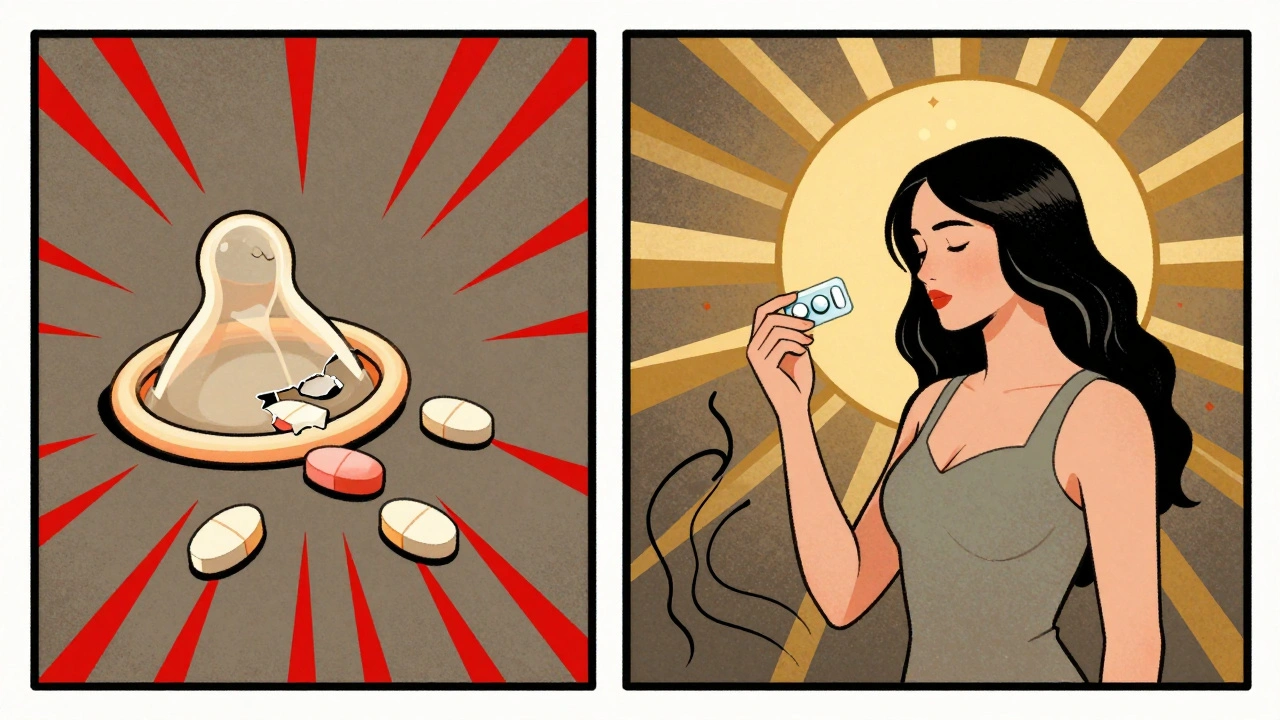
- Your condom broke or slipped off.
- You missed two or more birth control pills in a row.
- You were forced into sex without consent.
It’s not a substitute for regular contraception. If you’re sexually active and not trying to get pregnant, you should use something consistent-like the pill, an IUD, or condoms. The I-Pill is for emergencies only.
Take it as soon as possible. Studies show it’s 95% effective if taken within 24 hours, 85% effective between 24 and 48 hours, and drops to about 58% effective between 48 and 72 hours. After 72 hours, it’s not recommended.
Side Effects and Risks
Most women tolerate the I-Pill well. But side effects are common and usually mild:
- Nausea (about 20% of users)
- Vomiting (about 5% of users)
- Headache or dizziness
- Breast tenderness
- Irregular bleeding or spotting
- Delayed period by more than a week
If you vomit within two hours of taking the pill, you may need to take another dose. Contact a pharmacist or doctor for advice.
There’s no evidence that the I-Pill causes long-term infertility, birth defects, or cancer. It’s safe to use more than once, even in the same menstrual cycle, but repeated use isn’t ideal. Frequent use can disrupt your cycle and make it harder to track ovulation. If you’re using emergency contraception more than twice a year, it’s time to talk to a healthcare provider about better long-term options.
Who Should Avoid It?
Most women can safely use the I-Pill. But it’s not recommended if:
- You’re already pregnant. It won’t work and won’t harm the baby.
- You have a known allergy to levonorgestrel or any inactive ingredient in the pill.
- You have severe liver disease. Hormonal medications are processed by the liver, and severe liver issues can interfere with how the drug works.
Women with a history of blood clots, stroke, or heart disease should talk to a doctor before using any hormonal contraceptive, including emergency pills. But for most healthy women, the I-Pill is safe-even if you’re breastfeeding. Levonorgestrel doesn’t affect milk supply or harm the baby.
What to Expect After Taking It
Your next period should come within a week of when you expect it. If it’s more than seven days late, take a pregnancy test. A delayed period doesn’t always mean you’re pregnant-stress, illness, or the pill itself can throw your cycle off.
You might notice spotting or lighter-than-usual bleeding. That’s normal. Some women get their period early. Others don’t bleed at all until their next cycle. Don’t assume the pill worked just because you bled. Bleeding after taking the I-Pill isn’t a sign it worked-it’s just a side effect.
If you’re trying to track your fertility, the I-Pill can make it harder to predict ovulation for the next few months. Keep using condoms or another form of protection until your cycle settles back down.
Alternatives to the I-Pill
The I-Pill isn’t the only option. There are two other emergency contraceptives:
- Ulipristal acetate (Ella): Available by prescription in South Africa. Works up to 120 hours after unprotected sex and is more effective than levonorgestrel, especially after 72 hours.
- Copper IUD: The most effective form of emergency contraception. Can be inserted up to five days after unprotected sex and is over 99% effective. It also works as long-term birth control for up to 10 years.
If you’re under 20, live in a rural area, or don’t have easy access to a clinic, the I-Pill is often the most practical option. But if you can get to a clinic within five days, the copper IUD is the best choice-it’s more effective and gives you lasting protection.

Myths About the I-Pill
There’s a lot of misinformation out there. Let’s clear up a few common myths:
- Myth: The I-Pill causes abortion. Fact: It prevents pregnancy before it starts. It doesn’t affect an existing pregnancy.
- Myth: Taking it multiple times makes you infertile. Fact: No studies show long-term effects on fertility. Your cycle will return to normal.
- Myth: You need a prescription. Fact: In South Africa, it’s available over the counter at any pharmacy.
- Myth: It works like the abortion pill. Fact: The abortion pill (mifepristone + misoprostol) ends a pregnancy. The I-Pill doesn’t.
Don’t let myths stop you from using it when you need it. It’s safe, legal, and widely available.
Where to Get It in South Africa
You can buy the I-Pill at any pharmacy without a prescription. Popular brands include I-Pill, Postinor-2, and NorLevo. Prices range from R80 to R150 depending on the brand and location. In urban areas like Durban, Cape Town, or Johannesburg, it’s easy to find. In rural areas, you might need to visit a clinic or community health center.
Some public clinics and hospitals offer it for free, especially for teenagers and survivors of sexual assault. If you’re unsure where to go, call the National Sexual Violence Helpline at 0800 150 150-they can guide you to the nearest provider.
What to Do Next
If you’ve taken the I-Pill, here’s what to do:
- Keep track of your next period. If it’s more than seven days late, take a pregnancy test.
- Use condoms or another form of birth control for the rest of this cycle.
- Consider talking to a healthcare provider about long-term contraception. The I-Pill isn’t a solution-it’s a backup.
- If you’re sexually active and not planning to get pregnant, get an IUD or start the pill. It’s cheaper, safer, and more reliable in the long run.
Emergency contraception saves lives. But relying on it too often puts you at risk of unintended pregnancy and cycle disruption. Use it when you need it-but plan ahead so you don’t have to.
Can I take the I-Pill while breastfeeding?
Yes. Levonorgestrel, the hormone in the I-Pill, doesn’t reduce milk supply or harm your baby. It’s considered safe for breastfeeding mothers. You can take it without stopping nursing.
Does the I-Pill cause weight gain?
There’s no strong evidence that the I-Pill causes lasting weight gain. Some women report temporary bloating or water retention, but this usually goes away within a few days. Long-term weight changes are more likely linked to diet, stress, or other hormonal methods, not emergency contraception.
Can I take the I-Pill more than once in the same cycle?
Yes, it’s safe to take more than once in a cycle if needed. But it’s not recommended. Each dose can disrupt your cycle further and reduce effectiveness. If you’re having unprotected sex repeatedly, you need a better long-term method like the pill, IUD, or implant.
Is the I-Pill effective if I’m overweight?
Effectiveness drops slightly in women with a BMI over 25 and is significantly lower above 30. If you’re overweight, the copper IUD is a better choice-it’s equally effective regardless of weight. If you must use the I-Pill, take it as soon as possible after unprotected sex.
Can I use the I-Pill as regular birth control?
No. It’s not designed for daily use. Taking it regularly can cause irregular bleeding, nausea, and make your cycle unpredictable. It’s also less effective than daily pills, patches, or IUDs. Use it only for emergencies.
Karandeep Singh
December 2, 2025 AT 22:49Amber-Lynn Quinata
December 3, 2025 AT 07:49Margaret Stearns
December 4, 2025 AT 05:29amit kuamr
December 5, 2025 AT 19:54James Allen
December 7, 2025 AT 04:56Erin Nemo
December 9, 2025 AT 02:30ariel nicholas
December 10, 2025 AT 22:44Rachel Stanton
December 12, 2025 AT 08:57Bonnie Youn
December 12, 2025 AT 13:35Suzanne Mollaneda Padin
December 12, 2025 AT 16:58Alexander Williams
December 13, 2025 AT 10:05Lauryn Smith
December 13, 2025 AT 17:16Edward Hyde
December 14, 2025 AT 06:31Charlotte Collins
December 16, 2025 AT 05:39Scotia Corley
December 16, 2025 AT 12:15