Insulin Therapy Side Effects: Managing Hypoglycemia and Weight Gain
 Feb, 25 2026
Insulin Therapy Side Effects Calculator
Hypoglycemia Risk Estimator
Weight Gain Estimator
Insulin therapy saves lives. For millions of people with type 1 diabetes and many with advanced type 2 diabetes, it’s not an option-it’s a necessity. But while insulin keeps blood sugar from spiraling out of control, it comes with two big, well-documented downsides: hypoglycemia and weight gain. These aren’t rare or minor issues. They’re common, often feared, and can change how you live with diabetes every single day.
What Is Hypoglycemia, and Why Does Insulin Cause It?
Hypoglycemia means your blood sugar drops too low-below 70 mg/dL (3.9 mmol/L). It’s not just a blip on a glucose monitor. It’s your body screaming for help. Symptoms include shaking, sweating, a racing heart, dizziness, confusion, blurred vision, and in severe cases, seizures or unconsciousness. If left untreated, severe hypoglycemia can damage your brain or heart.
Insulin lowers blood sugar by helping cells absorb glucose. But if you take too much insulin, or if you don’t eat enough carbs after taking it, your blood sugar can crash. This isn’t a mistake-it’s a direct effect of how insulin works. The landmark Diabetes Control and Complications Trial (DCCT) showed that people on intensive insulin therapy had three times more severe hypoglycemic episodes than those on standard treatment. For type 1 diabetes patients, that’s about 2 to 3 serious lows per year.
One of the scariest parts? Hypoglycemia unawareness. After 15 to 20 years of living with diabetes, about 1 in 4 people stop feeling the early warning signs. No shaking. No sweating. One minute you’re fine, the next you’re passing out. That’s why continuous glucose monitors (CGMs) are now a game-changer. They alert you before your sugar drops too far, giving you time to act.
Why Weight Gain Happens with Insulin
When you start insulin, many people gain weight-often 4 to 6 kilograms (9 to 13 pounds) in the first year. It’s not because insulin makes you hungry (though it can). It’s because insulin is a storage hormone.
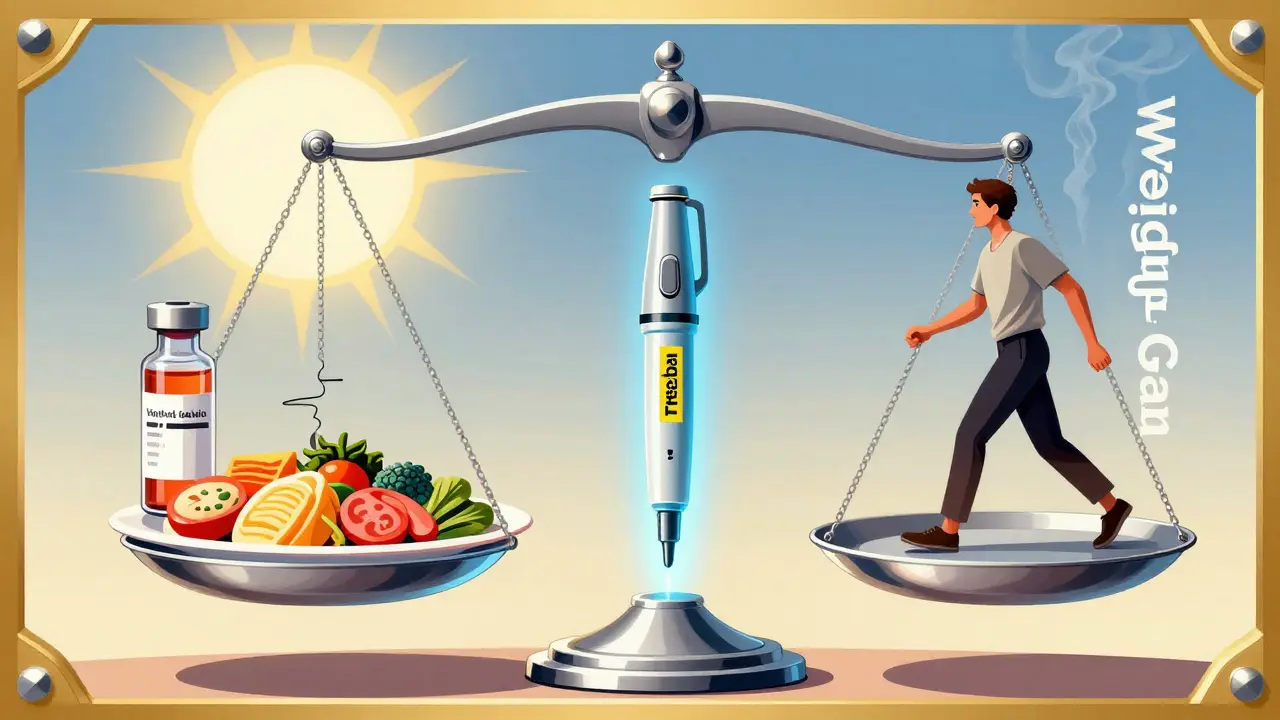
Before insulin therapy, your body was losing glucose through urine because it couldn’t use it. That’s called glycosuria. When you start insulin, your body finally starts using glucose properly. No more sugar wasted in pee. That means every calorie you eat gets stored-either as energy or as fat. Insulin also blocks fat breakdown, so your body holds onto every bit of fat you consume.
Studies show that people who don’t adjust their diet after starting insulin gain more weight. A 2023 American Association of Clinical Endocrinologists report found that patients who got early nutrition counseling gained just 2.8 kg on average-compared to 6.2 kg without counseling. It’s not that insulin causes weight gain. It’s that insulin lets your body store calories efficiently, and if you keep eating the same way, you gain weight.
How These Side Effects Impact Daily Life
Living with the fear of low blood sugar changes your behavior. Many people intentionally keep their blood sugar higher than recommended just to avoid a crash. Some skip meals. Others avoid exercise. A 2018 MedicalNewsToday survey found that nearly 1 in 5 patients with type 1 diabetes admitted to under-dosing insulin to avoid weight gain. That’s a dangerous trade-off: avoiding weight gain at the cost of higher A1c levels, which increases your risk of nerve damage, kidney disease, and vision loss.
There’s also the emotional toll. Anxiety about hypoglycemia is real. Parents of children with type 1 diabetes often lose sleep worrying about nighttime lows. Adults avoid driving, traveling, or even sleeping alone. The NHS recommends wearing a medical bracelet-because if you pass out, someone needs to know you have diabetes and need glucose fast.
How to Manage Hypoglycemia
Preventing lows isn’t about avoiding insulin-it’s about using it smarter.
- Monitor often. Check your blood sugar at least 4 to 6 times a day if you’re on multiple daily injections. CGMs cut the risk of severe lows by 40-50%.
- Know your insulin types. Long-acting insulins like insulin glargine (Lantus) and insulin degludec (Tresiba) are smoother and cause fewer nighttime lows than older NPH insulin.
- Use correction factors. If your blood sugar is high, don’t just guess how much insulin to take. Use your personal insulin-to-carb ratio and correction factor-taught in diabetes education programs.
- Treat lows fast. Keep fast-acting carbs handy: glucose tablets, juice, or candy. 15 grams of carbs, wait 15 minutes, recheck. Never rely on food alone-glucose tablets are precise.
- Have glucagon on hand. If you can’t swallow or are unconscious, someone needs to give you glucagon. Make sure family members or coworkers know where it is and how to use it.
How to Manage Weight Gain
Weight gain doesn’t have to be inevitable. It’s manageable with the right approach.
- Work with a dietitian. A 2023 study showed that structured lifestyle counseling at the start of insulin therapy cut average weight gain in half. Focus on portion control, fiber-rich foods, and balanced meals-not calorie restriction.
- Don’t overcorrect highs. Taking too much insulin to fix a high blood sugar leads to a low, which leads to eating more, which leads to weight gain. Use your correction factor, not guesswork.
- Move more. Exercise helps your body use insulin better. Even 30 minutes of walking daily can reduce insulin needs by 10-20%.
- Consider combination therapy. GLP-1 receptor agonists like semaglutide are now used alongside insulin. They help lower blood sugar, reduce appetite, and cause weight loss. In clinical trials, patients on insulin plus semaglutide lost 5-10 kg over 30 weeks-while those on insulin alone gained weight.
What’s New in Treatment
The future of insulin therapy is smarter, safer, and more personalized.
Closed-loop systems (also called artificial pancreases) automatically adjust insulin based on real-time glucose readings. In the 2020 International Diabetes Closed-Loop Trial, users spent 72% less time in hypoglycemia compared to those using sensor-augmented pumps.
New ultra-long-acting insulins like Tresiba have a flatter, more stable profile, reducing nighttime lows by 40% compared to older options.
And while insulin remains essential, the trend is shifting toward combination therapies. Instead of adding more insulin, doctors are now combining it with GLP-1 drugs, SGLT2 inhibitors, or both. These combinations improve blood sugar control while reducing weight gain and hypoglycemia risk.
The Bottom Line
Hypoglycemia and weight gain are real, common, and serious side effects of insulin therapy. But they’re not unavoidable. They’re manageable. With the right tools-CGMs, proper education, structured nutrition, and newer medications-you can control your blood sugar without living in fear of lows or gaining unwanted weight.
The goal isn’t to avoid insulin. It’s to use it wisely. Work with your care team. Learn your body’s patterns. Adjust your habits. And remember: better control doesn’t mean perfection. It means safety, sustainability, and a life you can live without constant worry.
Can insulin therapy cause death from low blood sugar?
Yes, severe hypoglycemia can be life-threatening. If blood sugar drops too low for too long, it can lead to seizures, coma, or cardiac events. The risk is higher in people with hypoglycemia unawareness, the elderly, or those with heart disease. That’s why having glucagon available and wearing a medical ID are critical safety steps.
Do all people gain weight on insulin?
No. While many gain 4-6 kg in the first year, weight gain isn’t universal. People who adjust their diet, increase physical activity, or use combination therapies like GLP-1 agonists often gain little or no weight. Weight gain depends on insulin dose, calorie intake, activity level, and individual metabolism.
Is it safe to reduce insulin to avoid weight gain?
No. Reducing insulin to avoid weight gain leads to high blood sugar, which damages nerves, kidneys, eyes, and blood vessels over time. This increases the risk of amputation, blindness, heart attack, and stroke. The long-term risks of poor control far outweigh the risks of moderate weight gain. Talk to your doctor about safer ways to manage weight instead.
Can continuous glucose monitors (CGMs) prevent hypoglycemia?
CGMs don’t prevent lows, but they dramatically reduce them. Studies show CGMs cut time spent in hypoglycemia by 40-50% by giving early warnings. When paired with insulin pumps or closed-loop systems, the reduction can be even greater. CGMs are now considered standard of care for people on intensive insulin therapy.
What’s the best insulin for avoiding weight gain and lows?
No single insulin eliminates both risks, but newer analogues help. Insulin degludec (Tresiba) has the lowest rate of nocturnal hypoglycemia. Insulin glargine U300 (Toujeo) provides more stable coverage than older versions. For weight, combining insulin with GLP-1 agonists like semaglutide is the most effective strategy. The best choice depends on your lifestyle, eating habits, and overall health-work with your provider to find it.
For those starting insulin, the fear of side effects is normal. But with modern tools and support, you can manage them. You don’t have to choose between good control and a healthy weight. You can have both.