Manufacturer Expiration vs. Pharmacy Beyond-Use Dates: What You Need to Know
 Aug, 12 2026
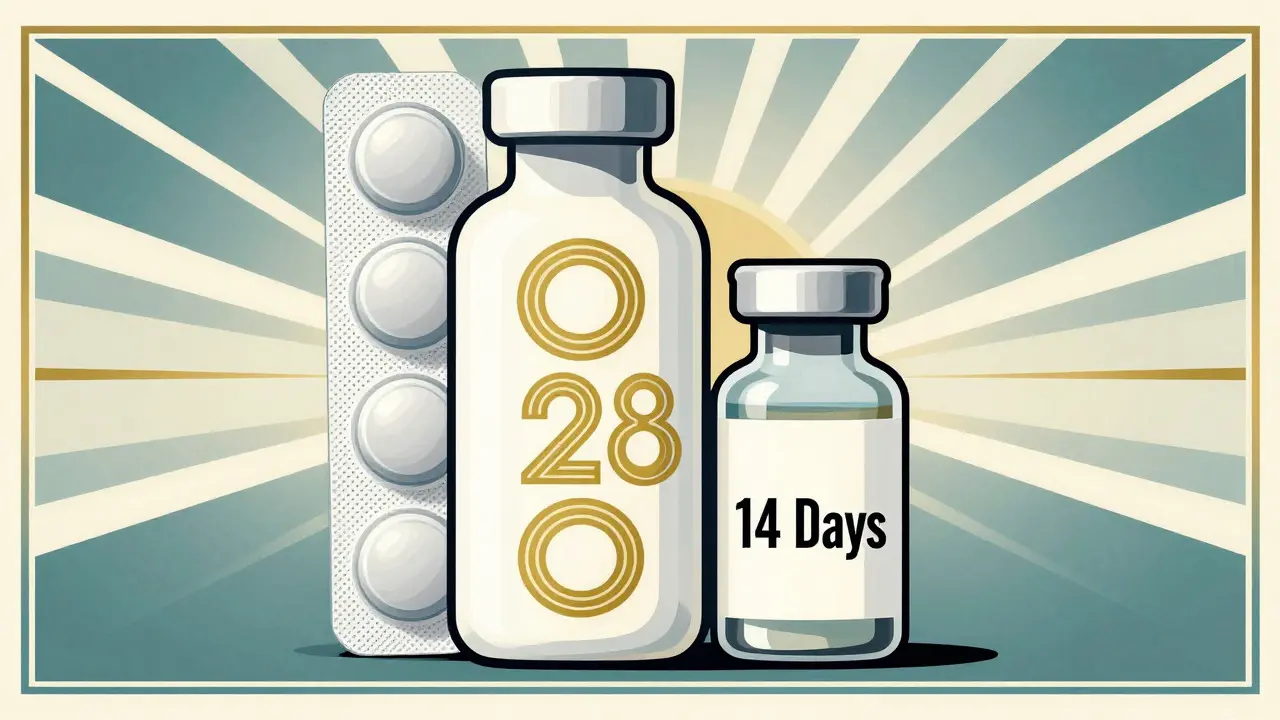
Have you ever stared at a prescription bottle and noticed two different dates? One might say "Exp 2028," while another label says "BUD 14 Days." It’s confusing, frustrating, and honestly, it feels like the pharmacy is trying to trick you into throwing away expensive medicine too soon. But there is a logical reason for this split system. Understanding the difference between a manufacturer's expiration date and a pharmacy's beyond-use date (BUD) can save you money, prevent medication errors, and keep your treatment on track.
The core issue isn't just about time; it's about stability. A pill that sits in a sealed factory blister pack behaves very differently than a liquid antibiotic mixed fresh in a pharmacy vial or a cream compounded specifically for your skin sensitivity. The rules governing these dates come from strict regulatory bodies like the U.S. Food and Drug Administration (FDA) for commercial drugs and the United States Pharmacopeia (USP) standards for pharmacy practices. Let’s break down exactly what these dates mean, why they differ, and how to handle them so you don’t waste money or risk your health.
What Is a Manufacturer Expiration Date?
A manufacturer expiration date is the deadline set by the company that made the drug. This date guarantees that the medication will retain its full potency, safety, and quality until that specific day, provided it has been stored correctly. These dates are not guesses. They are based on rigorous stability testing required by the FDA, which became legally mandated in 1979.
When a pharmaceutical company develops a new drug, they conduct accelerated and long-term stability tests. They expose the drug to controlled conditions-typically temperatures around 25°C with specific humidity levels-to see how the chemical structure breaks down over time. The expiration date printed on the box, such as "March 31, 2026," represents the end of the period during which the manufacturer promises the drug contains at least 90% of its labeled strength.
Key points about manufacturer expiration dates:
- Applies to unaltered products: This date is valid only if the medication remains in its original, sealed packaging.
- Long duration: Commercial medications typically have expiration dates ranging from 12 to 60 months from the manufacturing date.
- FDA verified: The data supporting this date is reviewed and approved by the FDA before the drug hits the market.
- No change upon opening: Interestingly, the manufacturer’s expiration date applies whether the bottle is opened or closed. However, once opened, other factors like moisture and air exposure begin to affect the drug, which leads us to the next concept.
Understanding Pharmacy Beyond-Use Dates (BUDs)
If a pharmacist changes anything about the medication, the manufacturer’s guarantee is voided. This is where the Beyond-Use Date (BUD) comes in. A BUD is the last date a compounded, repackaged, or reconstituted medication can be safely used. It is assigned by the pharmacist, not the manufacturer, and is governed by USP standards rather than direct FDA approval for that specific batch.
Why do BUDs exist? Because altering a drug introduces variables. When a pharmacy mixes a powder with a liquid to create an oral suspension, or compounds a steroid cream without preservatives, the stability profile changes. Without the protective preservatives found in mass-produced commercial drugs, compounded medications are more vulnerable to bacterial growth and chemical degradation.
BUDs apply in three main scenarios:
- Compounded Medications: Custom-made drugs for patients who need specific dosages, flavorings, or allergen-free formulations.
- Repackaged Drugs: When a pharmacy takes pills out of their original bottle and puts them into a smaller patient-specific container.
- Reconstituted Medications: Powders that require mixing with water or saline before use, such as many antibiotics.
Unlike expiration dates, BUDs are often much shorter. For non-sterile compounded medications containing water, the maximum BUD is often just 14 days under refrigeration. For solid dosage forms stored at room temperature, it might extend up to 180 days, but rarely longer. The goal is patient safety, ensuring the drug hasn’t degraded or become contaminated.
| Feature | Manufacturer Expiration Date | Pharmacy Beyond-Use Date (BUD) |
|---|---|---|
| Set By | Drug Manufacturer | Compounding Pharmacist |
| Regulatory Basis | FDA Stability Testing (21 CFR 211.137) | USP Chapters <795>, <797>, and <17> |
| Typical Duration | 1-5 years from manufacture | 14 days to 1 year (often shorter) |
| Applies To | Original, sealed commercial packaging | Compounded, repackaged, or reconstituted meds |
| Potency Guarantee | At least 90% of labeled strength | Based on ingredient stability and risk level |
| Storage Conditions | As specified on original label | Often stricter (e.g., mandatory refrigeration) |
Why Are BUDs So Short Compared to Expiration Dates?
You might wonder why your compounded thyroid medication has a six-month BUD when the raw ingredients had expiration dates years away. The answer lies in the loss of preservatives and the introduction of contamination risks.
Commercial drugs are manufactured in sterile environments with added preservatives to prevent microbial growth. When a pharmacist compounds a medication, especially one that involves mixing liquids or crushing tablets, those preservative systems are often disrupted or absent. According to USP Chapter <795>, which governs non-sterile compounding, the presence of water is a major risk factor. Water supports bacterial and fungal growth. Therefore, any compounded preparation containing water must have a significantly shorter BUD, often capped at 14 days even if kept in the fridge.
Additionally, repackaging exposes the drug to light, oxygen, and humidity every time the patient opens the bottle. The original manufacturer’s stability testing assumed the drug would remain in its tightly sealed, opaque blister pack or amber glass bottle. Once transferred to a clear plastic pharmacy vial, the clock starts ticking faster on degradation. The BUD accounts for these real-world handling variables that the manufacturer never tested for.
How to Determine Which Date Matters for Your Medication
This is the most critical step for patients. You need to know which date dictates when your medicine goes bad. Here is a simple decision tree:
Scenario 1: Standard Prescription Pill
If you pick up a standard antibiotic or blood pressure pill in a standard pharmacy bottle, check the label. If the pharmacist simply dispensed the manufacturer’s bottle, the Expiration Date on the outer box is the primary guide. However, many states require pharmacists to add a BUD to the label regardless, usually one year from dispensing or the manufacturer’s expiration date, whichever is earlier. In this case, follow the sooner date.
Scenario 2: Compounded Cream or Liquid
If your medication was custom-made because you are allergic to dyes or need a pediatric dose, look for the Beyond-Use Date. This is almost always shorter than the ingredient expiration dates. Do not assume the raw materials’ expiration dates apply to the final mixture. The BUD is the law here.
Scenario 3: Reconstituted Powder
For antibiotics like Amoxicillin that come as a powder and require adding water, the BUD starts the moment you mix it. The package insert will tell you how many days it lasts after mixing (usually 7-14 days). Discard any unused portion after this period, even if the original powder had an expiration date far in the future.
Practical Tips for Managing Medication Dates
Misunderstanding these dates leads to significant waste. A 2022 survey found that 68% of patients receiving compounded medications discarded them due to BUD expiration before finishing the course, compared to only 22% for commercial drugs. Here is how to avoid this pitfall:
- Ask Before You Pay: If you receive a compounded medication with a short BUD, ask the pharmacist if the duration matches your prescription length. If you need a 30-day supply but the BUD is 14 days, request a smaller initial quantity or discuss storage options.
- Store Correctly: BUDs are calculated based on specific storage conditions. If the label says "Refrigerate," do not leave it on the counter. Temperature fluctuations can degrade the drug faster than the BUD allows. Conversely, freezing a medication that should be refrigerated can also ruin it.
- Check Both Labels: Always look at both the manufacturer’s expiration date on the box and the pharmacy’s BUD on the vial. Use the earlier date. Never use a medication past either date.
- Dispose Properly: Don’t flush expired meds unless instructed. With 92% of U.S. pharmacies offering take-back programs, bring expired or unused medications back to your pharmacy for safe disposal. This prevents environmental contamination and household accidents.
The Future of Dating Standards
The landscape of medication dating is evolving. The compounding pharmacy market has grown to $11.7 billion annually, serving millions of patients who need personalized care. This growth has led to increased scrutiny. The FDA issued 27 warning letters to compounding pharmacies in 2022 for improper BUD assignments, highlighting the importance of adherence to USP standards.
Currently, USP is revising Chapters <795> and <797> to provide more specific criteria for assigning BUDs. Proposed changes may reduce maximum BUDs for certain high-risk preparations by up to 30% to enhance safety. While this might seem inconvenient, it reflects a commitment to ensuring that customized medications remain effective and safe. As a patient, staying informed about these standards helps you advocate for your own health and ensures you get the most value from your prescriptions.
Can I use medication past the manufacturer's expiration date?
Technically, the FDA recommends against it. While studies show many drugs retain potency for years after expiration under ideal storage, the expiration date is the last day the manufacturer guarantees full strength and safety. Since home storage conditions vary, using expired drugs carries a risk of reduced efficacy or degradation. Always consult your pharmacist before using expired medication.
Why does my compounded medication expire so quickly?
Compounded medications often lack the preservatives found in commercial drugs. Additionally, the process of mixing ingredients can introduce contaminants or alter chemical stability. The Beyond-Use Date (BUD) is set conservatively based on USP guidelines to ensure the medication remains safe and effective, especially if it contains water or is stored at room temperature.
Does opening a bottle change the expiration date?
The manufacturer's expiration date on the box remains the same whether opened or not. However, once opened, exposure to air, moisture, and light can degrade the drug faster. For this reason, pharmacists often assign a Beyond-Use Date (BUD) upon dispensing, which is typically shorter than the manufacturer's date to account for these real-world conditions.
What happens if I miss the Beyond-Use Date?
If you miss the BUD, the medication may have lost potency or become contaminated with bacteria. Using it could result in ineffective treatment or infection. You should discard the medication properly through a pharmacy take-back program and contact your provider for a new prescription if still needed.
Are BUDs regulated by the FDA?
BUDs are primarily guided by United States Pharmacopeia (USP) standards, which are incorporated into state pharmacy laws. While the FDA regulates the ingredients and the compounding facilities, the specific assignment of the BUD is the responsibility of the licensed pharmacist following USP chapters <795> and <797>.