Meniere’s Diet: How Sodium Restriction and Fluid Balance Reduce Vertigo and Hearing Loss
 Mar, 4 2026
When you’re hit with sudden dizziness, ringing in your ears, or a feeling of fullness in one ear, it’s not just annoying-it can be terrifying. For people with Meniere’s disease, these symptoms don’t just come and go; they disrupt work, relationships, and daily life. While medications and injections are options, one of the most effective, safest, and cheapest ways to manage Meniere’s isn’t found in a pharmacy-it’s in your kitchen.
Why Salt Matters More Than You Think
Meniere’s disease is caused by too much fluid building up in the inner ear, a condition called endolymphatic hydrops. This excess fluid puts pressure on delicate structures that control balance and hearing. The result? Vertigo attacks, hearing loss that comes and goes, and constant tinnitus.
Here’s the key: sodium is the main driver of fluid retention in your body. When you eat too much salt, your kidneys hold onto water to balance out the sodium. That extra water doesn’t just stay in your legs or face-it also builds up in your inner ear. The more sodium you consume, the more pressure builds in your ear, triggering or worsening symptoms.
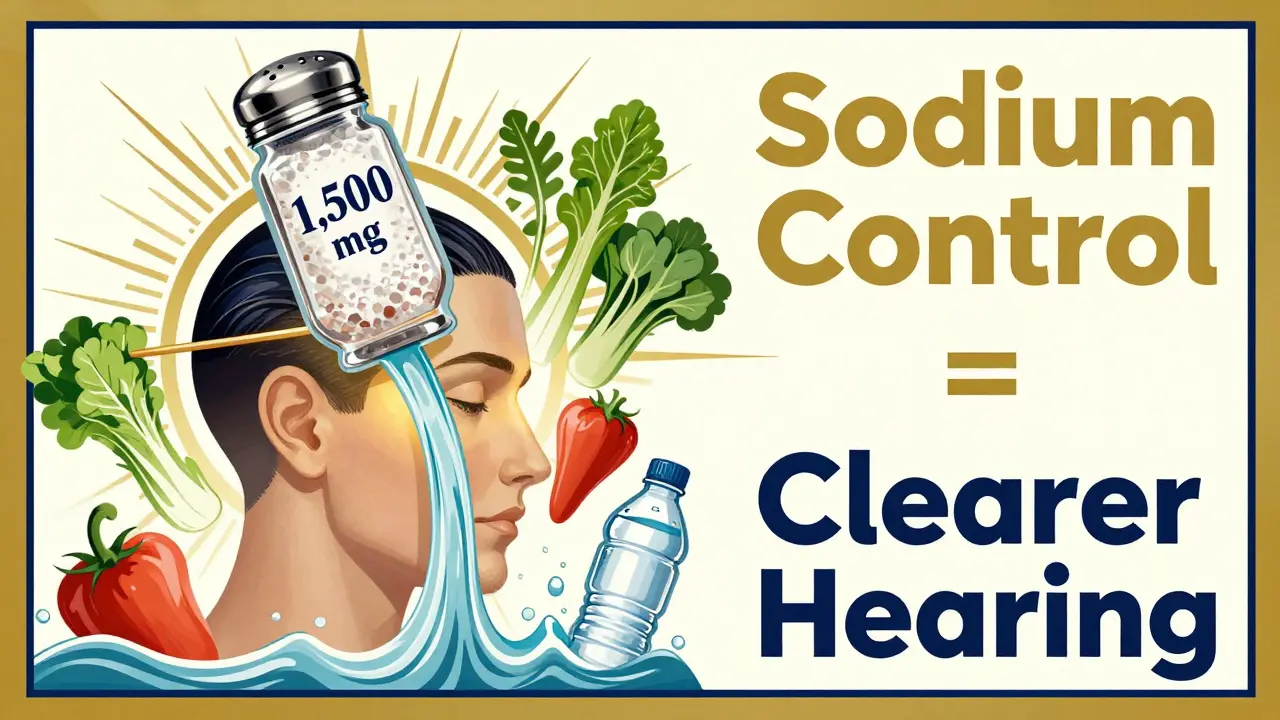
Multiple studies and clinical guidelines agree: lowering your sodium intake is the first step in managing Meniere’s. The National Institutes of Health, Mayo Clinic, and the American Academy of Otolaryngology all recommend limiting sodium to between 1,500 and 2,000 milligrams per day. That’s less than one teaspoon of table salt. For comparison, the average American eats over 3,400 mg daily-more than double the recommended limit for Meniere’s patients.
The Science Behind the Diet
A major study published in February 2024 in Acta Otolaryngologica followed 50 people with moderate to severe Meniere’s disease for six months. Half followed a strict low-sodium diet (1,500 mg/day) and drank 35 ml of water per kilogram of body weight daily. The other half only took standard medications.
The results were clear:
- Average hearing improvement of 12.3 dB at key frequencies
- Vertigo attacks dropped by over 50%
- Tinnitus severity dropped from 58.7 to 32.4 on a standard scale
- Dizziness-related quality of life improved by more than half
What’s more, these improvements happened without side effects. No kidney stress. No electrolyte crashes. Just better hearing and fewer dizzy spells.
Researchers believe this works because low sodium helps regulate aldosterone, a hormone that controls fluid movement in the inner ear. When sodium drops, aldosterone increases slightly, helping the ear drain excess fluid instead of letting it pool. It’s not magic-it’s biology.
What to Eat (and What to Avoid)
Reducing sodium isn’t just about skipping the salt shaker. About 77% of the sodium we consume comes from processed and restaurant foods. That means you need to rethink your entire diet.
High-sodium foods to avoid:
- Canned soups and vegetables (over 400 mg per serving)
- Processed meats like bacon, ham, and deli slices
- Soy sauce, ketchup, mustard, and Worcestershire sauce
- Fast food burgers, fries, and pizza
- Pre-packaged meals, instant noodles, and frozen dinners
- Snack foods like chips, pretzels, and salted nuts
Low-sodium swaps that work:
- Buy fresh or frozen vegetables without added sauce
- Cook with herbs, lemon, garlic, vinegar, and black pepper instead of salt
- Choose canned goods labeled "no salt added" or "low sodium" (under 140 mg per serving)
- Make your own salad dressings with olive oil and vinegar
- Snack on unsalted nuts, fresh fruit, or plain yogurt
- Read labels-even "healthy" foods like bread and cheese can hide sodium
One woman in the study kept a food diary and realized she was eating three slices of whole wheat bread a day-each with 230 mg of sodium. That’s 690 mg just from bread. She switched to a low-sodium brand and cut her daily intake by nearly a third overnight.

Fluid Balance: Drink More, Not Less
You might think, "If salt causes fluid buildup, shouldn’t I drink less water?" That’s a common mistake. Dehydration makes your body hold onto even more fluid, which can make Meniere’s symptoms worse.
The 2024 study found that drinking 35 ml of water per kilogram of body weight daily was the sweet spot. For a 70 kg (154 lb) person, that’s about 2.5 liters-roughly 10 cups. Spread it out over the day. Don’t chug it all at once.
Water helps your kidneys flush out excess sodium. If you’re not drinking enough, your body clings to every bit of fluid it can. Stick to plain water. Skip soda, energy drinks, and sugary juices. Even caffeine and alcohol can make symptoms worse by narrowing blood vessels in the inner ear.
Real-Life Challenges and How to Beat Them
Changing your diet isn’t easy. Social events, dining out, and family meals become minefields. Many people give up because food starts tasting bland.
Here’s how to stick with it:
- Plan meals ahead. Cook in batches so you always have safe options ready.
- When eating out, ask for no added salt and sauces on the side. Most restaurants will accommodate you.
- Keep a salt-free spice mix on hand-try garlic powder, onion powder, paprika, cumin, and dried herbs.
- Use citrus juice and vinegar to add flavor without sodium.
- Don’t punish yourself if you slip. One high-sodium meal won’t ruin everything. Just get back on track.
One patient in a 2018 study said she stopped eating out for six months. She started hosting potlucks with low-sodium dishes and found her friends loved the food. Her vertigo attacks dropped from once a week to once every three months.

How This Compares to Medication
Doctors often prescribe diuretics like hydrochlorothiazide to flush out fluid. These work for about 60% of people, but they come with risks: dehydration, low potassium, dizziness, and kidney stones.
By contrast, a low-sodium diet has no side effects. In the same 2018 study, 68% of patients saw major improvement with diet alone-no pills needed.
It’s not a cure, but it’s the safest first step. If diet doesn’t help enough, then you can consider medications or even injections. But starting with food? That’s the foundation.
What About Other Triggers?
Sodium isn’t the only player. Caffeine, alcohol, and stress can all make symptoms worse. Caffeine narrows blood vessels in the inner ear, cutting off oxygen. Alcohol disrupts fluid balance and can trigger attacks. If you’re serious about controlling Meniere’s, cut back on coffee, wine, and beer. Switch to herbal teas or sparkling water with lemon.
Stress doesn’t directly cause fluid buildup, but it makes your body more sensitive to it. Try breathing exercises, walking, or yoga. Even 10 minutes a day can help.
What to Do Next
If you have Meniere’s disease, here’s your action plan:
- Buy a food scale or use a nutrition app to track your sodium for one week. You’ll be shocked how fast it adds up.
- Set a goal of 1,500 mg per day. Don’t aim for perfection-aim for progress.
- Drink 35 ml of water per kilogram of body weight daily. Use a marked bottle to track it.
- Remove the salt shaker from your table. Replace it with a spice blend.
- Check labels on everything-even "healthy" snacks.
- Give it 3 months. Most people see improvement within 6-8 weeks.
You don’t need to be perfect. You just need to be consistent. And if you stick with it, you might find yourself with fewer dizzy spells, clearer hearing, and more control over your life.
Can I still eat out if I have Meniere’s disease?
Yes, but you need to be strategic. Always ask for no added salt, choose grilled or steamed items over fried, and avoid sauces, dressings, and soups unless you know they’re low-sodium. Many restaurants now offer nutrition information online-check before you go. Ordering a plain salad with olive oil and vinegar is often the safest bet.
Is a low-sodium diet effective for everyone with Meniere’s?
Most people see improvement, but not everyone. Studies show about 65-70% of patients experience fewer vertigo attacks and better hearing. If you don’t notice changes after 3 months, talk to your doctor. You may need to combine diet with other treatments like diuretics or inner ear injections.
How long does it take to see results from a low-sodium diet?
Some people notice less dizziness within 2-3 weeks. Hearing improvements and reduced tinnitus usually take longer-around 6-8 weeks. The 2024 study showed clear results after 6 months. Patience is key. The goal isn’t instant relief-it’s long-term stability.
Should I stop drinking water to reduce fluid in my ear?
No. Drinking less water makes Meniere’s worse. Your body holds onto fluid when it’s dehydrated, which increases pressure in the inner ear. The key is to drink enough water (35 ml per kg of body weight) while keeping sodium low. This helps your body flush out excess fluid naturally.
Are there any supplements that help with Meniere’s?
There’s no strong evidence that supplements like magnesium, vitamin B12, or ginkgo biloba help with Meniere’s. The most reliable approach is diet: low sodium, adequate water, and avoiding caffeine and alcohol. Focus on food first. If you’re considering supplements, talk to your doctor-they can interact with medications or worsen symptoms.
Milad Jawabra
March 5, 2026 AT 15:27Bro this is LIFE CHANGING. I’ve been dizzy for years and thought it was just stress. Turned out my taco Tuesdays were killing me. Cut salt, started drinking water like it’s my job, and now I can actually drive without puking. No meds. No injections. Just food. Mind blown.
PS: Try the garlic-herb spice blend. It’s magic. 🤘
John Cyrus
March 6, 2026 AT 11:20Everyone’s acting like this is some breakthrough but honestly it’s just basic physiology. Sodium draws water. Water in ear = bad. Duh. The real issue is people who think they’re special and can’t follow a 1500mg limit. You want to eat chips? Fine. But don’t cry when your ear explodes.
Also hydration is not optional. You’re not a cactus.
John Smith
March 6, 2026 AT 19:16Yo I’ve been down this road and let me tell you - this ain’t just a diet, it’s a whole vibe shift. One minute you’re choking down salt bombs from Walmart, next thing you know you’re whipping up turmeric-lemon-ginger water like some kind of wellness wizard. My tinnitus went from a jackhammer to a whisper. I even started making my own broth. Who knew? Turns out food can be a weapon. And I’m armed now.
Also I ditched soy sauce for coconut aminos. Game. Changer.
Sharon Lammas
March 8, 2026 AT 05:59It’s interesting how something so simple - reducing sodium and hydrating - can rewire the body’s internal balance so profoundly. The inner ear is such a delicate system, and we often treat it like an afterthought. This approach doesn’t just treat symptoms, it respects the body’s natural regulatory mechanisms. I wonder how many other chronic conditions might respond similarly to gentle, consistent environmental adjustments rather than aggressive interventions.
It makes me think about how much we’ve been taught to fear our own biology.
Aisling Maguire
March 8, 2026 AT 16:05Lmao I tried this for a week and thought I was gonna die without cheese. Then I found those low-sodium feta wedges. Holy hell. I’ve had 3 vertigo episodes in 2 years. Zero since switching. I’m not even trying anymore. It just… works. Also stop drinking soda. I didn’t realize how much sodium was in my "diet" lemon lime until I checked the label. Facepalm.
Shivam Pawa
March 9, 2026 AT 01:57Low sodium protocol aligns with osmotic homeostasis principles. Endolymphatic hydrops is essentially a ionic imbalance cascade. Sodium load → aquaporin dysregulation → fluid retention in scala media. Hydration at 35ml/kg optimizes renal excretion. No pharmacological intervention required. This is systems biology 101. Why are we surprised?
Also avoid caffeine. It’s a vasoconstrictor. Reduces cochlear perfusion. Basic.
Diane Croft
March 9, 2026 AT 04:41I started this 6 weeks ago and I can actually hear my kids laughing now. Not just the sound - the tone. The warmth. It’s like someone turned up the volume on life. I didn’t think it would be this emotional. Don’t wait. Just start. One meal at a time. You’ve got this.
Donna Zurick
March 10, 2026 AT 18:16This changed my life. I used to get dizzy every time I stood up. Now I hike. I cook. I travel. I even went to a BBQ last weekend and ate grilled chicken with lemon and rosemary. No one even noticed I didn’t take a single bite of potato salad. It’s not about deprivation. It’s about flavor. And freedom.
Tobias Mösl
March 11, 2026 AT 22:41Let me guess - this was funded by Big Salt. Or maybe the pharmaceutical industry wants you to think diet works so they can sell you the next miracle drug later. They don’t want you cured. They want you compliant. 1500mg? That’s not a limit - it’s a trap. What about potassium? Magnesium? What about the fact that some of us have adrenal dysfunction and salt is the only thing keeping us upright?
This is manipulation. Read the fine print. Who wrote this study? Who owns the patents? Don’t be fooled.
tatiana verdesoto
March 12, 2026 AT 15:11I just wanted to say thank you for this. I’ve been reading every comment here and I’m not alone anymore. I thought I was the only one who cried when I realized I couldn’t eat my grandma’s soup anymore. But now I make my own version - no salt, extra herbs, love. And guess what? My vertigo is gone. I feel like I got my life back. You’re all amazing.