Microscopic Colitis: Understanding Chronic Diarrhea and Budesonide Treatment
 Nov, 29 2025
Chronic diarrhea that won’t go away-even when tests look normal-can be frustrating and exhausting. If you’ve been dealing with watery stools for months, frequent bathroom trips, or abdominal cramps that come and go, you might have microscopic colitis. It’s not Crohn’s disease. It’s not ulcerative colitis. And you won’t see anything wrong during a colonoscopy. The problem hides under the microscope.
What Is Microscopic Colitis?
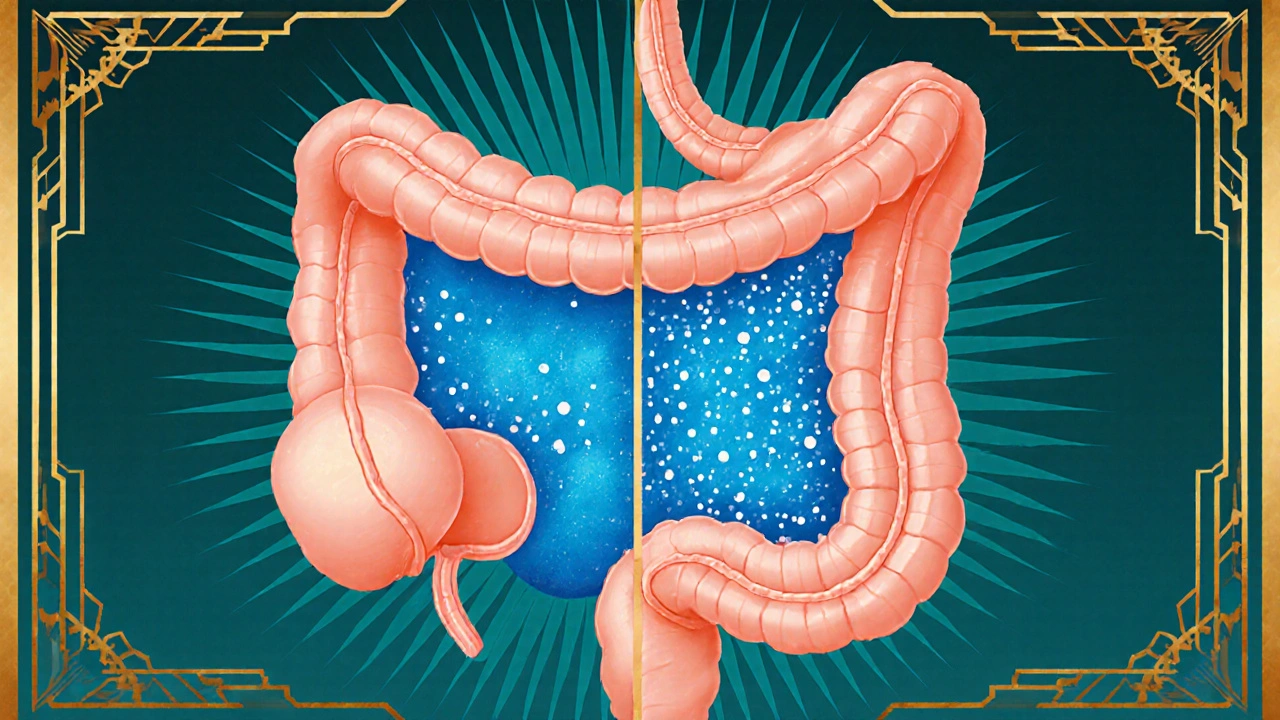
Microscopic colitis is an inflammatory condition of the colon that causes chronic, watery, non-bloody diarrhea. It was first identified in 1984 and later split into two types: collagenous colitis and lymphocytic colitis. Both look identical on the surface during a colonoscopy, but under the microscope, they show clear differences. In collagenous colitis, there’s a thickened band of collagen-over 10 micrometers-under the lining of the colon. In lymphocytic colitis, you see too many white blood cells (lymphocytes) stuck between the cells lining the colon.
These changes stop the colon from absorbing water properly. That’s why diarrhea is the main symptom-often 5 to 10 watery bowel movements a day. Many people also have abdominal pain (40-60%), weight loss (especially in collagenous colitis), fecal incontinence, and nighttime symptoms. It’s not rare. Studies show about 4.85 out of every 100,000 people get lymphocytic colitis each year, and 4.14 get collagenous colitis. The numbers have been rising since the 1990s, mostly because doctors now know to look for it.
Most patients are over 50, and women make up 65-70% of cases. It often takes over a year to get diagnosed because the symptoms mimic other things like irritable bowel syndrome or food intolerances. Without a biopsy, it’s invisible.
Why Budesonide Is the First-Line Treatment
When you’re having 10 bowel movements a day and can’t leave the house, you need something that works fast. That’s where budesonide comes in. It’s a corticosteroid, but unlike prednisone, it’s designed to act mostly in the gut. About 90% of it gets broken down by the liver before it enters your bloodstream. That means fewer side effects like weight gain, high blood sugar, or bone loss.
Multiple clinical trials show budesonide works. In the MICRO-1 and MICRO-2 studies, 84% of people with collagenous colitis went into complete remission after 8 weeks of taking 9 mg daily. That’s compared to just 38% on placebo. For lymphocytic colitis, the numbers are similar-around 75-85% respond. Most people start feeling better within 2 weeks. One patient on PatientsLikeMe said, “Went from 10 bathroom trips daily to 2 within 10 days.”
The European Microscopic Colitis Group and major U.S. guidelines all agree: budesonide 9 mg per day for 6 to 8 weeks is the best starting point. It’s not a cure, but it’s the most effective tool we have to bring symptoms under control quickly.
How It Compares to Other Options
There are other treatments, but none match budesonide’s balance of speed and safety.
- Prednisone works just as well, but up to 45% of users get side effects like insomnia, mood swings, or elevated blood sugar. Budesonide? Only 15%.
- Mesalamine (commonly used in ulcerative colitis) helps about 40-50% of people-less than half the success rate of budesonide.
- Bismuth subsalicylate (Pepto-Bismol) has a 26% remission rate. It’s cheap and safe, but not strong enough for moderate-to-severe cases.
- Cholestyramine helps if bile acid malabsorption is involved, which happens in up to 70% of MC patients. Some doctors combine it with budesonide for better results.
- Anti-TNF drugs like infliximab are expensive ($2,500-$3,000 per infusion) and only work for 20-30% of people. They’re reserved for when budesonide fails.
Budesonide isn’t perfect, but it’s the most reliable option. It’s the standard in 90% of European guidelines and 85% of North American ones.

The Relapse Problem
Here’s the catch: once you stop budesonide, symptoms come back in 50-75% of people within a year. That’s why many need maintenance therapy.
Doctors often reduce the dose slowly-cutting back by 3 mg every 2 to 4 weeks-to lower the chance of relapse. Some patients stay on 6 mg daily for months or even years. About 30-40% of people end up needing long-term treatment. That’s not failure-it’s managing a chronic condition.
But long-term steroid use, even low-dose, raises concerns. Some experts warn about adrenal suppression in older adults. Regular checks for bone density, blood sugar, and blood pressure are recommended for anyone on maintenance therapy for more than 6 months.
Cost is another issue. Generic budesonide costs $150-$250 for an 8-week course. The brand-name version, Entocort EC, can hit $800-$1,200. Without insurance, that’s a major barrier. Many patients on forums like Reddit say they can’t afford to refill it after the first prescription.
What Patients Really Say
Real-world experiences are mixed but mostly positive. On PatientsLikeMe, 68% of 247 users reported major improvement within two weeks. Common praise: “I finally slept through the night.” “I went on a weekend trip without planning my route around bathrooms.”
But 32% had negative experiences. Side effects like insomnia (15%), acne (12%), and mood changes (8%) were reported. One user wrote: “Worked great for 6 weeks, then symptoms returned. Now I’m stuck on maintenance for two years.”
Those who combined budesonide with cholestyramine or dietary changes often had the best outcomes. “Budesonide plus bile acid binder fixed me after 3 years,” said one Reddit user. Diet alone doesn’t cure it, but avoiding caffeine, dairy, or artificial sweeteners can help reduce flare-ups.

What’s Next for Treatment?
Research is moving fast. In 2023, the FDA gave vedolizumab-a drug already used for Crohn’s and ulcerative colitis-Fast Track status for microscopic colitis. Early trials show 65% remission at 14 weeks. It’s not approved yet, but it could become the first biologic option for people who can’t tolerate or respond to budesonide.
Scientists are also looking at genetics. The COLMICS trial is testing whether people with certain genes (HLA-DQ2/DQ8) respond better to budesonide. If true, we could soon test patients before prescribing.
Another update coming in 2024: the European Microscopic Colitis Group will recommend fecal calprotectin as a tool to monitor treatment. It’s a simple stool test that measures gut inflammation. No more guessing if the drug is working-just check the numbers.
When to See a Doctor
If you’ve had watery diarrhea for more than 4 weeks, especially if you’re over 50 or have unexplained weight loss, ask your doctor about microscopic colitis. Don’t assume it’s IBS. A colonoscopy with multiple biopsies is the only way to confirm it. Make sure the doctor takes samples from the right spots-right colon and transverse colon-because the inflammation can be patchy.
Start with a basic workup: blood tests, stool tests to rule out infection, and possibly a hydrogen breath test for small intestinal bacterial overgrowth. If those are normal and diarrhea persists, biopsy is the next step.
Living With It
Microscopic colitis isn’t life-threatening, but it can wreck your quality of life. The good news? Most people respond well to treatment. You don’t need surgery. You don’t need a colostomy. With budesonide, you can get your life back.
Be patient with the process. It takes time to diagnose. It takes time to find the right dose. And it takes time to figure out how to stay in remission. Keep a symptom diary. Track what you eat, how you feel, and when you have accidents. That helps your doctor adjust your plan.
And remember: you’re not alone. Thousands of people live with this. The treatments are improving. The awareness is growing. And for most, budesonide is the key that unlocks normalcy again.
Is microscopic colitis the same as ulcerative colitis?
No. Ulcerative colitis causes visible ulcers and bleeding in the colon, and it shows up clearly during colonoscopy. Microscopic colitis looks completely normal on the surface-you can only see the inflammation under a microscope. The symptoms are similar (chronic diarrhea), but the causes, treatments, and long-term risks are different.
Can I stop budesonide once I feel better?
You shouldn’t stop abruptly. Even if your diarrhea is gone after 6 weeks, your colon may still be inflamed. Stopping too soon increases the chance of relapse. Doctors recommend gradually reducing the dose over several weeks. Some people need to stay on a low dose long-term to keep symptoms away.
Does budesonide cause weight gain?
Unlike prednisone, budesonide rarely causes significant weight gain because it’s mostly broken down by the liver before entering the bloodstream. Some people report mild fluid retention or increased appetite, but it’s far less common than with traditional steroids.
Are there natural remedies for microscopic colitis?
No natural remedy has been proven to induce remission. Some people find relief by avoiding trigger foods like caffeine, dairy, gluten, or artificial sweeteners. Bismuth subsalicylate (Pepto-Bismol) is available over the counter and helps a small number of people, but it’s not as effective as budesonide. Always talk to your doctor before trying supplements-they can interfere with treatment.
How long does it take to diagnose microscopic colitis?
On average, it takes 11 months from the start of symptoms to diagnosis. Many people are misdiagnosed with IBS or food intolerances first. The key is pushing for a colonoscopy with multiple biopsies if diarrhea persists beyond 4 weeks. Don’t accept a normal colonoscopy as the end of the story-biopsies are essential.
Can microscopic colitis turn into cancer?
No. Unlike ulcerative colitis, microscopic colitis does not increase your risk of colon cancer. It’s considered a benign condition. The main concern is quality of life and managing relapses, not cancer prevention.
tushar makwana
November 30, 2025 AT 07:49Thank you for writing this.
Richard Thomas
December 1, 2025 AT 07:46Matthew Higgins
December 1, 2025 AT 17:03Mary Kate Powers
December 3, 2025 AT 05:58Peter Axelberg
December 4, 2025 AT 10:55Monica Lindsey
December 6, 2025 AT 05:38Bernie Terrien
December 7, 2025 AT 11:07Jennifer Wang
December 7, 2025 AT 12:43stephen idiado
December 8, 2025 AT 07:35Subhash Singh
December 9, 2025 AT 21:14Geoff Heredia
December 10, 2025 AT 11:33Andrew Keh
December 11, 2025 AT 09:17Peter Lubem Ause
December 12, 2025 AT 02:41