Non-Opioid Alternatives: A Guide to Multimodal Pain Management
 Apr, 9 2026
For a long time, the go-to answer for severe pain was a prescription pad and a bottle of opioids. But we've seen the fallout: addiction, respiratory issues, and a cycle of tolerance that leaves patients needing more just to feel "normal." The good news is that the medical world has shifted. We're moving toward multimodal pain management, which is basically a fancy way of saying "don't rely on one single drug." By attacking pain from multiple angles-combining different types of medications with physical and mental therapies-we can get effective relief without the scary side effects of heavy narcotics.
If you're dealing with a lingering back injury, joint pain, or the aftermath of a surgery, you might be wondering if you can actually manage your pain without opioids. The answer is a resounding yes for most people. Current guidelines from the Centers for Disease Control and Prevention the national public health agency of the United States now strongly recommend non-opioid and non-pharmacologic therapies as the first line of defense for subacute and chronic pain.
The Multimodal Approach: Why It Works
Think of pain like a fire. An opioid is like a giant blanket that smothers everything-including your consciousness and your breathing. A multimodal strategy, however, is like having a team of firefighters using different tools: one uses water, one uses foam, and another clears the brush. By targeting different pain pathways in the body, you can often achieve the same level of relief with lower doses of individual treatments, which means fewer side effects.
This approach splits treatments into two main buckets: Non-pharmacologic therapy pain management techniques that do not involve the use of medication and non-opioid pharmacologic options. When you combine these, you aren't just masking the symptoms; you're often improving how your body functions.
Non-Pharmacologic Strategies for Every Stage of Pain
Depending on whether your pain just started or has been with you for years, the tools change. For acute pain-like a sprained ankle or a sudden flare-up-the focus is on reducing inflammation and protecting the area.
- Cold and Heat: Applying ice for 15-20 minutes every few hours during the first 48-72 hours helps bring down swelling. After that, moist heat packs at 40-45°C can relax stiff muscles.
- Movement and Rest: While some immobilization is needed early on, gentle exercise prevents the joints from freezing up.
When pain becomes chronic, the strategy shifts toward "retraining" the body and mind. This is where the real heavy lifting happens. For instance, Cognitive Behavioral Therapy a psychological treatment that helps people manage their reactions to pain (CBT) typically involves 8-12 weekly sessions. It doesn't "cure" the physical injury, but it changes how your brain processes pain signals, which can lead to a 30-50% reduction in perceived pain for those with chronic low back issues.
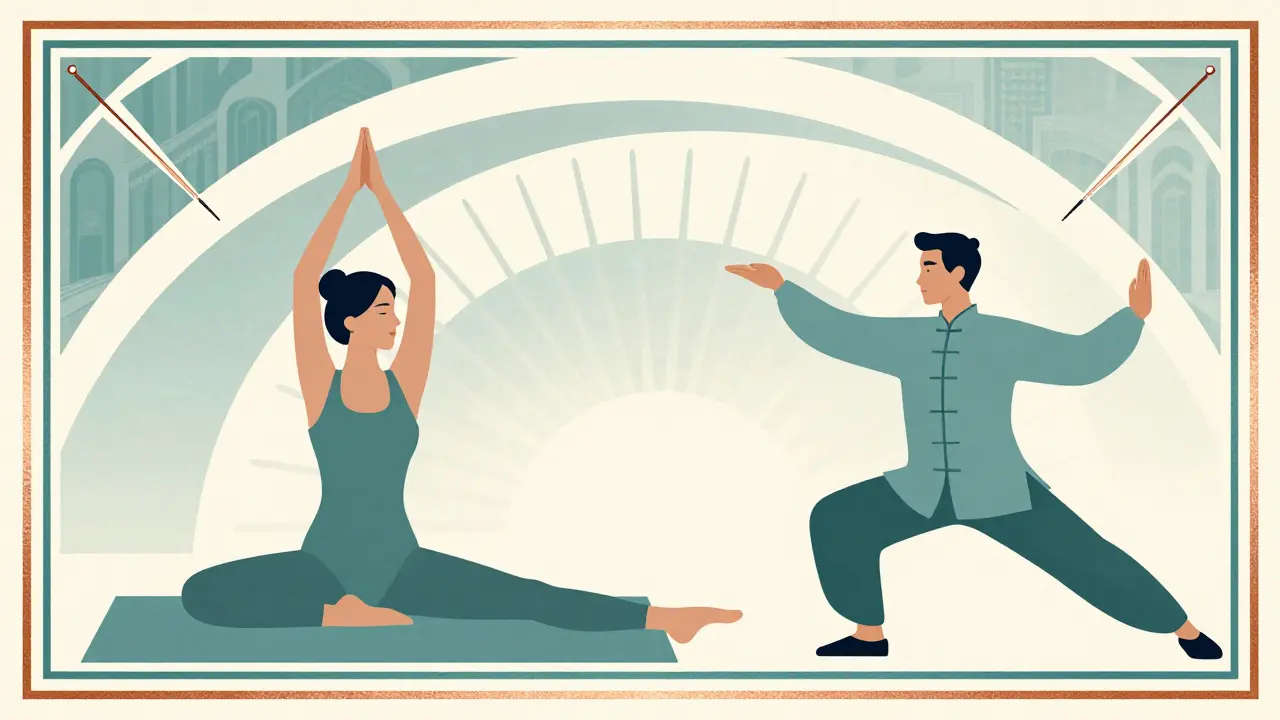
Physical movement is equally vital. You don't need an expensive gym membership to see results. Research shows that low-cost group aerobics can be just as effective as expensive individual physical therapy for low back pain. Whether it's yoga sessions of 60-90 minutes or daily Tai Chi, the goal is to keep the body fluid and the mind focused.
Non-Opioid Medications: Beyond the Basics
Most of us know about Acetaminophen a common over-the-counter analgesic and antipyretic (Tylenol) and NSAIDs nonsteroidal anti-inflammatory drugs like ibuprofen and naproxen. These are the workhorses of non-opioid care. For chronic joint pain, a topical diclofenac gel applied four times a day can reduce pain by 20-40% without the stomach upset that comes with oral pills.
But there is a new wave of science hitting the market. One of the biggest milestones in 25 years is the FDA approval of suzetrigine a selective NaV1.8 sodium channel inhibitor used for acute pain, marketed as Journavx. Unlike opioids, which mess with your brain's reward system, suzetrigine targets specific sodium channels in the peripheral nerves. This means you get the pain relief for moderate to severe acute pain without the risk of addiction or the dreaded "opioid constipation."
| Approach | Typical Use Case | Key Benefit | Main Risk/Limitation |
|---|---|---|---|
| Topical NSAIDs | Osteoarthritis / Joint Pain | Local relief, low systemic absorption | Skin irritation |
| CBT & Mindfulness | Chronic Low Back Pain | Changes pain perception, no drug side effects | Requires high time commitment |
| Suzetrigine | Acute Moderate to Severe Pain | Strong analgesia without addiction risk | Newer drug; longer-term data pending |
| Acupuncture | Chronic Tension / Nerve Pain | Low adverse event rate (0.14 per 10k) | Variable effectiveness between patients |
The Risks You Should Actually Worry About
Let's be honest: "non-opioid" doesn't mean "risk-free." While we're avoiding the danger of respiratory depression (which affects 50-80% of opioid users), other medications have their own baggage. If you're using oral NSAIDs long-term, there's a 1-2% annual risk of gastrointestinal bleeding. If you're relying on acetaminophen, exceeding 4,000 mg a day can lead to serious liver toxicity. This is exactly why the multimodal part is so important. If you use a bit of heat, a bit of gentle stretching, and a low dose of medication, you don't have to max out on any one drug, which keeps your organs safer.

What's on the Horizon?
The future of pain management is moving toward extreme precision. Researchers at Duke University are currently working on ENT1 inhibitors. While opioids cause you to develop a tolerance (meaning you need more and more to get the same effect), these new inhibitors might actually become *more* effective with repeated use. Imagine a medication that gets better the more you use it, rather than worse.
Additionally, compounds like CP612 are showing promise in treating chemotherapy-induced nerve pain and even helping people through the agony of opioid withdrawal without being addictive themselves. We are moving toward a world where we treat the specific *type* of pain-whether it's neuropathic, inflammatory, or nociceptive-rather than just numbing the entire nervous system.
Putting it Into Practice: A Checklist for Patients
If you're looking to build your own non-opioid plan with your doctor, keep these rules of thumb in mind:
- Start Low, Go Slow: Begin with non-pharmacologic options like ice/heat and gentle movement before adding medications.
- Combine Classes: Using a topical gel and a mind-body practice (like yoga) is often more effective than doubling the dose of a single pill.
- Track Your Triggers: Keep a diary. Does the pain respond better to movement or stillness? This helps your doctor tweak the multimodal mix.
- Commit to the Process: CBT and exercise aren't overnight fixes. They require weeks of consistency to change how your nerves communicate with your brain.
Can non-opioids really handle severe acute pain?
For the most extreme traumas, potent analgesics are sometimes still necessary. However, new drugs like suzetrigine are closing the gap, providing comparable efficacy to opioids for moderate to severe acute pain without the risk of addiction or respiratory suppression.
Is acupuncture actually scientifically backed?
Yes. The CDC identifies it as a viable non-pharmacologic therapy for chronic pain, noting an incredibly low adverse event rate of only 0.14 per 10,000 treatments. It is often most effective when used in a series of 8-12 sessions over several weeks.
What is the safest way to use NSAIDs for long-term pain?
Topical NSAIDs (like diclofenac gel) are generally safer for long-term use because they don't enter the bloodstream in high concentrations, significantly reducing the risk of stomach ulcers and kidney issues compared to oral pills.
How long does it take for CBT to work for pain?
CBT is not an instant fix. It typically requires 8-12 weekly sessions of 50-60 minutes. Patients often see a 30-50% reduction in pain levels once they've learned the cognitive tools to manage their response to chronic signals.
Why is "multimodal" better than just taking one strong pill?
Using multiple low-dose treatments that target different biological pathways (e.g., a nerve blocker, a physical stretch, and a mental relaxation technique) usually provides better overall relief with far fewer side effects than one high-dose medication.
Sarina Montano
April 10, 2026 AT 12:42The bit about suzetrigine is absolutely fascinating. It's like a precision strike against pain instead of just nuking the whole nervous system with a heavy-duty narcotic. I've always found the idea of targeting specific sodium channels to be such a clever way to bypass the brain's reward circuitry and avoid that whole messy cycle of dependency.
Franklin Anthony
April 12, 2026 AT 00:12funny how the fda suddenly loves a new drug just as they realize the old ones are a disaster just follow the money folks
Simon Jenkins
April 13, 2026 AT 12:40Honestly, the sheer audacity of suggesting that low-cost aerobics can be comparable to specialized physical therapy is simply laughable. I have spent thousands on elite rehabilitation professionals, and the idea that a group of seniors in a community center doing jazzercise provides the same clinical outcome as a bespoke biomechanical analysis is an insult to the profession! Truly a travesty of medical simplification.
Trey Kauffman
April 14, 2026 AT 20:19Right, because nothing says "modern medicine" like telling someone with chronic agony to just think their way out of it with 12 weeks of chatting. Truly a revolutionary breakthrough in the art of ignoring the problem.
Emily Wheeler
April 15, 2026 AT 07:19I find it so incredibly heartening to see the shift toward a more holistic integration of mind and body because, when you really stop to contemplate the nature of suffering, it's clear that our physical sensations are so deeply intertwined with our mental state, and by leaning into these long-term commitments like CBT or yoga, we aren't just treating a symptom but are actually embarking on a journey of self-discovery and healing that respects the innate wisdom of the human body to restore its own balance over time.
Victor Parker
April 16, 2026 AT 07:43Acupuncture is just a way for them to keep you coming back for more sessions 🙄 they probably just poke you with needles to distract you from the fact that the real cure is being hidden by big pharma 🤡
Peter Meyerssen
April 17, 2026 AT 13:13The pharmacological synergy here is basically just a basic application of the additive effect in a clinical setting 🙄 it's a paradigm shift for the masses but totally elementary for anyone who understands the actual molecular dynamics of NaV1.8 inhibition. Simple stuff really.
Ryan Hogg
April 18, 2026 AT 08:27I've tried every single thing on this list. I've done the yoga, the CBT, the gels... nothing works for me. It's just a constant, grinding weight in my spine that makes me wake up dreading every single second of the day. I feel like I'm just shouting into a void while everyone else tells me to just "try breathing exercises." It's exhausting to even pretend to be hopeful anymore.
Ben hogan
April 20, 2026 AT 05:00This whole "multimodal" buzzword is just a way to shift the burden of care from the doctor to the patient. Now instead of one pill, you have to do five different things and track them in a diary like some kind of medical intern. It's a lazy approach to medicine wrapped in a "holistic" bow.
Kelly DeVries
April 20, 2026 AT 22:02honestly just try the gel it works way better than those pills that wreck your stomach anyway just rub it on and go about your day lol
Suchita Jain
April 21, 2026 AT 22:02It is highly imperative that individuals do not disregard the traditional wisdom of the East in favor of these new synthetic compounds. One must maintain a disciplined approach to one's physical temple if one wishes to achieve true liberation from pain.
Simon Stockdale
April 22, 2026 AT 13:42Man we really got the best medtech in the whole world right here in the US and people still wanna complain about it!! I bet some of these other countries dont even have half of this stuff and they just gotta deal with it the hard way while we got this fancy a guide to keep us feeling great while we build the greatest nation on earth!!!!
Danny Wilks
April 24, 2026 AT 12:57I've noticed that in various cultures, the approach to chronic pain is far less about the immediate eradication of the sensation and far more about the integration of that pain into a daily rhythm of life, which makes the suggestion of mindfulness and movement feel very aligned with a more global perspective on wellness and longevity.
Lynn Bowen
April 25, 2026 AT 05:12The focus on non-opioid options is definitely a positive step for public health.
kalpana Nepal
April 25, 2026 AT 07:51These western drugs are just temporary fixes. In India we have known the power of the mind and ancient herbs for thousands of years while you people are just now discovering that yoga helps. It is simple truth.