Obesity Comorbidities: How Diabetes, Heart Disease, and Sleep Apnea Connect
 Mar, 14 2026
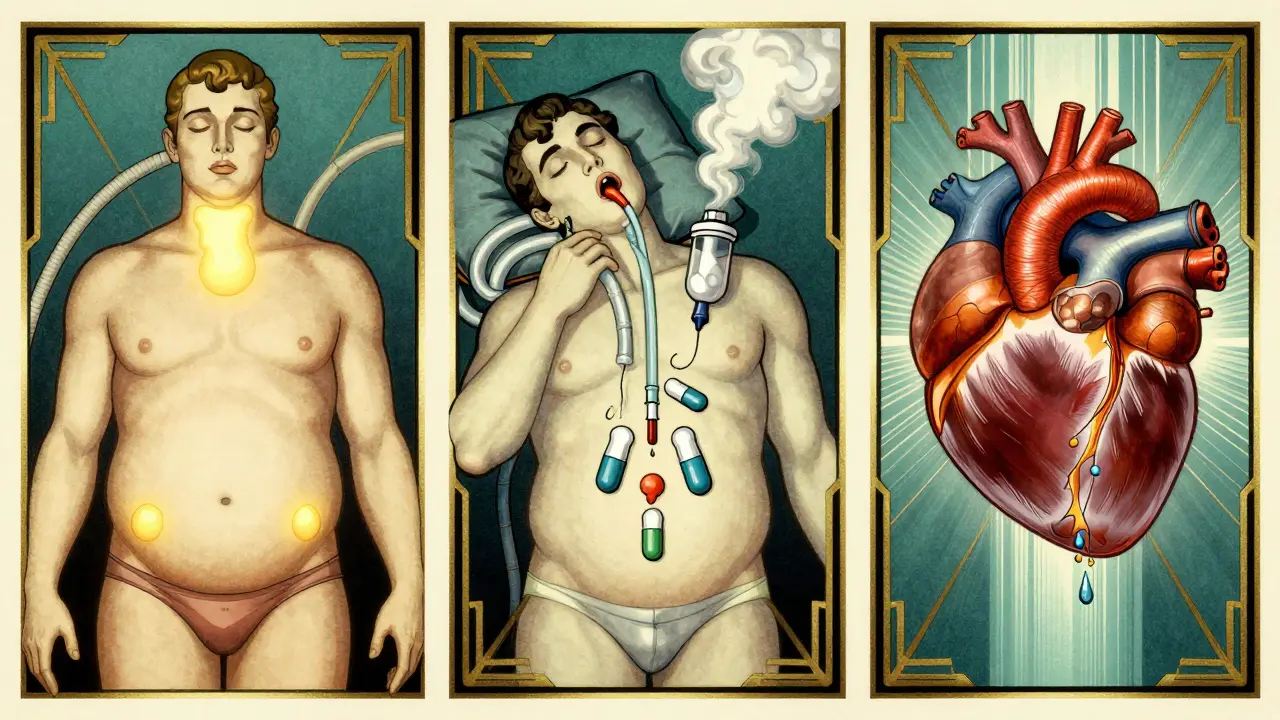
When you hear the word obesity, you might think of weight alone. But for millions of people, it’s not just about the number on the scale-it’s about what that extra weight does to the body behind the scenes. Obesity doesn’t sit quietly. It triggers a chain reaction, pulling in other serious conditions like type 2 diabetes, heart disease, and sleep apnea. These three don’t just happen alongside obesity-they feed off each other, making everything worse. This isn’t a coincidence. It’s a biological domino effect.
The Triad No One Talks About
Doctors call it the obesity comorbidity triad: obesity, type 2 diabetes, and obstructive sleep apnea (OSA). Add heart disease to the mix, and you’ve got a perfect storm. Each condition makes the others more likely, more severe, and harder to treat. It’s not just that being overweight increases your risk-it’s that once one of these conditions takes hold, the others follow fast.
Take sleep apnea. It’s not just loud snoring. It’s when your airway collapses during sleep, cutting off oxygen for seconds at a time, sometimes hundreds of times a night. A 2018 study found that 86% of obese people with type 2 diabetes also had sleep apnea. That’s not random. Fat buildup around the neck and throat physically narrows the airway. Each extra pound of body mass index (BMI) increases your sleep apnea risk by 14%. And it’s not just BMI-waist size matters even more. For every centimeter your waist grows, your chance of sleep apnea goes up by 12%.
How Fat Turns Into Diabetes
Obesity doesn’t just make you heavier-it makes your body resistant to insulin. That’s the hormone that tells your cells to take sugar out of your blood. When fat cells grow too large, they start releasing inflammatory chemicals. These chemicals interfere with insulin’s job. The result? Blood sugar climbs. That’s how obesity leads to type 2 diabetes.
But here’s the twist: sleep apnea makes diabetes worse. When you stop breathing at night, your oxygen levels drop. Your body responds by releasing stress hormones. These hormones spike your blood sugar-even if you didn’t eat anything. One study showed that people with severe sleep apnea had 30% more insulin resistance than those without it, even if they weighed the same. So even if you’re managing your diet and meds, untreated sleep apnea can keep your blood sugar high.
Heart Disease: The Silent Killer in the Dark
Your heart doesn’t get a break during sleep. In fact, when you have sleep apnea, it’s under constant strain. Every time your airway closes, your body panics. Your heart rate spikes. Your blood pressure surges by 15 to 25 mmHg. These spikes happen over and over all night. That’s not normal stress. That’s like running a marathon while you’re asleep.
Over time, this damages your arteries, thickens your heart muscle, and raises your risk of heart attack, stroke, and heart failure. A 2020 study found that obese people with sleep apnea had 2.3 times the risk of heart failure compared to those with obesity alone. Add diabetes into the mix? That risk jumps to 3.7 times higher.
And it gets worse. A 2019 study using genetic data showed that sleep apnea itself causes about 6.4% of the heart rhythm problems linked to obesity. That means even if you lose weight, if your sleep apnea stays untreated, your heart is still at risk.

The Vicious Cycle
This isn’t a straight line. It’s a loop.
- Obesity causes sleep apnea by filling up your airway with fat.
- Sleep apnea makes diabetes harder to control by raising blood sugar at night.
- Diabetes damages nerves that help keep your airway open, making sleep apnea worse.
- Both conditions strain your heart, leading to high blood pressure and thickened heart muscle.
- That strain increases the chance of heart attack or stroke.
And here’s the cruel part: when you’re tired from poor sleep, you’re less likely to exercise. When your blood sugar is high, you crave sugar. When your heart is struggling, you feel too worn out to try. It’s not laziness. It’s biology.
What Actually Helps
The good news? Breaking this cycle is possible. And it doesn’t require perfection.
Weight loss is the most powerful tool. Losing just 10% of your body weight can cut sleep apnea severity in half. In one study, obese patients with diabetes who lost 3.2 kg over six months saw their HbA1c drop from 8.2% to 7.4%. That’s a big deal. It means less damage to kidneys, eyes, and nerves.
But weight loss alone isn’t always enough. If you have sleep apnea, treating it directly matters just as much. Continuous positive airway pressure (CPAP) therapy-wearing a mask that keeps your airway open at night-has been proven to lower blood pressure, reduce insulin resistance, and cut heart attack risk by nearly a third in people who use it consistently.
And there’s new hope. In 2024, researchers found that GLP-1 medications like semaglutide don’t just help with weight loss-they also reduce fat around the airway, improving sleep apnea even before major weight loss happens. That’s groundbreaking.

Screening Is the First Step
Here’s the problem: most people don’t know they have sleep apnea. A 2022 survey found that 74% of obese people with diabetes had never been screened for it. Doctors often focus on blood sugar or cholesterol and miss the sleep issue.
The American Diabetes Association now recommends that everyone with obesity and type 2 diabetes get checked for sleep apnea. A simple questionnaire called STOP-Bang can help. If you snore loudly, feel tired during the day, have high blood pressure, or have a large neck size, you should be tested.
And if you’re diagnosed? Treatment works. CPAP isn’t perfect-it can feel uncomfortable at first-but studies show that even using it 4 hours a night, 70% of the time, cuts cardiovascular events by 28%. And for those who can’t tolerate the mask, new devices like the hypoglossal nerve stimulator (Inspire) are now available. It’s implanted like a pacemaker and gently stimulates the tongue to keep the airway open.
Why This Matters Now
Obesity affects over 40% of adults in the U.S. And with it comes a hidden epidemic of undiagnosed sleep apnea and uncontrolled diabetes. The cost? Not just in dollars-though obese patients with all three conditions spend over $12,000 more per year on healthcare-but in lives lost too early.
But we can change this. When doctors screen for sleep apnea in diabetic patients, when patients get support to lose weight, and when treatments are used consistently, outcomes improve dramatically. One health system in California cut hospital visits by 18% in just one year by linking care between endocrinologists, sleep specialists, and dietitians.
This isn’t about willpower. It’s about understanding how your body works. Obesity isn’t just a number. It’s a signal that something deeper is going on. And if you’re dealing with diabetes or sleep problems, it’s time to ask: could sleep apnea be part of the puzzle?
Can losing weight cure sleep apnea?
Yes, in many cases. Losing 10% of your body weight can reduce sleep apnea severity by about 50%. In some people, especially those with mild to moderate sleep apnea, weight loss can eliminate the condition entirely. Bariatric surgery has shown remission rates as high as 78% for sleep apnea. But even modest weight loss helps-enough to reduce breathing pauses during sleep and improve daytime energy.
Do I need to be tested for sleep apnea if I have type 2 diabetes?
Absolutely. Studies show that 60% to 80% of people with type 2 diabetes and obesity also have undiagnosed sleep apnea. The American Diabetes Association now recommends routine screening for all patients with BMI over 30. If you snore, feel tired during the day, or have high blood pressure, you should get checked-even if you think your diabetes is under control.
Does treating sleep apnea help with blood sugar?
Yes. Using CPAP regularly for at least 4 hours a night improves insulin sensitivity and lowers HbA1c levels. One study found an average drop of 0.8% in HbA1c after six months of consistent CPAP use. That’s similar to the effect of adding a second diabetes medication. Better sleep means better glucose control, even without changing diet or meds.
Why do some people with obesity not get sleep apnea?
Not everyone with obesity develops sleep apnea. About 25% to 30% of people with sleep apnea are not overweight. Genetics, jaw structure, neck fat distribution, and muscle tone in the airway all play a role. Some people store fat around their neck more than others, which is a bigger risk factor than overall BMI. That’s why waist size and neck circumference are better predictors than BMI alone.
Is CPAP the only treatment for sleep apnea?
No. While CPAP is the most common and effective treatment, alternatives exist. Oral appliances can help people with mild to moderate sleep apnea by repositioning the jaw. Newer options include the hypoglossal nerve stimulator (Inspire), which is implanted and helps keep the airway open during sleep. Positional therapy (sleeping on your side) and weight loss are also effective for some. The best choice depends on your anatomy, severity, and tolerance for devices.
If you’re living with obesity, diabetes, or both, don’t assume your symptoms are just part of the package. Ask your doctor about sleep apnea. Get tested. Treat it. It’s not just about better sleep-it’s about protecting your heart, your metabolism, and your future.
Shruti Chaturvedi
March 14, 2026 AT 19:58My mom had diabetes and sleep apnea for years before anyone connected the dots
We thought her fatigue was just aging
Turns out her CPAP made a bigger difference than her meds
Why isn't this screening standard everywhere?
Katherine Rodriguez
March 16, 2026 AT 19:37It's a complex biological cascade and we keep acting like people just need to eat less
My cousin lost 100 pounds and still had apnea because of her jaw structure
Stop blaming people
Hugh Breen
March 18, 2026 AT 11:24I was diagnosed with all three last year and it felt like someone flipped a switch
CPAP was the hardest thing but also the most life-changing
My energy went from 'zombie mode' to 'I can actually hike again' 🙌
Doctors need to stop treating symptoms and start treating the whole system
Byron Boror
March 18, 2026 AT 18:13It's just Big Pharma pushing CPAP machines and GLP-1 drugs
People have been living with weight and sleep issues for centuries without all this medical intervention
Why are we suddenly treating it like a crisis?
Sabrina Sanches
March 20, 2026 AT 02:13My sister was told her diabetes was 'just genetics' until she got tested for sleep apnea
Now she's on CPAP and her A1C dropped 2 points
It's not magic it's medicine
Everyone needs to know this
rakesh sabharwal
March 20, 2026 AT 11:45One must consider the heterogeneity of fat distribution, adipokine profiles, and visceral-to-subcutaneous ratios
Moreover, the epidemiological correlation between OSA and T2DM does not establish causality without controlling for confounders such as socioeconomic status and dietary patterns
Aaron Leib
March 20, 2026 AT 22:04As a primary care provider, I see this every day
Most patients don't realize their daytime tiredness isn't normal
We need better systems to screen and connect care
Not just more drugs
Dylan Patrick
March 21, 2026 AT 13:44It's not expensive. It's not complicated.
It's a questionnaire and a sleep study.
Why are we waiting for people to have heart attacks before we do this?
Stephanie Paluch
March 22, 2026 AT 08:55I thought I was just 'bad at sleep'...
Turns out I had moderate OSA
CPAP felt weird at first but now I don't even remember how I lived without it
My mood, my energy, my blood sugar - all better
Don't wait. Get tested.