Opioid Rotation: How Switching Medications Can Reduce Side Effects
 Jan, 3 2026
Opioid Rotation Calculator
Based on current medical guidelines, this calculator helps determine safe dose equivalents when switching opioids. Remember: Always reduce the new opioid dose by 25-50% to account for incomplete cross-tolerance and prevent overdose. This tool uses standard conversion ratios but should be used under medical supervision.
| Morphine | Oxycodone | Fentanyl | Methadone | |
|---|---|---|---|---|
| Nausea | ||||
| Constipation | ||||
| Sedation | ||||
| Duration | 2-4 hours | 4-6 hours | 24-72 hours | 24-36 hours |
Why Opioid Rotation Matters in Chronic Pain Management
When someone has been on the same opioid for months or years, it’s common to hit a wall. The pain doesn’t get better, but the side effects do-drowsiness, nausea, constipation, confusion, even muscle twitching. Many patients and doctors assume the solution is to just increase the dose. But that often makes things worse. That’s where opioid rotation comes in: switching from one opioid to another not to chase more pain relief, but to escape the side effects that are ruining quality of life.
This isn’t a last resort. It’s a standard, evidence-backed strategy used in pain clinics and palliative care around the world. Studies show that 50 to 90% of patients who switch opioids see real improvements in how they feel-not because the new drug is magically stronger, but because their body reacts differently to it. Some people tolerate oxycodone just fine but can’t handle morphine. Others find fentanyl patches reduce nausea where methadone failed. It’s not about the drug class-it’s about the individual.
When Is Opioid Rotation the Right Move?
Opioid rotation isn’t for everyone. It’s not a quick fix for a bad day. Experts agree it’s appropriate only when specific problems arise. The most common reasons are:
- Unbearable side effects-like constant vomiting, extreme drowsiness, or mental fog that makes it hard to work or care for yourself.
- Pain isn’t improving despite increasing the dose by more than 100%. If doubling your dose doesn’t cut your pain in half, you’re not getting more benefit-you’re just stacking up side effects.
- Drug interactions-if you’re starting a new medication (like an antidepressant or anticonvulsant) that could react badly with your current opioid.
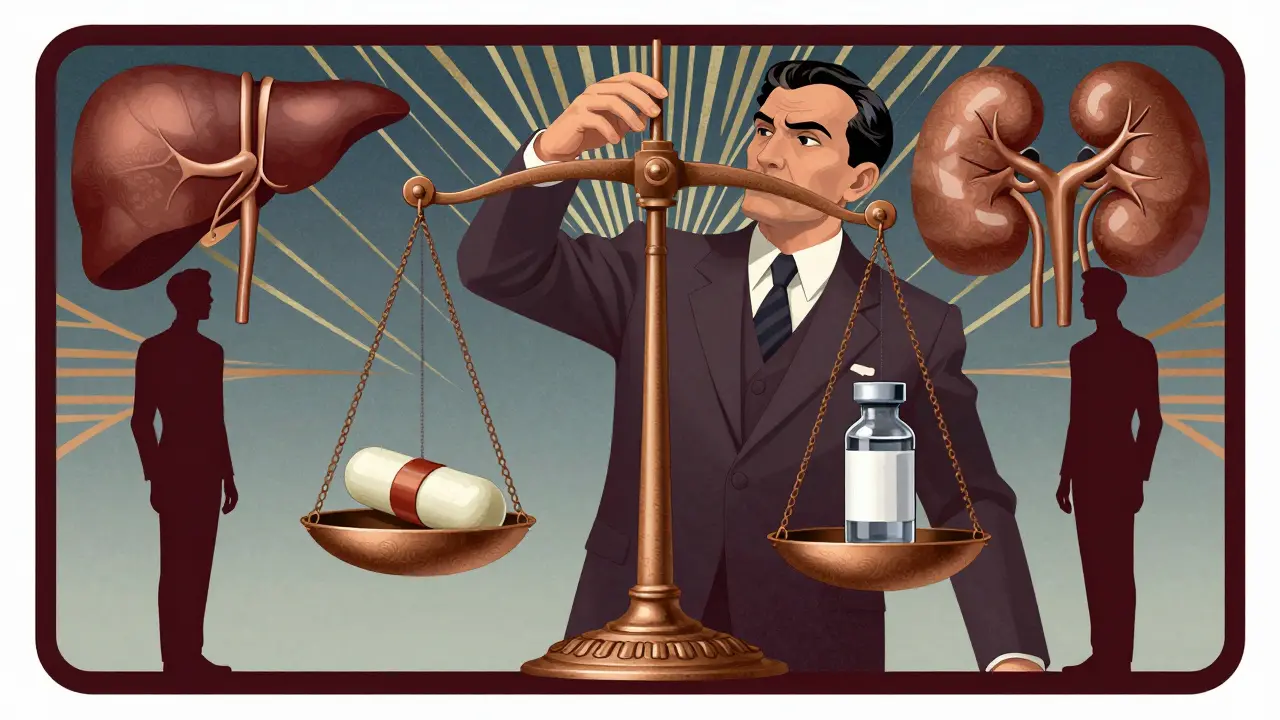
- Changes in your body-kidney or liver function declines with age or illness, and some opioids are harder for your body to clear than others.
- Need for a different delivery method-if swallowing pills becomes difficult, switching to a patch, injection, or suppository might be safer and more effective.
One thing it’s not for: a sudden spike in pain. That’s a crisis, not a rotation opportunity. And it’s not because you’re “resistant” to opioids. That’s a myth. Your body isn’t broken-it’s just not responding to that specific chemical.
What Happens When You Switch? The Science Behind the Change
Not all opioids are the same, even if they’re all in the same family. They bind to receptors in your brain and gut differently. Morphine might cause severe nausea because it strongly affects the area of your brain that triggers vomiting. Oxycodone? Less so. Fentanyl? Even less. Methadone has a unique shape that lets it work on multiple pain pathways at once, which can mean better control with fewer side effects.
Research from cancer pain patients shows clear patterns: switching from morphine to oxycodone or fentanyl reduces nausea and vomiting in up to 70% of cases. Constipation also improves-though not always. Clouded vision, a less talked-about side effect, often clears up after a switch. One study of 49 patients found that after rotation, sedation dropped by half, vomiting disappeared in most, and patients reported feeling more alert and in control.
But here’s the catch: it’s not always the new drug that’s doing the heavy lifting. Often, when doctors rotate opioids, they also reduce the total dose by 25-50% to avoid overdose. That dose cut alone can reduce side effects. So is the improvement from the drug change-or the lower dose? The truth is, it’s probably both.
Methadone: The Exception That Changes the Rules
Methadone is different. It’s not just another opioid. It lasts longer, works on more receptors, and-critically-it often lets patients use less of it overall. In fact, studies show methadone is the only opioid rotation that consistently lowers the Morphine Equivalent Daily Dose (MEDD). That’s huge. Lower MEDD means fewer side effects, less risk of overdose, and better long-term safety.
But here’s where things get tricky. The old conversion ratios-like 10 mg of morphine equals 1 mg of methadone-are outdated. New data suggests the real ratio might be closer to 9:1 or even 12:1, depending on your dose and why you’re switching. If you’re rotating for side effects, the ratio is usually more conservative (around 9:1). If you’re switching for pain control, it might be higher. Mess this up, and you risk serious harm. That’s why methadone rotations should only be done by experienced providers who track your response closely.
The Safety Risk: Getting the Dose Wrong
Opioid rotation is one of the most dangerous things you can do in pain management-if it’s not done right. The biggest risk? Overdose. Your body doesn’t instantly adapt to the new drug. Even if you’re taking the “equivalent” dose, you might still be too high. That’s called incomplete cross-tolerance. It’s why guidelines recommend reducing the new opioid’s dose by 25-50% when switching, especially from long-acting opioids like fentanyl or methadone.
And don’t assume all online calculators are accurate. Many use outdated ratios. Even some hospital systems still default to old numbers. The 2009 expert panel made this clear: safety must come before convenience. There are no large randomized trials proving one rotation protocol is perfect. So the safest path is conservative: start low, go slow, watch closely.
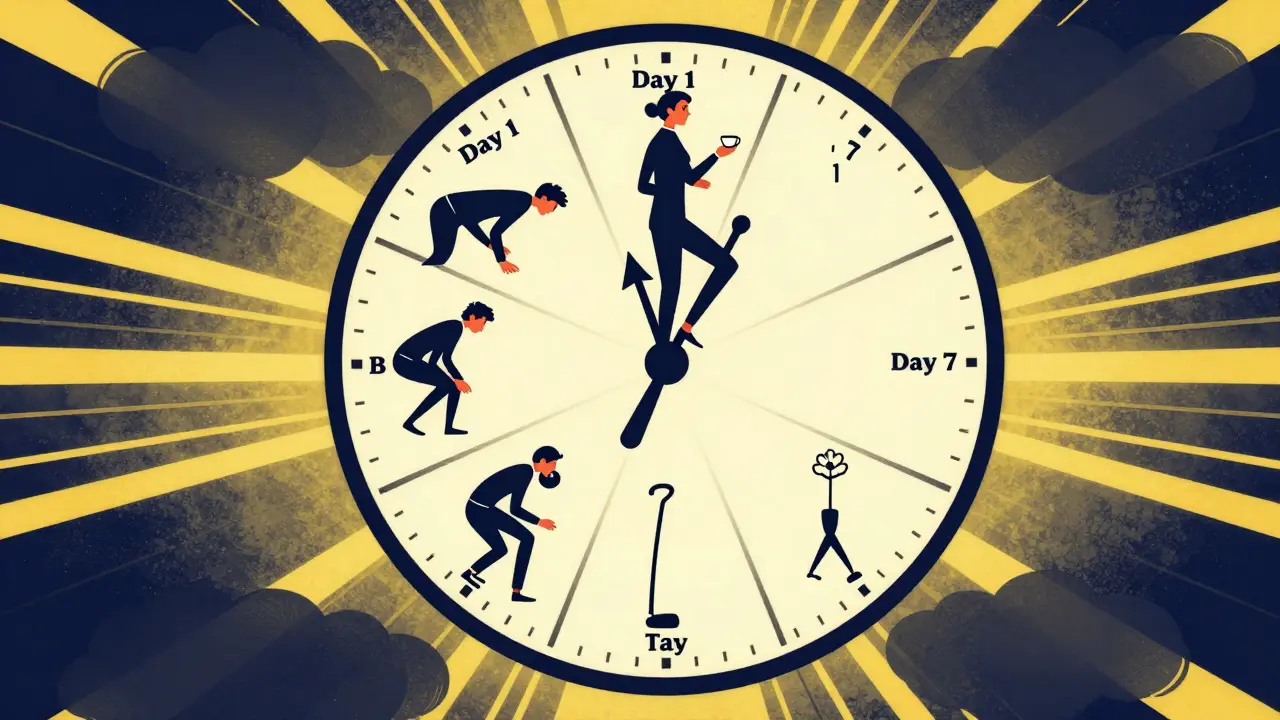
That’s why rotation should never be rushed. It’s not a one-time switch. It’s a process. You need to monitor for 3-7 days after the change. Are you sleeping better? Is the nausea gone? Are you able to eat or walk without feeling dizzy? Those are the real signs it worked.
What Comes After the Switch?
Rotation isn’t the end-it’s the start of a new phase. After switching, your doctor should document:
- Why you rotated (exact reason)
- Which opioid you switched from and to
- The conversion ratio used
- How much the dose was reduced
- Your response over the next week
This isn’t just paperwork. It’s data that helps future decisions. If you switch to oxycodone and feel better, that’s useful info if you ever need to rotate again. If you switch to methadone and your pain worsens, that’s also useful. Every rotation adds to your medical story.
Some clinics now use electronic health records with built-in alerts that flag when a rotation might be risky. That’s a step forward. But nothing replaces the human touch: a doctor who listens, asks how you’re really feeling, and doesn’t just look at numbers.
What’s Next for Opioid Rotation?
Right now, rotation is still guided by a 2009 consensus. It’s old, but it’s still the gold standard because no newer trials have replaced it. Researchers are working on better tools: genetic tests that predict how you’ll respond to certain opioids, AI-driven dosing calculators that adjust for your age, kidney function, and other meds, and standardized protocols that can be embedded in clinic workflows.
One day, you might get a simple blood test that tells your doctor: “You metabolize morphine slowly-try oxycodone instead.” That’s not science fiction. It’s already being tested in research hospitals. Until then, rotation remains a smart, practical tool-if used carefully.
If you’re considering a switch, ask your doctor: “What’s the plan if this doesn’t work?” “What side effects should I watch for?” “Will my dose be lowered?” If they can’t answer clearly, it’s time to find someone who can.
Is opioid rotation safe?
Yes, when done correctly under medical supervision. The biggest risk is overdose due to incorrect dosing. That’s why experts always recommend reducing the new opioid’s dose by 25-50% to account for incomplete cross-tolerance. Always work with a provider experienced in opioid management-never switch on your own.
Can opioid rotation help with constipation?
Sometimes. Constipation is caused by opioids acting on gut receptors, and different opioids affect the gut differently. Switching from morphine to oxycodone or fentanyl often reduces constipation, but not always. Some people still need laxatives or other bowel management strategies even after rotation.
Why is methadone different in opioid rotation?
Methadone works on multiple pain pathways and lasts longer than most opioids. It often allows patients to achieve the same pain control with a lower total daily dose, which reduces side effects. Recent studies suggest its potency is higher than older conversion ratios indicate, especially when switching for side effects, so dosing must be cautious.
How long does it take to see results after switching opioids?
Most people notice changes within 3 to 7 days. The new drug needs time to build up in your system, and side effects like drowsiness or nausea may take a few days to fade. Your doctor should schedule a follow-up during this window to assess how you’re doing.
Does opioid rotation mean I’m addicted?
No. Opioid rotation is a clinical strategy to improve pain control and reduce side effects-it’s not a sign of addiction. Addiction involves compulsive use despite harm, while rotation is a planned, monitored adjustment to optimize treatment. Many patients rotate opioids multiple times without ever developing addiction.
Can I rotate opioids on my own if I’m not feeling well?
Never. Opioid rotation requires precise calculations and close monitoring. Self-switching can lead to overdose, withdrawal, or worsening pain. Always consult your pain specialist or prescribing provider before making any changes.
Neela Sharma
January 4, 2026 AT 10:04Shanahan Crowell
January 6, 2026 AT 07:21Kerry Howarth
January 6, 2026 AT 10:50Shruti Badhwar
January 6, 2026 AT 14:03Tiffany Channell
January 7, 2026 AT 09:44Liam Tanner
January 9, 2026 AT 07:09Ian Detrick
January 9, 2026 AT 22:21Angela Goree
January 11, 2026 AT 12:26