Pediatric Hearing Loss: Screening, Causes, and Early Intervention Guide
 May, 21 2026
Why the First Few Months Matter More Than You Think
You might think a baby’s first job is just to sleep and eat. But their ears are working overtime from day one. Pediatric hearing loss is any degree of auditory impairment in children from birth through age 21 that can significantly impact speech, language development, cognitive function, and social-emotional growth. If you miss the window for detection, the consequences ripple out into school performance, social confidence, and even career choices later in life. The good news? We have a proven system to catch it early. It’s called the Early Hearing Detection and Intervention (EHDI) framework, which was established following recommendations from the Joint Committee on Infant Hearing (JCIH). This isn’t just a suggestion; it’s a medical standard that has saved thousands of children from silent isolation.
The stakes are high because language develops fastest in the first three years of life. Research shows that children identified with hearing loss before 6 months achieve normal language outcomes 60-70% of the time. Wait until after 12 months, and that number drops to just 20-30%. That gap isn’t just about statistics; it’s about whether your child will speak like their peers or struggle to keep up in kindergarten. Understanding how this system works helps you advocate for your child effectively.
How Newborn Screening Actually Works
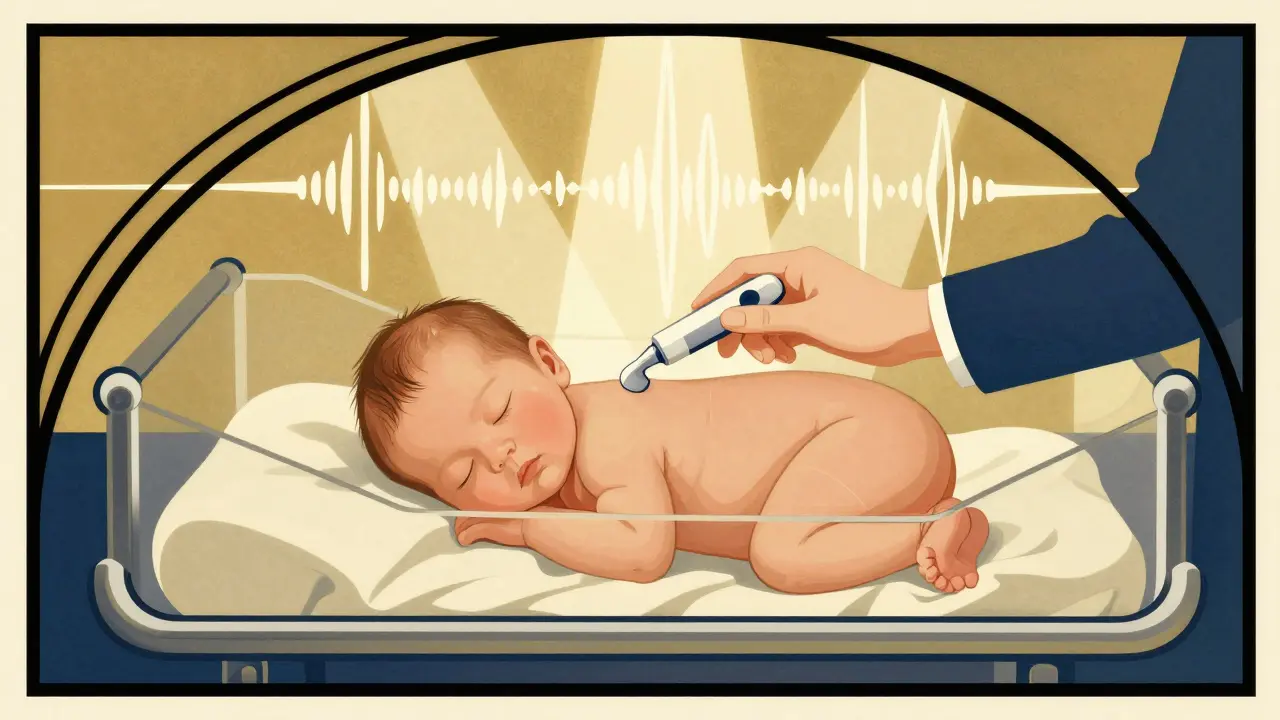
Most parents don’t realize their baby is being screened while they’re still in the hospital. Universal newborn hearing screening became standard practice across the United States after the 1993 JCIH position statement advocated for systematic early identification. Today, 94% of U.S. newborns receive hearing screening before hospital discharge, according to CDC 2022 data. But what does that test actually look like?
There are two main types of tests used during this initial screen:
- Otoacoustic Emissions (OAE): A small probe is placed in the ear canal. It plays soft clicks and measures the sound waves bouncing back from the inner ear. If the inner ear is healthy, it echoes back. If it doesn’t, the baby fails the screen. This requires a quiet environment and minimal movement.
- Automated Auditory Brainstem Response (AABR): Electrodes are placed on the baby’s head to measure how the brain responds to sound. This is often used for babies in the NICU or those with risk factors because it checks both the ear and the nerve pathway to the brain.
If your baby “fails” the screen, take a deep breath. Failure does not mean permanent hearing loss. Fluid in the ear canal, vernix (the white coating on newborns), or even background noise can cause a false positive. However, it does mean they need a follow-up diagnostic test within a few weeks. The goal is to complete a full diagnostic audiologic evaluation by 3 months of age for those who do not pass the initial screen.
Common Causes of Childhood Hearing Loss
Understanding why hearing loss happens helps you recognize risk factors. Experts divide these causes into two categories: congenital (present at birth) and acquired (developing later). Congenital causes account for 50-60% of childhood hearing loss cases.
| Type | Specific Cause | Prevalence/Details |
|---|---|---|
| Congenital (Genetic) | GJB2 Gene Mutations | Accounts for 50% of genetic hearing loss cases |
| Congenital (Infection) | Cytomegalovirus (CMV) | Responsible for 15-20% of congenital cases |
| Congenital (Complication) | Prematurity | Approximately 5% of cases linked to NICU stay/prematurity |
| Acquired (Ear Infection) | Otitis Media | Causes temporary hearing loss in 80% of children by age 3 |
| Acquired (Environmental) | Noise-Induced Hearing Loss | Affects 12.5% of children aged 6-19 years |
| Acquired (Illness) | Bacterial Meningitis | Causes sensorineural hearing loss in 30% of pediatric cases |
Notice that Otitis Media (middle ear infections) is huge here. It’s temporary, but if left untreated, it can delay speech. Genetic factors play a massive role too, with GJB2 gene mutations being the most common culprit. If you have a family history of hearing loss, tell your pediatrician immediately. The JCIH 2019 position statement identifies 14 specific risk indicators, including family history, craniofacial anomalies, and bacterial meningitis, that require ongoing monitoring even if the newborn screen passed.
The 1-3-6 Rule: Timelines You Must Know
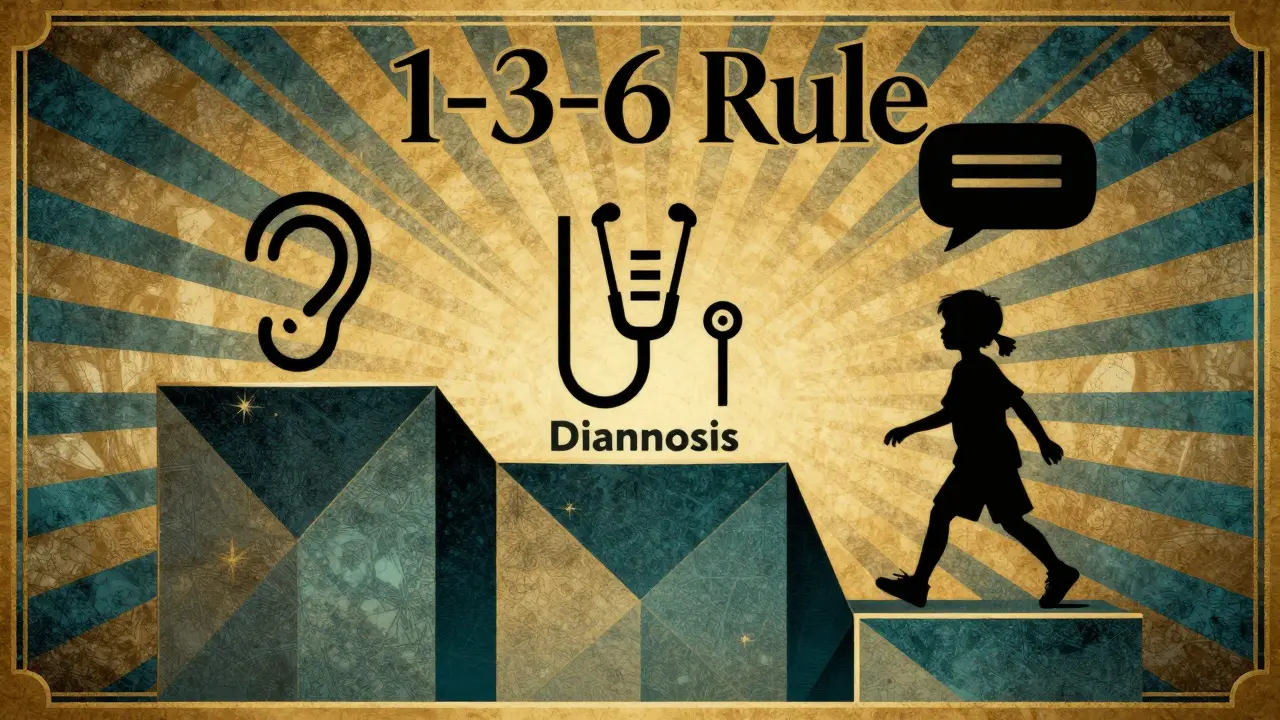
This is the core of the EHDI framework. Memorize these numbers if nothing else sticks. They represent the gold standard for care:
- Screen by 1 Month: All infants must undergo hearing screening before hospital discharge or within the first month of life.
- Diagnose by 3 Months: Infants who do not pass screening must receive a comprehensive diagnostic audiologic evaluation by 3 months of age. Currently, 72.3% of U.S. infants meet this milestone.
- Intervene by 6 Months: Children diagnosed with permanent hearing loss should begin appropriate intervention services by 6 months of age. Only 64.5% of infants currently meet this benchmark nationally.
Why 6 months? Because that’s when the brain’s plasticity for language is at its peak. Every week of delay counts. For children with risk indicators who passed the newborn screen, protocols mandate referral to audiology for at least one diagnostic assessment by 24-30 months or immediately upon parental concern.
School-Age Screening: Don’t Stop After Birth
Many parents assume that because the baby passed the hospital screen, they’re safe forever. That’s a dangerous myth. Acquired hearing loss can happen at any time due to infections, trauma, or exposure to loud noises. The American Academy of Pediatrics (AAP) formalized standards in their Pediatric Periodicity Schedule to catch these later-onset issues.
Here is the recommended schedule for older children:
- Ages 4, 5, 6, 8, and 10 years: Routine pure-tone screening.
- Ages 11-14 years: One screening required.
- Ages 15-17 years: One screening required.
- Ages 18-21 years: One screening required.
Technical specifications matter here. For children over 3, pure-tone audiometry procedures require screening at 500 Hz at 25 dB and 1000, 2000, 4000 Hz at 20 dB. For teens, 6000 Hz is added to check for high-frequency damage often caused by headphones or concerts. Tympanometry referral criteria specify >250 daPa tympanometric width for children 3-12 years. If your child seems to be ignoring commands, watching TV with the volume too high, or struggling in class despite good intelligence, request a hearing test. Speech-language pathologists (SLPs) often conduct these screenings in schools, with 87% of school-based SLPs reporting responsibility for hearing screening in their districts.

Intervention Options: What Comes Next?
If your child is diagnosed with permanent hearing loss, the world opens up rather than closes. Technology and therapy have advanced dramatically. The choice of intervention depends on the severity of the loss and family preferences.
Hearing Aids: For mild to moderate losses, modern digital hearing aids show an 85% speech perception improvement in quiet environments. They amplify sound selectively, helping the brain distinguish words from background noise.
Cochlear Implants: For profound hearing loss where hearing aids aren’t enough, cochlear implants bypass the damaged hair cells in the inner ear and stimulate the auditory nerve directly. Studies show open-set speech recognition in 60-70% of children with profound hearing loss. Success rates are highest when implanted early and paired with intensive therapy.
Therapy Approaches:
- Auditory-Verbal Therapy (AVT): Focuses on developing listening and spoken language skills. When initiated before 12 months, it produces age-appropriate language skills in 65-75% of children.
- Bilingual-Bicultural (Bi-Bi) Education: Teaches both sign language (like ASL) and spoken language. This approach shows 80% high school graduation rates for deaf students when implemented with native signing teachers.
The Listening and Spoken Language Specialist (LSLS) certification ensures therapists have 300 hours of supervised clinical practice. Look for this credential when choosing a provider.
Navigating Barriers and Finding Help
Even with great guidelines, gaps exist. Nationally, 37.5% of infants who fail newborn screening do not receive diagnostic evaluation by 3 months. Rural areas face even higher drop-off rates, exceeding 50%. There are also disparities based on race and ethnicity, with Black and Hispanic infants 23% less likely to meet the 6-month intervention benchmark than White infants.
To bridge these gaps, new technologies are emerging. Telehealth diagnostics now offer 92% accuracy for remote audiologic evaluations. Mobile screening units reached 15,000 previously unscreened children in 2022 through CDC-funded programs. Smartphone-based OAE screening tools are being validated with 95% sensitivity, making home or community screening more accessible.
If you suspect your child has hearing issues, don’t wait for a scheduled well-child visit. Contact your pediatrician immediately. Ask for a referral to a pediatric audiologist. Check if your state has an EHDI coordinator-they can help navigate insurance and early intervention services under IDEA Part C, which mandates free services for children birth-3 years with developmental delays.
What does it mean if my baby fails the newborn hearing screen?
It means your baby needs further testing, not necessarily that they have permanent hearing loss. Common reasons for failure include fluid in the ear canal, vernix residue, or background noise during the test. You should schedule a diagnostic audiologic evaluation by 3 months of age to get a definitive answer.
Can hearing loss develop after a baby passes the newborn screen?
Yes. Acquired hearing loss can occur due to middle ear infections (otitis media), illnesses like meningitis, exposure to loud noises, or genetic changes that activate later. This is why routine screening continues through ages 4, 5, 6, 8, 10, and periodically through adolescence.
What is the "1-3-6" rule in pediatric hearing loss?
The 1-3-6 rule is the national standard for Early Hearing Detection and Intervention (EHDI). It states that all infants should be screened by 1 month of age, diagnosed by 3 months if they fail the screen, and begin intervention services by 6 months if permanent hearing loss is confirmed.
Is cytomegalovirus (CMV) a major cause of childhood deafness?
Yes. CMV is the leading non-genetic cause of congenital hearing loss, accounting for 15-20% of cases. It is a viral infection that can be transmitted from mother to fetus during pregnancy. Universal newborn CMV testing is being explored to identify at-risk infants earlier.
How effective are cochlear implants for young children?
Cochlear implants are highly effective for children with profound hearing loss. Studies show that 60-70% of children achieve open-set speech recognition (understanding speech without lip-reading). Outcomes are best when implants are received early and combined with intensive auditory-verbal therapy.