Prior Authorization for NTI Drugs: When Insurers Require Brand-Name Medications
 Mar, 11 2026
When you take a medication for epilepsy, hypothyroidism, or another serious condition, you expect your treatment to be consistent. But for many people on NTI drugs, that consistency is under threat-not from the medicine itself, but from insurance rules.
What Are NTI Drugs and Why Do They Matter?
Narrow Therapeutic Index (NTI) drugs are medications where the difference between a safe, effective dose and a toxic one is razor-thin. Even a small change in how the drug is absorbed can lead to serious consequences: seizures, heart rhythm problems, or even death. The FDA defines these drugs as those where "small differences in dose or blood concentration may lead to serious therapeutic failures."
Common NTI drugs include:
- Levothyroxine (for hypothyroidism)
- Phenytoin and carbamazepine (for epilepsy)
- Warfarin (a blood thinner)
- Cyclosporine and tacrolimus (for organ transplant patients)
There are about 37 medications on the official NTI list. These aren’t rare or experimental drugs-they’re daily essentials for millions. Yet, insurance companies often treat them like any other medication with a generic version.
Why Insurers Push for Generics (Even When It’s Dangerous)
Insurance companies want to save money. Generic drugs cost 80-90% less than brand-name versions. So, when a generic becomes available, insurers automatically switch patients to it-unless there’s a reason not to. That’s standard policy.
But for NTI drugs, that logic falls apart. A 2023 study in the Journal of Managed Care & Specialty Pharmacy found that switching from brand to generic levothyroxine caused TSH levels to fluctuate by up to 300% in some patients. That’s not a minor adjustment. It’s a medical emergency waiting to happen.
Despite this, many insurers still require prior authorization before allowing a patient to stay on their brand-name NTI drug. Prior authorization is a bureaucratic hurdle: your doctor must fill out forms, submit lab results, wait for approval, and often fight denials. The average processing time? 3.2 business days. For someone on levothyroxine or carbamazepine, that delay can mean a seizure, hospitalization, or worse.
How NTI Drug Policies Vary Across Insurers
Not all insurance plans handle NTI drugs the same way. Some follow the FDA’s guidance and exempt them from prior authorization. Health Net, for example, explicitly states that brand-name NTI drugs "may be listed on the Formulary at a higher tier and do not require prior approval." That means if you’re already on brand-name Keppra or Synthroid, you can stay on it without jumping through hoops.
But others? They’re stuck in the past. Medicare Part D plans often call it a "coverage determination," and responses can take days. Medicaid programs have federal rules requiring them to respond within 24 hours for urgent cases-but many states don’t enforce it. In Mississippi, you need a special form just to request a brand-name NTI drug. In North Carolina, your doctor must write "medically necessary" on the prescription, and even then, approval isn’t guaranteed.
Here’s the real problem: most patients don’t know these rules exist. Your doctor might assume the generic is fine. You might not realize your TSH levels are drifting out of range. By the time you feel off-fatigued, anxious, having seizures-it’s too late.
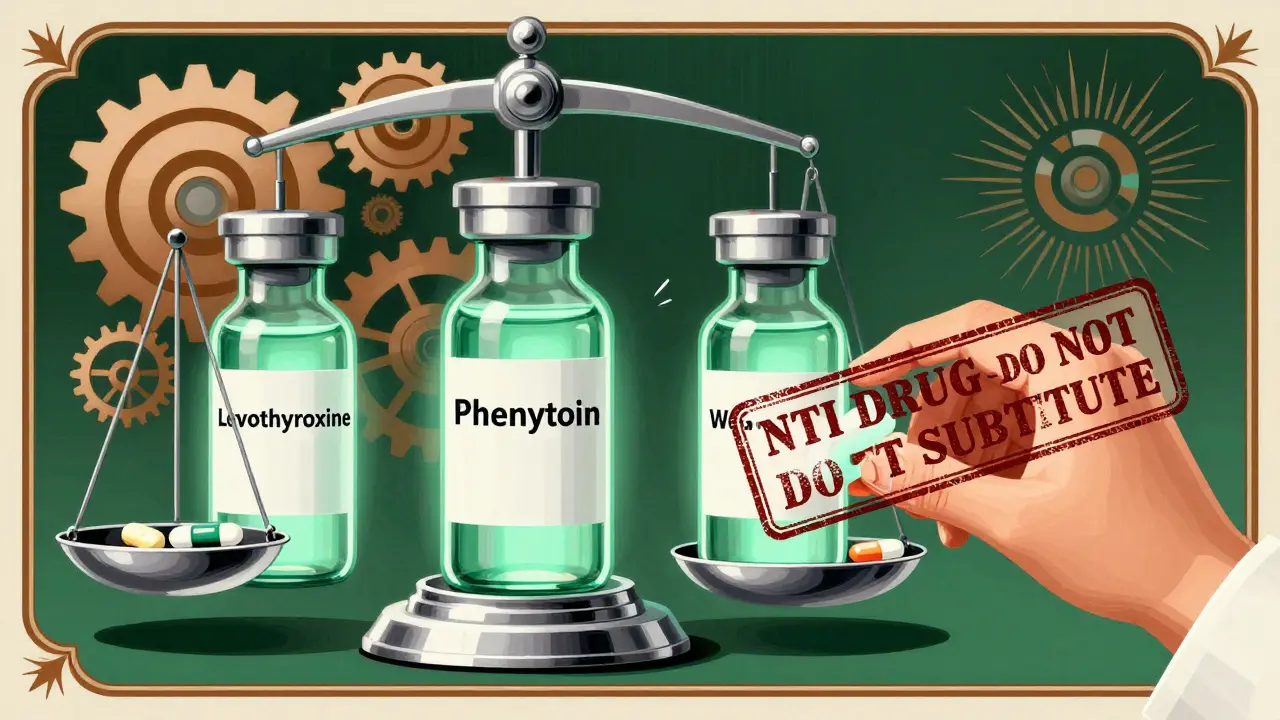
What Patients Are Experiencing
Real people are paying the price. On Reddit, a neurologist shared that 73% of their brand-name levothyroxine requests were initially denied-even when lab results showed dangerous hormone swings. The Patients Rising advocacy group surveyed 1,200 NTI drug users and found that 68% faced delays longer than 72 hours. Nearly one in three reported a direct health event because of it: a fall, a seizure, a trip to the ER.
One woman in Ohio lost her job because she couldn’t get her brand-name epilepsy medication approved in time. Her seizures returned. Her employer didn’t understand. Her insurance said, "We’re just following protocol."
But some stories have better endings. A patient on HealthUnlocked described how, after a grand mal seizure caused by a generic switch, her insurer finally approved brand-name Keppra-and now, they automatically approve it every year. No forms. No delays. Just safety.
What’s Changing-And What’s Not
Pressure is building. In April 2024, the U.S. House passed the Improving Seniors’ Timely Access to Care Act, which requires Medicare Advantage plans to give real-time electronic decisions on prior authorization. For NTI drugs, that’s a big deal.
States are moving faster. California’s AB-1428, effective January 2025, bans prior authorization for NTI drugs if the patient has been stable on the same brand. Eighteen states now require automatic approval if insurers don’t respond within their legal time limit-up from just seven in 2022.
And insurers? Some are quietly changing. Jefferies Healthcare Policy Analysis predicts that by 2026, 75% of commercial plans will drop prior authorization for NTI drugs entirely. Why? Because the cost of a single seizure, hospital stay, or missed workday outweighs the savings from a generic switch.

What You Can Do
If you’re on an NTI drug and your insurance is fighting to switch you to a generic:
- Ask your doctor to write "NTI drug-do not substitute" on the prescription.
- Request a copy of your insurer’s formulary and look for NTI drug exceptions.
- Submit lab results (like TSH for thyroid meds or drug levels for epilepsy drugs) with your prior auth request.
- If denied, appeal immediately. Most plans allow 180 days to appeal.
- Use electronic prior authorization portals-paper faxing adds days to the process.
Also, check your state’s laws. If your state requires 72-hour reviews and you’re waiting longer, you have rights. Contact your state’s insurance commissioner or advocacy groups like Patients Rising.
The Bottom Line
NTI drugs aren’t like other medications. They’re precision tools. One pill too strong, one pill too weak, and your body can’t recover. Insurance companies were never meant to be the gatekeepers of your brain chemistry or your heart rhythm.
Some insurers are waking up. States are stepping in. But right now, thousands of people are still stuck in a system that treats life-threatening conditions like budget line items.
If you’re on an NTI drug, don’t assume your insurance has your back. Know your rights. Track your labs. Speak up. Your safety shouldn’t depend on a form you have to fill out.
Are all NTI drugs covered without prior authorization?
No. Coverage varies by insurer and state. Some plans exempt NTI drugs from prior authorization, while others still require it. Always check your plan’s formulary and state laws. For example, California now prohibits prior authorization for stable NTI drug users, but many states still allow it.
Can I switch from generic to brand-name NTI drug if I’m having side effects?
Yes, but you’ll likely need prior authorization. Your doctor must provide clinical evidence-like lab results showing unstable drug levels or documented adverse events. Some insurers require a trial of the generic first. If you’ve had a seizure, hospitalization, or severe symptom flare-up, document it. That strengthens your case.
Why do some insurers allow brand-name NTI drugs without prior auth?
Because they’ve seen the data. Studies show that forcing patients to switch from brand to generic NTI drugs increases emergency room visits, hospitalizations, and seizure rates. The long-term cost of these events far exceeds the savings from generics. Insurers that waive prior auth for NTI drugs are reducing risk-and liability.
How long does prior authorization for NTI drugs usually take?
On average, it takes 3.2 business days. Electronic submissions are faster, but NTI requests still take 22% longer than standard ones because they require extra clinical details. Emergency cases should be processed within 24 hours under federal Medicaid rules, but enforcement varies by state.
What should I do if my NTI drug prior authorization is denied?
File an appeal immediately. Include lab results, your doctor’s letter explaining the risk, and any past adverse events. Most insurers have a 180-day window for appeals. If the appeal fails, contact your state’s insurance commissioner or advocacy groups like Patients Rising. In some states, you can request a state-level review.
Emma Deasy
March 12, 2026 AT 15:26Let me be perfectly clear: this is not a policy issue. This is a human rights crisis wrapped in bureaucratic red tape.
Imagine being told that your life depends on a form you must fill out - and that the government has deemed your neurological stability negotiable.
Levothyroxine is not a commodity. It is not a line item. It is the difference between consciousness and convulsions.
I have seen patients collapse in waiting rooms because their pharmacy ran out of the brand - and the insurer refused to authorize an emergency override.
One woman, 52, with Hashimoto’s, went into thyroid storm after a 14-day delay. She lost 20 pounds. She couldn’t speak for three weeks.
And yet, some actuaries still insist that a $0.12-per-pill savings justifies the risk.
Do they ever meet the people they’re costing? Do they hear the seizures? Do they see the ER charts?
There is no moral calculus here. Only negligence dressed up as cost containment.
And if your insurer says, ‘We’re following protocol,’ they’re not protecting your health - they’re protecting their quarterly earnings.
This is not healthcare. It’s insurance theater. And we are the audience watching people die on stage.
tamilan Nadar
March 14, 2026 AT 06:33India also has this problem. Generic levothyroxine is everywhere. Doctors don’t even ask. Patients don’t know to ask.
My aunt switched. TSH went wild. She stopped sleeping. Then she stopped working.
Now she pays out of pocket. No choice.
Adam M
March 15, 2026 AT 16:07People who can’t handle generics shouldn’t be on NTI drugs. Simple.
Rosemary Chude-Sokei
March 16, 2026 AT 22:54Thank you for writing this with such precision and care. The data here is undeniable - and the human cost is devastating.
I work in a hospital pharmacy, and I’ve seen firsthand how a 10% fluctuation in drug levels can trigger cascading failures - especially in elderly patients with comorbidities.
What’s worse is that many providers don’t even know the NTI list exists. I’ve had nurses ask, ‘Why can’t we just switch her to the cheaper one?’
It’s not ignorance. It’s systemic failure.
I’m hopeful about California’s law. But we need national standards - not patchwork state policies that leave people in Mississippi or Alabama behind.
And yes - if your doctor writes ‘do not substitute,’ that should be legally binding. Period.
Thank you for shining a light on this. I’m sharing this with every department I work with.
Noluthando Devour Mamabolo
March 18, 2026 AT 00:11ABSOLUTELY FURIOUS. 😤
This is a CLASSIC example of how healthcare systems prioritize balance sheets over biochemistry.
NTI drugs = precision medicine.
Insurance = cost optimization algorithms.
When your algorithm can’t account for the fact that your brain needs stable TSH - it’s not broken. It’s evil.
Also - if you’re on cyclosporine post-transplant and get switched? You’re not ‘at risk.’ You’re one missed dose from organ rejection. PERIOD.
And yes - I’m using emojis because this is emotional trauma, not a spreadsheet.
Advocacy groups: we need a #NTIrights movement. NOW.
Leah Dobbin
March 19, 2026 AT 04:41How is it possible that we live in a society where a person’s seizure risk is subject to a 3.2-day administrative review?
I mean - really.
Are we still in the 19th century? Or did we just forget how to be humane?
I suppose if you’re not personally affected, it’s easy to shrug and say, ‘Well, generics are cheaper.’
But then again - I’m sure the people who designed the Titanic also thought it was ‘sufficiently safe.’
Ali Hughey
March 20, 2026 AT 08:36THIS IS A BIOTECH-INSURANCE CONSPIRACY.
Do you think Big Pharma doesn’t profit from generics? They DO. They own the generics.
And the insurers? They’re all in bed with the same corporate lobbies.
Remember when they said vaping was safe? Now they say generics are ‘just as good.’
It’s the same playbook.
They don’t care if you die. They care if you file a lawsuit.
That’s why they only ‘waive’ prior auth when someone sues them.
Wake up. This isn’t healthcare. It’s a profit pipeline.
And if you’re on levothyroxine? You’re a walking liability. And they’re waiting for you to slip up.
Alex MC
March 21, 2026 AT 05:41Thanks for laying this out so clearly.
I’m a nurse practitioner, and I’ve had to fight insurers for years on NTI drugs.
It’s exhausting - but worth it.
I’ve saved three patients from hospitalization just by insisting on brand-name and submitting lab results.
It’s not about being ‘anti-generic’ - it’s about being pro-safety.
And yes - electronic prior auth helps. But it’s still too slow.
Let’s keep pushing. One appeal at a time.
You’re not alone.
rakesh sabharwal
March 21, 2026 AT 22:12Let’s be honest - most patients can’t even pronounce ‘narrow therapeutic index.’
Why should insurers be expected to cater to medical elitism?
Also - if you can’t tolerate a generic, maybe you’re not the right candidate for chronic medication.
Just saying.
Aaron Leib
March 22, 2026 AT 15:48One thing I’ve learned: if your doctor says ‘do not substitute,’ they’re not being difficult - they’re being a lifeline.
I had a patient last month who had a seizure because her insurer switched her to generic carbamazepine.
She’s fine now. Back on brand. No more delays.
But she almost didn’t make it.
So if you’re reading this and you’re on an NTI drug - don’t wait for the system to fix itself.
Ask. Advocate. Document.
You’re worth the fight.
Dylan Patrick
March 23, 2026 AT 17:02My sister’s on cyclosporine. Switched to generic. Ended up in the ICU.
They said ‘it’s the same.’
It wasn’t.
Now she’s on brand. Forever.
And guess what? Her premiums went up.
But she’s alive.
That’s the only metric that matters.