REM Sleep Behavior Disorder: Medications and Neurological Assessment
 Feb, 11 2026
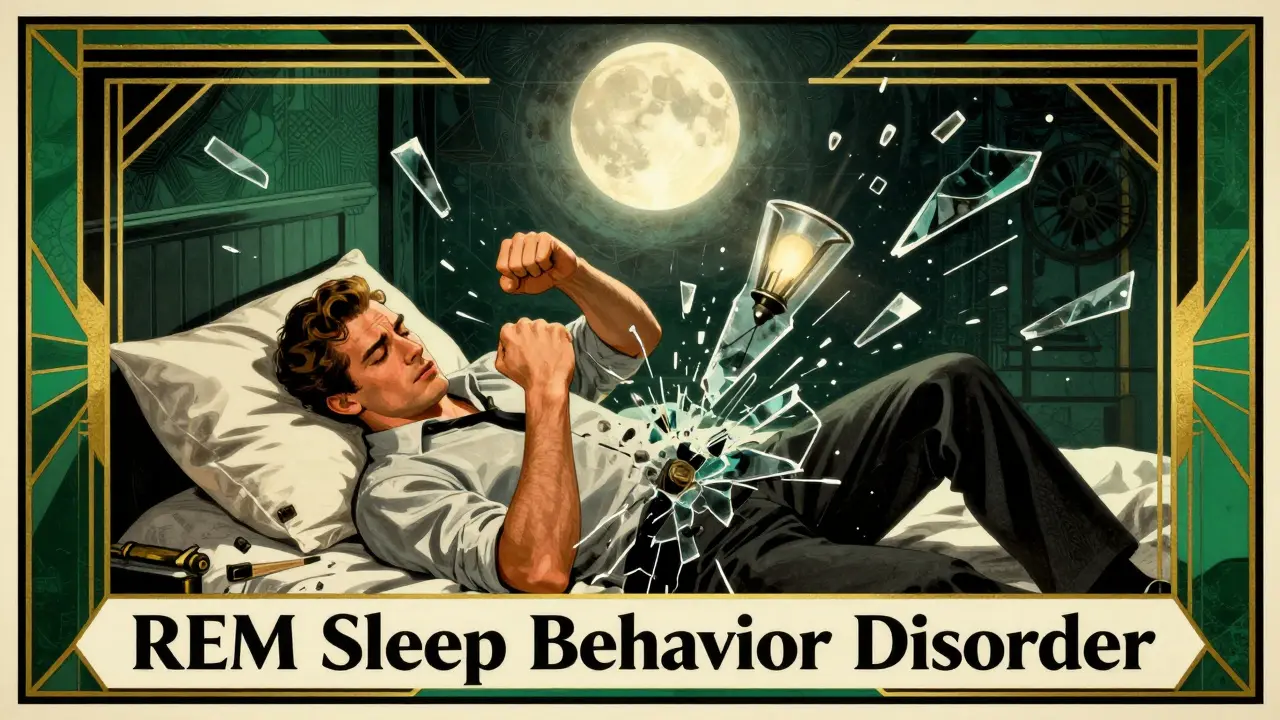
Imagine sleeping soundly, only to wake up bruised, with a shattered lamp beside your bed, or your partner bleeding from a punch you didn’t even know you threw. This isn’t a nightmare-it’s REM sleep behavior disorder (RBD). Unlike normal sleep, where your body is temporarily paralyzed during REM sleep, people with RBD act out vivid, often violent dreams. They kick, scream, jump, or even leap out of bed. It’s not just disturbing-it’s dangerous. And while it might look like a sleep problem, RBD is often the earliest sign of something far more serious: Parkinson’s disease, dementia with Lewy bodies, or multiple system atrophy.
What Exactly Is REM Sleep Behavior Disorder?
REM sleep is when most dreaming happens. Normally, your brain sends signals to temporarily paralyze your muscles so you don’t physically act out dreams. In RBD, that signal fails. Muscle activity surges during REM sleep, turning dreams into actions. People with RBD might punch, yell, run, or fall out of bed. Sometimes, they’re fully awake and confused. Other times, they don’t remember it at all.
The condition was first formally described in 1986 by Dr. Carlos Schenck, but it’s only in the last decade that doctors started seeing it as a warning sign. About 90% of people with RBD eventually develop a neurodegenerative disease. A 2010 study found that 73.5% of patients with idiopathic RBD-meaning no known cause-developed Parkinson’s, dementia with Lewy bodies, or multiple system atrophy within 12 years. That’s not a coincidence. It’s a red flag.
How Is RBD Diagnosed?
You can’t diagnose RBD with a questionnaire alone. You need a sleep study-polysomnography (PSG). This test records brain waves, eye movements, muscle activity, heart rate, and breathing overnight. The key finding? REM sleep without atonia (RSWA). That’s the medical term for when your muscles aren’t paralyzed during REM sleep.
The International Classification of Sleep Disorders (ICSD-3) says RBD is confirmed if muscle activity exceeds 15% of REM sleep epochs. In simpler terms: if your arms or legs move more than they should during dreaming, you likely have RBD. On average, people with RBD show complex movements about 4.2 times per hour during sleep. That’s more than once every 15 minutes.
Doctors also look for other signs: frequent dream enactment, injuries from sleep, and a history of neurological symptoms. If you’re over 50 and suddenly start acting out dreams, especially if you’ve never done it before, it’s time for a sleep study.
First-Line Medications for RBD
There are no FDA-approved drugs specifically for RBD. But two medications are used off-label and backed by decades of clinical use: melatonin and clonazepam.
Melatonin is a natural hormone your body makes to regulate sleep. In RBD, it helps restore muscle paralysis during REM sleep. The standard starting dose is 3 mg at bedtime. Most people need to increase it slowly-6 mg, then 9 mg, and sometimes up to 12 mg. It takes 2 to 4 weeks at each dose to see if it works. About 65% of patients respond to melatonin alone. Side effects are mild: maybe a headache or a little morning grogginess. One 68-year-old man in a Cleveland Clinic case study cut his weekly RBD episodes from 7 to 1 after starting 6 mg nightly. He said the only downside was a brief period of morning fog that faded after two weeks.
Clonazepam is a benzodiazepine, a type of sedative. It’s been used for RBD since the 1980s. The usual starting dose is 0.25 mg to 0.5 mg at bedtime. Some patients need up to 2 mg. It often works within the first week. Studies show it reduces symptoms in 80-90% of cases. But it’s not without risks. Side effects include dizziness (22% of users), unsteadiness (18%), daytime sleepiness (15%), and memory issues. In older adults, the risk of falls jumps by 34%. A 2018 meta-analysis in JAMA Internal Medicine found clonazepam increases fall risk in people over 65. One patient stopped clonazepam after three months because her falls went from zero to two per month.
Other Medications and Emerging Treatments
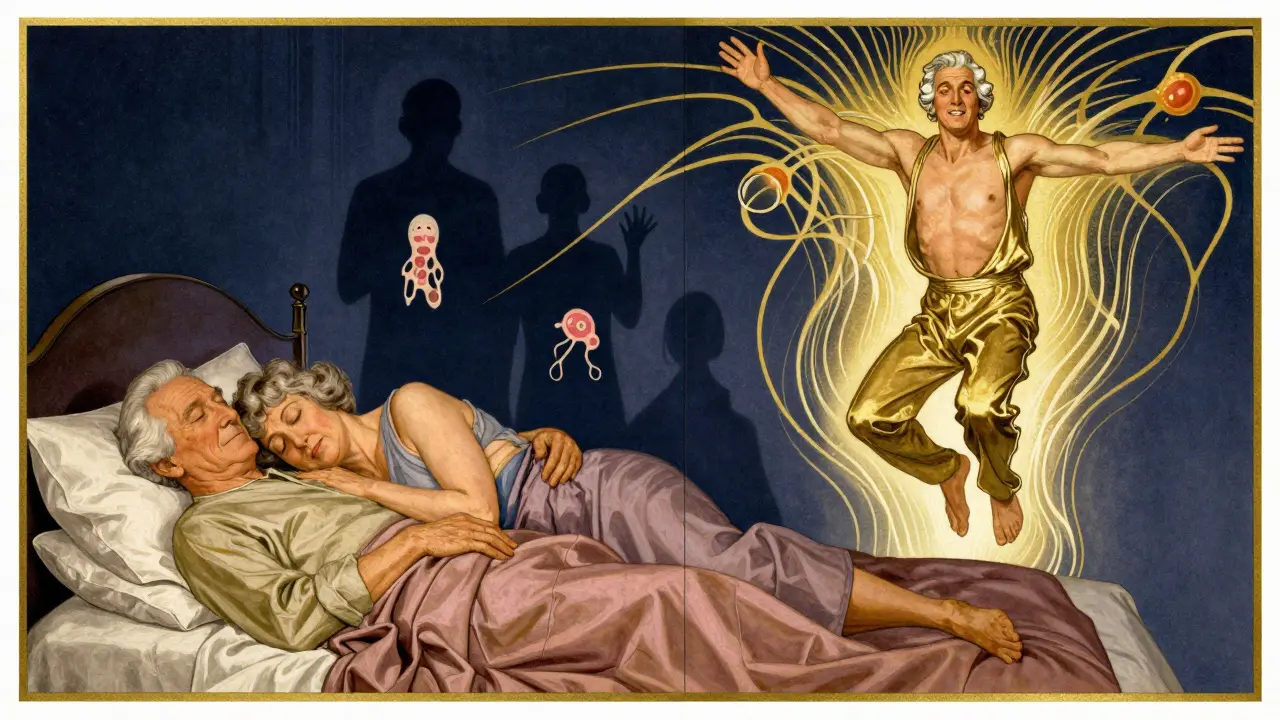
Not everyone responds to melatonin or clonazepam. For those who don’t, doctors sometimes try:
- Pramipexole: A dopamine agonist used for Parkinson’s and restless legs syndrome. It helps about 60% of RBD patients, especially those with leg restlessness. Dose: 0.125-0.5 mg daily.
- Rivastigmine: A cholinesterase inhibitor used in dementia. One small trial showed it reduced RBD episodes in patients with mild cognitive impairment who didn’t respond to other treatments.
But the most exciting developments are on the horizon. Researchers at Mount Sinai published findings in October 2023 showing that dual orexin receptor antagonists-drugs that block wakefulness signals-cut dream enactment behaviors by 78% in animal models. One such drug, suvorexant (Belsomra), is already approved for insomnia. Early human trials are underway.
Neurocrine Biosciences is testing a new drug called NBI-1117568, a selective orexin-2 receptor blocker. The FDA gave it Fast Track designation in January 2023, meaning it could reach patients faster. If it works in humans, it could be the first RBD-specific treatment with fewer side effects than clonazepam.
Safety First: Non-Medication Strategies
Medication helps-but it doesn’t eliminate risk. You need to make your bedroom safe.
- Remove all weapons-guns, knives, swords-from the bedroom.
- PAD sharp furniture edges with foam or pillows.
- Place thick rugs or mats on the floor beside the bed.
- Install bed rails if you’re at risk of falling out.
- Consider sleeping in separate beds or rooms if episodes are severe. A 2019 study found 42% of patients eventually do this, even with treatment.
And avoid alcohol. Even one or two drinks can trigger RBD episodes in 65% of patients. That’s not a myth-it’s science.
Neurological Monitoring: Why It Matters
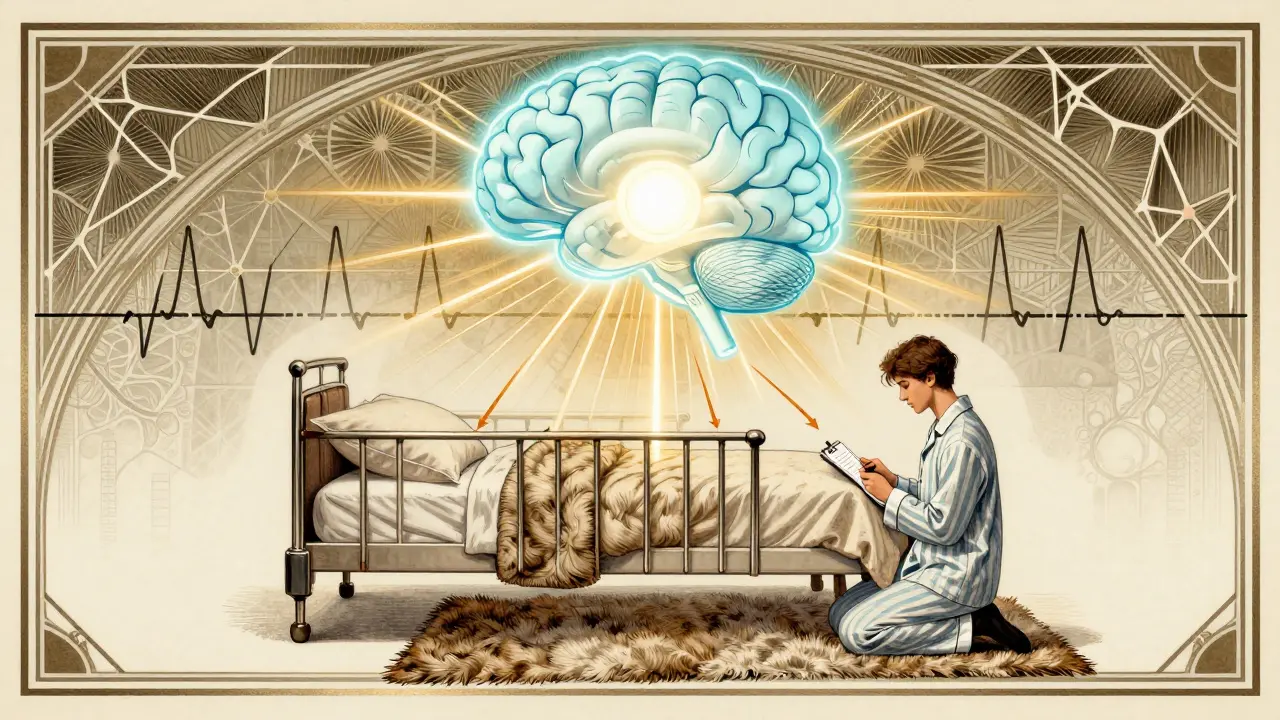
RBD isn’t just a sleep problem. It’s a neurological warning sign. That’s why annual neurological check-ups are critical. The American Academy of Neurology recommends yearly exams for anyone with idiopathic RBD. Why? Because about 6.3% of these patients develop Parkinson’s or another neurodegenerative disease each year. That means over a decade, nearly two-thirds will progress.
Early detection changes everything. If you develop tremors, stiffness, loss of smell, or constipation alongside RBD, it could mean you’re in the early stages of Parkinson’s. Starting treatment early-like physical therapy, exercise, or even neuroprotective trials-can slow progression.
What’s Next for RBD Treatment?
The global market for RBD treatments hit $1.2 billion in 2023. That’s not because of new drugs-it’s because more people are being diagnosed. Between 2010 and 2020, RBD diagnosis rates jumped 217%. More neurologists are now ordering sleep studies. And more patients are asking about it.
But the real goal isn’t just to stop the kicking. It’s to stop the brain from dying. Right now, all treatments manage symptoms. They don’t change the disease. Researchers believe RBD is the first stage of synucleinopathy-the abnormal buildup of a protein called alpha-synuclein in the brain. If we can detect this early and stop it, we might prevent Parkinson’s before it starts.
Dr. Ronald Postuma, a leading expert at McGill University, says: "The next five years will likely see the first disease-modifying therapies targeting the underlying neurodegenerative process in RBD patients." That’s the holy grail. And it’s closer than you think.
Choosing the Right Treatment for You
There’s no one-size-fits-all. Here’s how to think about it:
- If you’re older, have balance issues, or are at risk of falls: Start with melatonin. It’s safer.
- If symptoms are severe and you’re younger with no fall risk: Clonazepam might be faster and more effective-but monitor for side effects closely.
- If melatonin doesn’t work after 12 weeks: Talk to your neurologist about pramipexole or rivastigmine.
- If you’re under 50 and have no other symptoms: You still need neurological follow-up. RBD doesn’t care about age.
And never stop clonazepam suddenly. Tapering is crucial. Quitting abruptly can cause rebound nightmares, agitation, or even seizures. Reduce by 0.125 mg every 1-2 weeks.
Can REM sleep behavior disorder be cured?
No, RBD cannot be cured-at least not yet. Current treatments manage symptoms effectively, but they don’t stop the underlying brain changes that lead to Parkinson’s or dementia. The goal is to reduce injury and improve sleep quality. Researchers are working on therapies that target the root cause, like stopping alpha-synuclein buildup, but those are still in trials.
Is RBD the same as sleepwalking?
No. Sleepwalking happens during deep non-REM sleep, usually early in the night. People who sleepwalk are hard to wake and have no memory of it. RBD happens during REM sleep, often later in the night. People with RBD can be woken easily and often recall vivid, violent dreams. The movements in RBD are more complex-punching, running, yelling-unlike the simple walking or sitting of sleepwalkers.
Does RBD only affect older people?
Most cases are in people over 50, but RBD can occur in younger adults, even in their 30s or 40s. When it happens in younger people, it’s more likely to be linked to narcolepsy, PTSD, or certain medications. Still, even young patients need neurological evaluation because RBD can be an early sign of neurodegenerative disease, regardless of age.
Why is melatonin preferred over clonazepam for some patients?
Melatonin has fewer side effects. It doesn’t cause dependence, dizziness, or increased fall risk. It’s safe for long-term use and doesn’t interfere with cognition. For elderly patients, those with balance problems, or anyone on multiple medications, melatonin is the safer first choice. Clonazepam works faster and more strongly, but its risks often outweigh benefits in older populations.
Can lifestyle changes help with RBD?
Yes-but not as a replacement for medical treatment. Avoiding alcohol, maintaining a regular sleep schedule, reducing stress, and sleeping in a safe environment are all critical. Exercise during the day can improve sleep quality. But if you have RBD, you still need medication and a sleep study. Lifestyle changes alone won’t stop the brain changes behind RBD.
What should I do if my partner has RBD?
First, don’t try to physically restrain them. That can lead to injury. Instead, make the bedroom safe: remove sharp objects, pad furniture, and consider separate beds if needed. Encourage them to see a sleep specialist. Keep a log of episodes-what happened, how often, and how long. This helps doctors track progress. And remember: this isn’t personal. They’re not doing it on purpose. It’s a neurological condition.
Gabriella Adams
February 12, 2026 AT 01:02My dad had RBD for years before they figured it out. He’d yell about "the guy in the corner" and swing at nothing. Scary as hell. Melatonin saved his life-no more broken lamps, no more bruises on Mom. He’s 74 now, still takes 9mg nightly. No falls, no confusion. Just quiet sleep. If you’re scared to start meds, start here. It’s not magic, but it’s safe.
Reggie McIntyre
February 13, 2026 AT 23:04Just read this and cried. My uncle died of Lewy body dementia at 61. He started punching the air in his sleep at 53. No one connected the dots. We thought he was just "getting weird." If this post saves one family from that kind of ignorance, it’s worth every word. Thank you.
Vamsi Krishna
February 14, 2026 AT 13:02Bro this is just another example of Big Pharma pushing melatonin because it’s cheap and natural and they can’t patent it. Clonazepam works 90% of the time but you’re scared of side effects? That’s not medical advice, that’s fear-based parenting. You want real solutions? Stop being afraid of benzodiazepines. Also, sleep studies are expensive. Most people can’t afford them. So we just live with broken ribs and confused partners. Welcome to American healthcare.
Skilken Awe
February 16, 2026 AT 03:15RSWA? Really? That’s the term they’re using now? Since when did "REM sleep without atonia" become a buzzword for lazy neurologists who can’t diagnose anything else? You know what’s actually happening? People are stressed. They’re caffeine-drenched. They’re sleeping 4 hours. And now we’re calling it a neurodegenerative red flag? Nah. Fix their lifestyle. Stop overmedicalizing sleep.
Steve DESTIVELLE
February 17, 2026 AT 17:31Think about this deeply the brain is not just a machine the dreams are not just electrical signals they are the soul trying to escape the body during the most vulnerable state of consciousness when the conscious mind is offline and the subconscious takes over and when the paralysis fails it is not a malfunction it is a revelation the body is trying to tell us something we refuse to listen to because we are too busy optimizing our sleep hygiene and buying melatonin gummies from Amazon
Joanne Tan
February 19, 2026 AT 09:48OMG I had no idea this was a thing. My boyfriend does this and I thought he was just having bad dreams. I’ve been sleeping on the couch for 2 years. We just got a bed rail and I’m so relieved. He’s gonna try melatonin next week. I’m so glad I found this. You’re a lifesaver 🙌
Carla McKinney
February 20, 2026 AT 20:00Let’s be real. 90% of people with RBD develop neurodegenerative disease? That’s not a red flag. That’s a death sentence. Why are we even giving people hope with melatonin? It doesn’t change the outcome. You’re just delaying the inevitable. If you’re over 50 and have RBD, you’re already on the path. Stop pretending this is treatable. It’s not. It’s a countdown.
Brad Ralph
February 21, 2026 AT 12:42So we’re telling people to take a hormone and a benzo… and avoid alcohol. That’s the entire treatment plan? Wow. We really just patched the symptom and called it a day. Meanwhile, the brain is quietly turning to mush. I mean… congrats? We got a better night’s sleep for the dying.
Sophia Nelson
February 23, 2026 AT 08:51My neighbor has this. She told me she "saw a dragon" and kicked through her window. She’s 52. No other symptoms. But she’s got a neurologist appointment next week. I told her: "You’re not crazy. You’re early." She cried. Then she hugged me. This post? Needed.