Signs and Symptoms of Medication Overdose You Should Recognize
 May, 28 2026
It happens fast. One minute someone is talking to you, the next they are slumped on the couch, unresponsive, and breathing shallowly. In those critical minutes, recognizing the signs and symptoms of medication overdose can mean the difference between life and death. You don’t need a medical degree to spot the red flags; you just need to know what to look for.
An overdose occurs when a person takes too much of a substance-whether it’s a prescription pill, an over-the-counter remedy, or an illicit drug-overwhelming their body’s systems. According to the Centers for Disease Control and Prevention (CDC), drug overdose deaths in the United States reached 107,941 in 2022. That number isn’t just statistics; it represents real people whose loved ones might have missed the warning signs. This guide breaks down exactly what those signs look like across different drug types and tells you precisely what to do if you see them.
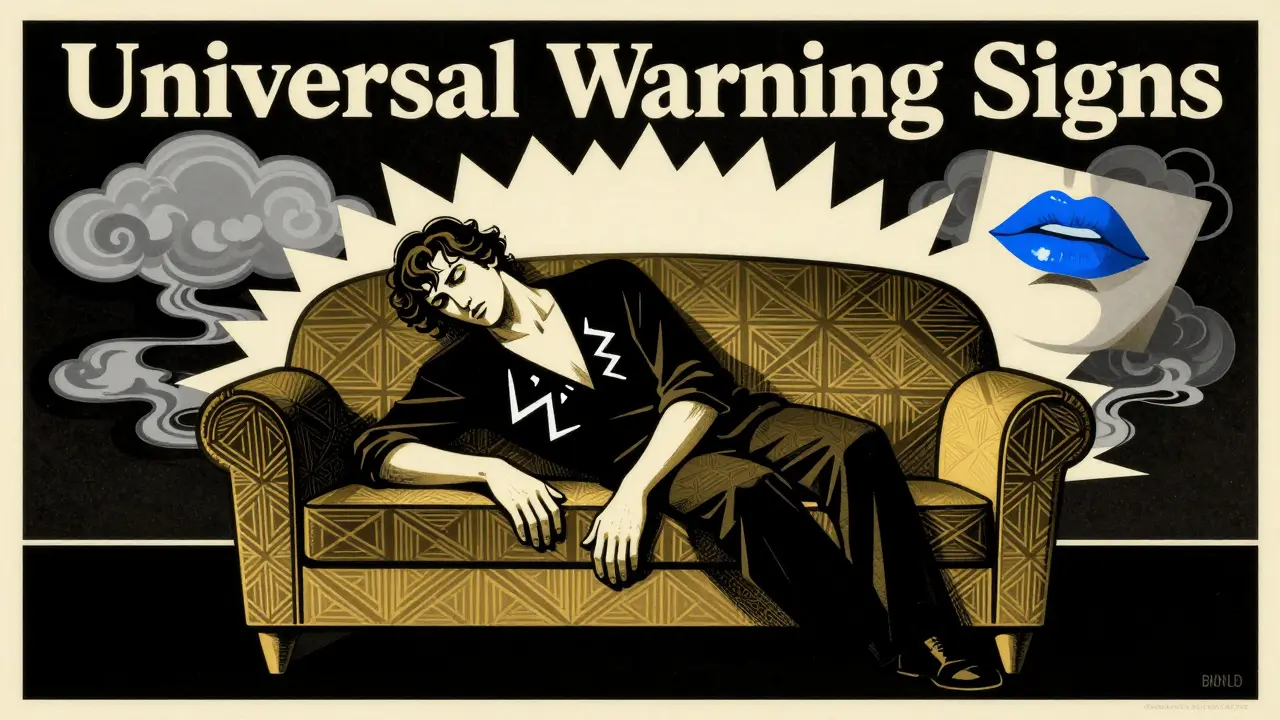
The Universal Warning Signs: What Every Bystander Needs to Know
While specific drugs affect the body differently, there are general symptoms that appear across most overdose scenarios. If you notice a combination of these issues in someone who has recently taken medication, assume the worst and act immediately.
- Altered Mental Status: The person may be confused, agitated, paranoid, or hallucinating. In more severe cases, they become unresponsive but remain awake, staring into space without reacting to your voice or touch.
- Nausea and Vomiting: About 78% of non-fatal overdoses involve nausea or vomiting. This is the body’s attempt to expel the toxin, but it becomes dangerous if the person is unconscious and chokes on vomit.
- Physical Instability: Look for loss of balance, coordination issues, dizziness, or inability to stand upright. They may stumble or collapse unexpectedly.
- Skin Changes: Their face may turn pale, clammy, or blue (cyanosis). Blue lips or fingernails indicate oxygen saturation has dropped below 90%, a critical emergency sign.
- Respiratory Distress: Breathing may become difficult, shallow, erratic, or stop completely. Listen for choking or gurgling sounds, which occur in nearly half of opioid overdose cases.
If you see any of these signs, do not wait to see if they “wake up.” Time is brain tissue. Oxygen deprivation causes permanent damage within minutes.
Opioid Overdose: The Silent Killer
Opioids-including fentanyl, heroin, oxycodone, and hydrocodone-are responsible for the majority of overdose deaths. The Cleveland Clinic notes that opioids slow down the part of the brain that regulates breathing. When this function shuts down, death follows quickly if untreated.
Medical professionals refer to the "Opioid Triad" as the definitive set of symptoms for an opioid overdose. If you see all three, call emergency services immediately:
- Pinpoint Pupils: The pupils constrict to 1-2mm in diameter, looking like tiny dots even in dim light.
- Unconsciousness: The person cannot be woken up by shouting, shaking, or pain stimuli (like rubbing the sternum).
- Respiratory Depression: Breathing slows to fewer than 12 breaths per minute, or pauses for 10 seconds or more between breaths.
Other indicators include extreme drowsiness that progresses to unresponsiveness, cold/clammy skin, and a slow pulse (below 60 beats per minute). Synthetic opioids like fentanyl are 50-100 times more potent than morphine, meaning a dose the size of a few grains of salt can be fatal. Counterfeit pills often contain these synthetics without the user’s knowledge, making recognition of symptoms even more vital.
Stimulant Overdose: The Body in Overdrive
Stimulants such as cocaine, methamphetamine, and prescription ADHD medications (Adderall, Ritalin) push the body into hyperactivity. Unlike the slowing effects of opioids, stimulant overdoses accelerate heart rate and blood pressure to dangerous levels.
Watch for these acute symptoms:
- Hyperthermia: Body temperature spikes above 104°F (40°C). The person may feel burning hot to the touch.
- Hypertension: Systolic blood pressure exceeds 180 mmHg, risking stroke or heart attack.
- Cardiac Arrhythmias: An irregular, racing heartbeat that may lead to chest pain or collapse.
- Psychological Distress: Severe agitation, paranoia, panic, and hallucinations. The person may feel like their skin is crawling or that they are being persecuted.
- Seizures: About 37% of cocaine overdose cases involve seizures, which require immediate protection from injury.
Stimulant overdoses can cause sudden cardiac arrest or heatstroke. If the person is having a seizure, clear the area around them to prevent injury, but do not restrain them.

Depressant Overdose: The Slow Fade
Depressants include benzodiazepines (Xanax, Valium), alcohol, and barbiturates. These substances suppress the central nervous system, leading to profound sedation.
Key signs include:
- Slurred Speech: Words become indistinct and difficult to understand.
- Ataxia: Loss of muscle coordination, resulting in staggering gait or inability to walk straight.
- Profound Drowsiness: The person struggles to stay awake and eventually slips into unconsciousness.
- Respiratory Failure: Like opioids, depressants can stop breathing entirely.
Alcohol poisoning is particularly dangerous because it combines respiratory depression with the risk of aspiration. If someone vomits while unconscious, they can choke on their own vomit, which contributes to 58% of fatal alcohol overdoses.
Polysubstance Overdose: The Complex Picture
In 2022, polysubstance use accounted for 56.8% of overdose deaths. This means many people are mixing drugs-such as combining opioids with benzodiazepines or alcohol. This combination creates synergistic effects, where the combined impact is greater than the sum of individual parts.
Polysubstance overdoses present overlapping and sometimes contradictory symptoms. For example, someone might exhibit the pinpoint pupils of an opioid overdose but also the agitation of a stimulant withdrawal or interaction. This complexity makes diagnosis difficult for laypeople. The safest approach? Treat any unexplained unconsciousness or respiratory distress as a potential overdose regardless of the suspected substance mix.

Immediate Action Plan: What To Do Right Now
If you suspect an overdose, follow these steps without hesitation. Delaying action is the biggest mistake bystanders make.
- Call Emergency Services Immediately: Dial 911 (or your local emergency number). State clearly that you suspect an overdose. Provide the location and describe the person’s condition.
- Administer Naloxone (NARCAN) if Available: If you suspect an opioid overdose and have naloxone, use it. Naloxone nasal spray delivers 4mg per dose and can reverse opioid effects in 85% of cases when given within 2-3 minutes. It is safe to administer even if you are unsure about the drug type; it simply won’t work if opioids aren’t involved.
- Position the Person Safely: If the person is unconscious but breathing, place them in the recovery position (on their side). This prevents choking if they vomit. Keep their airway open.
- Monitor Breathing: Stay with the person until help arrives. If they stop breathing, begin CPR if you are trained. Continue rescue breathing if they are not breathing normally.
- Do Not Leave Them Alone: Never let an overdose victim “sleep it off.” This myth has contributed to 29% of fatal overdoses where treatment was delayed.
Remember Good Samaritan laws. In 47 U.S. states, including under policies like Minnesota’s “Steve’s Law,” bystanders who call 911 for an overdose are protected from certain drug possession charges. Saving a life takes precedence over legal concerns.
| Drug Class | Pupil Size | Breathing Pattern | Skin Temperature | Mental State |
|---|---|---|---|---|
| Opioids | Pinpoint (1-2mm) | Slow/Shallow (<12/min) | Cold/Clammy | Unconscious/Sedated |
| Stimulants | Dilated | Rapid/Irregular | Hot/Sweaty | Agitated/Paranoid |
| Depressants | Normal/Dilated | Slow/Shallow | Cool/Pale | Confused/Sedated |
Prevention and Preparedness: Tools That Save Lives
Recognition is only half the battle. Preparation saves lives. The CDC reports that distributing naloxone to high-risk individuals reduced overdose mortality by 14% in community settings. Here’s how you can prepare:
- Carry Naloxone: Since March 2023, the FDA has approved over-the-counter naloxone nasal spray. You can buy it at pharmacies without a prescription for approximately $40-$50 per kit. Keep one in your car, home, or bag if you live with someone who uses opioids.
- Use Fentanyl Test Strips: These strips detect fentanyl in drugs with 97% accuracy at concentrations as low as 0.25 micrograms. The California Department of Public Health found fentanyl in 67% of counterfeit pills tested in 2022. Testing before use allows users to adjust consumption or avoid the substance entirely.
- Avoid Using Alone: Isolation increases the risk of fatal overdose because no one is there to call for help. Use buddy systems or apps like NarcanNow that connect users with remote support during use.
- Know Your Tolerance: Tolerance decreases significantly after just 3-7 days of abstinence. Resuming previous doses after a break (e.g., after jail, hospitalization, or vacation) is a leading cause of accidental overdose.
Emerging threats like xylazine (“tranq”) complicate treatment. Found in 67% of fentanyl samples in Philadelphia in 2022, xylazine does not respond to naloxone and causes severe skin ulcers. This highlights why calling 911 remains essential even after administering naloxone, as additional medical care is often required.
Understanding the Risks: Why Vigilance Matters
The landscape of medication overdose is evolving rapidly. Synthetic opioids are becoming more potent, with carfentanil-an elephant tranquilizer 10,000 times stronger than morphine-appearing in illicit supplies. This potency shift means smaller quantities are lethal, making visual identification of dosage impossible.
Demographic trends show rising rates among Black Americans, with overdose death rates increasing by 21% from 2020 to 2022. Geographic disparities persist, with West Virginia reporting the highest death rate at 88.9 per 100,000 population. However, overdoses happen everywhere, affecting communities regardless of income or geography.
The economic burden is also staggering, with non-fatal opioid overdoses costing over $10,000 per emergency department visit. Beyond the financial cost, the emotional toll on families is immeasurable. Prevention through education and preparedness is our strongest defense.
How long does it take for an overdose to become fatal?
For opioid overdoses, brain damage can begin within 4-6 minutes of oxygen deprivation, and death can follow shortly after. Stimulant overdoses can cause sudden cardiac arrest or stroke within minutes. Immediate intervention is critical; every second counts.
Can naloxone harm someone if they haven't taken opioids?
No. Naloxone only affects opioid receptors in the brain. If no opioids are present, it has no effect. It is safe to administer if you are unsure about the substance involved, as it buys time for professional medical help to arrive.
What should I do if the person starts breathing again after naloxone?
Stay with them. Naloxone’s effects last 30-90 minutes, while some opioids last longer. The person may slip back into overdose once the naloxone wears off. Call 911 immediately and monitor them until paramedics take over. Multiple doses of naloxone may be needed for potent synthetic opioids like fentanyl.
Are there legal consequences for calling 911 for an overdose?
In most U.S. states, Good Samaritan laws protect bystanders and victims from minor drug possession charges when they seek emergency medical help for an overdose. Prioritize saving the life; legal protections exist to encourage this action.
How can I tell if someone is sleeping versus overdosing?
Try to wake them by shouting their name, shaking their shoulder, or applying gentle pressure to the sternum. If they do not respond, check their breathing. Normal sleep involves regular, audible breathing. Overdose breathing is slow, shallow, silent, or absent. If in doubt, treat it as an overdose.
Recognizing the signs of a medication overdose is a skill everyone should possess. By understanding the specific symptoms of opioids, stimulants, and depressants, and knowing how to act decisively, you can intervene effectively in a crisis. Keep naloxone accessible, educate yourself on local resources, and never hesitate to call for help. Your quick action could save a life today.