Taste Changes and Metallic Taste from Medications: Proven Coping Strategies
 Jan, 8 2026
Zinc Dosage Calculator for Metallic Taste
Your medication might be causing a metallic taste. Zinc supplementation can help when taste changes are linked to zinc deficiency. This tool calculates the appropriate dosage based on your specific medication and weight.
Recommended Zinc Dosage
Enter your information to see personalized dosage
Estimated time for improvement
Important Safety Note
Do not exceed 50 mg daily without medical supervision. Long-term high doses can cause copper deficiency. Consult your doctor before starting zinc supplements.
How This Works
For most medications, the standard recommendation is 25-50 mg zinc daily. Our calculation uses:
- Antibiotics/Chemotherapy: 50 mg daily for 2-4 weeks (as per ADA guidelines)
- Other medications: 25-30 mg daily
- Adjust based on your weight (25 mg per 50 kg)
Why Your Medication Tastes Like Metal
Ever taken a pill and suddenly everything tastes like licking a penny? You’re not imagining it. This isn’t just a weird quirk-it’s a real side effect called dysgeusia, and it’s more common than most people realize. Around 11% of older adults on multiple medications report serious taste changes, and up to 84% of chemotherapy patients deal with it. The metallic taste doesn’t come from your mouth being dirty or your food going bad. It comes from the drugs themselves.
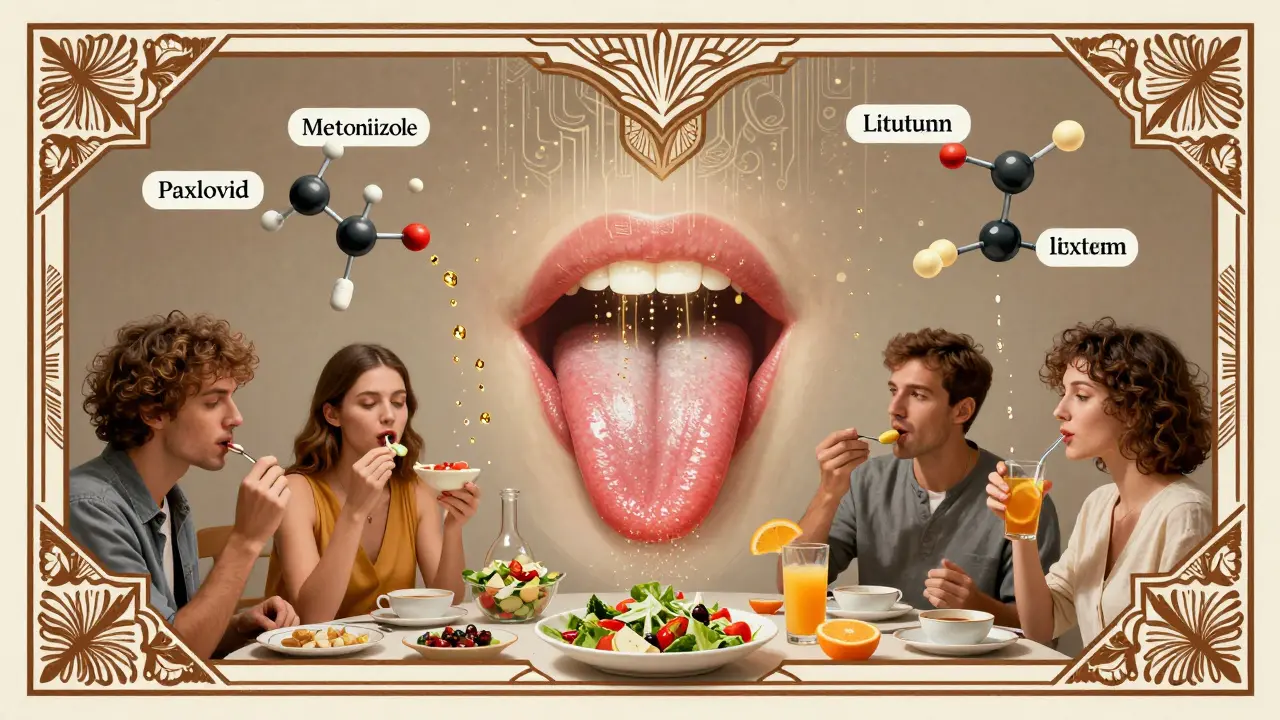
When you swallow a pill, your body breaks it down. Some of those drug molecules end up in your saliva. From there, they directly touch your taste buds or interfere with the nerves that send taste signals to your brain. Certain antibiotics like metronidazole, antidepressants like lithium, blood pressure meds like ACE inhibitors, and even antiviral pills like Paxlovid are known triggers. Even iron supplements, which many people take for anemia, can make your mouth feel like a rusty pipe.
What makes this worse is that the taste doesn’t just make food unpleasant-it makes you avoid eating altogether. People stop eating meat, skip meals, or lose weight because nothing tastes right. And because the taste comes and goes with each dose, it’s easy to think it’s just your mood or your diet. But if the metallic flavor started within a few days of beginning a new medication, that’s your body’s signal: the drug is the culprit.
How Medications Mess With Your Taste Buds
Your taste buds aren’t just little sensors-they’re complex little factories. They need saliva to work. They need minerals like zinc to stay healthy. And they need clean nerves to send the right signals to your brain. Medications can break all three of those systems.
Some drugs, like SSRIs (Prozac, Zoloft), dry out your mouth. Less saliva means taste molecules can’t dissolve properly, so your brain gets fuzzy signals. Others, like amoxicillin and cephalosporins, lower your body’s zinc levels. Zinc isn’t just for your immune system-it’s critical for taste bud regeneration. Without enough zinc, your taste buds start to die off and don’t recover fast enough. That’s why people on long-term antibiotics often describe their food as bland or metallic.
Then there are drugs like lidocaine, iron, and even some chemotherapy agents. These don’t just sit in your saliva-they actively trigger nerve endings near your taste cells. The result? A sudden, sharp metallic taste that hits within minutes of taking the pill. It’s not a slow build-up. It’s like flipping a switch. And because these drugs are often taken multiple times a day, the taste keeps coming back, making it impossible to escape.
And here’s the catch: it’s not always obvious which drug is doing it. If you’re on five medications, which one is the problem? Doctors often miss this because taste changes aren’t listed as a top side effect on most labels. But studies show it’s a real, measurable issue-and one that leads to people stopping their meds altogether.
What to Do When Your Pills Taste Like Pennies
First, don’t stop your medication without talking to your doctor. That’s the biggest mistake people make. But you don’t have to live with the taste either. There are real, science-backed ways to make it better.
Start with oral hygiene. Brush your teeth twice a day with baking soda toothpaste. It’s not fancy, but it neutralizes acids in your mouth that make metallic tastes worse. Floss daily. Plaque buildup traps drug residues and makes the taste linger longer. A professional dental cleaning every three to four months can help too-especially if you’re on long-term meds.
Next, try switching your utensils. Use plastic or wooden spoons instead of metal ones. Metal utensils can react with the drug residue in your saliva and amplify the taste. Same with cookware-use glass or ceramic pots when possible. Even small changes like this can cut the metallic sensation by half.

Zinc Supplementation: The Most Effective Fix
If you’re on antibiotics, chemotherapy, or any drug linked to zinc loss, zinc supplements are your best bet. Not all supplements are created equal. The most studied form is zinc gluconate. For chemotherapy patients, the standard is 50 mg daily, started 24 hours before treatment and continued for two weeks after. For general medication-induced dysgeusia, 25-50 mg daily for 2-4 weeks is recommended by the American Dental Association.
Don’t just grab any zinc bottle off the shelf. Look for zinc gluconate or zinc sulfate. Avoid zinc oxide-it’s poorly absorbed. Take it with food to reduce stomach upset. And don’t go over 50 mg a day unless your doctor says so. Too much zinc can cause copper deficiency, which can make other problems worse.
Studies show 65% of cancer patients saw improvement with zinc. People on Paxlovid and metronidazole report similar results. One woman on Reddit said her metallic taste vanished after 8 days of 50 mg zinc. Another, a 72-year-old on lisinopril, said she could finally taste coffee again after two weeks.
It’s not magic. But it’s one of the few interventions with solid clinical backing.
Food Tricks That Actually Work
When your taste buds are on the fritz, you need to outsmart them. Here’s what works:
- Eat tart foods before meals. Suck on a lemon wedge or drink a splash of apple cider vinegar. The sourness wakes up your taste nerves and makes other flavors pop.
- Marinate your protein. Chicken or fish soaked in teriyaki, barbecue sauce, or a mix of soy, ginger, and garlic can overpower the metallic taste. Strong flavors win.
- Choose cold or room-temperature foods. Hot food releases more aroma, which can make bad tastes stronger. Cold meals like yogurt, salads, or chilled soups are easier to handle.
- Use herbs and spices aggressively. Fresh basil, mint, rosemary, and black pepper add flavor without needing salt. Try cinnamon on oatmeal or ginger in tea.
- Drink through a straw. This helps bypass your front taste buds, where metallic taste hits hardest.
One cancer survivor told her oncology nurse she couldn’t eat anything for weeks. Then she started marinating chicken in lemon juice and soy sauce, eating it cold, and sucking on lemon slices before meals. Within five days, she gained back three pounds.
When to Call Your Doctor
You should reach out if:
- The metallic taste started within 72 hours of beginning a new drug.
- You’ve lost more than 5 pounds because you can’t eat.
- The taste is so bad you’re skipping doses or stopping your medication.
- You’ve tried zinc and oral hygiene for two weeks with no improvement.
Your doctor might adjust your dose, switch you to a different drug, or check your zinc and copper levels. Some newer medications, like the updated lithium carbonate approved in early 2023, now come with taste-masking coatings that reduce metallic taste by over 60%. If you’re on a chronic drug, ask if there’s a newer version with fewer taste side effects.
Don’t accept this as normal. Taste changes are not just annoying-they affect your nutrition, your mood, and your ability to stick to your treatment plan. And you’re not alone. Thousands of people feel the same way.
What’s Next for Medication Taste Problems
Pharmaceutical companies are finally waking up. New technologies like lipid coatings and polymer shells are being used to hide bitter or metallic tastes before the drug even hits your tongue. One iron supplement with a special coating reduced metallic taste complaints by 89% in trials.
Researchers are also looking at genetics. Some people have a gene variant (TAS2R38) that makes them extra sensitive to bitter and metallic tastes. In the future, doctors might test for this before prescribing certain drugs.
For now, the tools you have are enough. Zinc. Hygiene. Food tricks. Talking to your doctor. You don’t need to suffer through every pill. There are ways to take your meds and still enjoy your food.
Can zinc supplements help with metallic taste from any medication?
Zinc helps most when the metallic taste is caused by drugs that lower zinc levels-like antibiotics, chemotherapy, or long-term use of certain blood pressure meds. It’s less effective for drugs that directly trigger taste nerves, like lidocaine or some antivirals. But many people still see improvement because zinc supports overall taste bud health. Try 25-50 mg of zinc gluconate daily for 2-4 weeks. If you don’t notice a change, talk to your doctor about other causes.
How long does metallic taste last after stopping a medication?
It varies. For most people, taste returns to normal within 1-4 weeks after stopping the drug. But if you’ve been on the medication for months or years, it can take up to 2-3 months for your taste buds to fully regenerate. Zinc supplementation during this time can speed up recovery. If the taste doesn’t improve after a month of stopping the drug, see a doctor to rule out other causes like oral infections or neurological issues.
Is metallic taste dangerous?
The metallic taste itself isn’t dangerous. But what it leads to can be. Many people stop eating, lose weight, or skip doses because they can’t tolerate the flavor. This can lead to malnutrition, treatment failure, or hospitalization. In older adults on multiple medications, taste changes are linked to a 30% higher risk of unplanned hospital visits. So while the taste isn’t harmful, ignoring it can be.
Can chewing gum help with metallic taste?
Sugar-free gum with strong flavors-like mint or citrus-can help by stimulating saliva flow and masking the taste temporarily. But it’s not a cure. Some people find that the artificial sweeteners in gum (like aspartame) make the metallic taste worse. Try gum with xylitol instead. It’s less likely to trigger bad taste and actually helps protect your teeth. But don’t rely on gum alone. Combine it with zinc and dietary changes for real results.
Why do some people get metallic taste and others don’t?
It comes down to genetics, age, and how your body processes drugs. Some people have a gene variant called TAS2R38 that makes them super-sensitive to bitter and metallic tastes. Older adults are more likely to notice it because their taste buds naturally decline with age. People with dry mouth, dental issues, or zinc deficiency are also more vulnerable. It’s not random-it’s biology. If you’ve never had taste changes before but suddenly do after starting a new drug, it’s likely the medication, not you.
Final Thoughts: You Don’t Have to Live With It
Metallic taste from medication is not a minor annoyance. It’s a real, documented side effect that affects nutrition, mental health, and treatment success. But it’s also one of the most manageable. You don’t need expensive products or complicated routines. Just a few simple steps-zinc, better hygiene, smarter eating, and talking to your doctor-can make a huge difference. Millions of people get through this every year. You can too.
Bradford Beardall
January 10, 2026 AT 03:03Also, eating cold yogurt with honey and chia seeds? Lifesaver. The cold masked it and the sweetness overpowered the metal. Tried it on a whim after reading a Reddit thread and now I eat it for breakfast every day.
McCarthy Halverson
January 10, 2026 AT 13:32Jake Kelly
January 10, 2026 AT 21:16Ashlee Montgomery
January 11, 2026 AT 17:57neeraj maor
January 11, 2026 AT 22:14Ritwik Bose
January 13, 2026 AT 06:24Paul Bear
January 15, 2026 AT 04:16lisa Bajram
January 15, 2026 AT 19:39Jaqueline santos bau
January 16, 2026 AT 13:02Aurora Memo
January 17, 2026 AT 04:37