Traveling with Medications: Why Original Containers Are Non-Negotiable in 2026
 Jul, 29 2026
You’ve packed your bags, checked the weather forecast, and printed your boarding pass. But there’s one item that could turn a smooth vacation into a legal nightmare if you aren’t careful: your medication. It is easy to assume that because you have a valid prescription, you can pack those pills anywhere-especially when you are trying to save space or keep your routine simple by using a weekly pill organizer. The reality of traveling with medicine in original containers is far more complex than just tossing them into your suitcase.
The Transportation Security Administration (TSA) has a reputation for being flexible, but their flexibility ends where state laws and international borders begin. While federal security agents might not care how your pills are stored, a customs officer in Japan or a police officer in Texas might. Navigating this patchwork of regulations requires understanding not just what you *can* do, but what you *should* do to avoid delays, confiscation, or worse.
The TSA Myth: You Can Pack Pills Anywhere
If you read only the headlines about airport security, you might believe that carrying medication in a generic plastic case is perfectly fine. And technically, at the federal security checkpoint level, it is. The TSA updated its guidelines on September 15, 2023, clarifying that they do not require medications to be in their original prescription bottles. Their official stance is that there is no limit to the amount of solid medication you can bring, provided it goes through the X-ray scanner.
However, this creates a dangerous false sense of security. The TSA’s job is to stop threats to aviation safety; their job is not to verify your medical history. When an agent sees a bottle of white pills in a clear bag without a label, they have no way to know if it is blood pressure medication or something illicit. This ambiguity is exactly why experts recommend keeping the pharmacy label intact.
Dr. Marcia Wyman, a medication safety specialist at the Cleveland Clinic, notes that while the TSA doesn't ask for original containers, keeping them "helps you and airport security identify medications" during screening. In practice, this means faster processing. A study published in the Journal of Travel Medicine in February 2024 found that travelers presenting medications in original containers with physician documentation experienced security screening times that were 42% faster than those using unmarked pill organizers. That time adds up when you are rushing to catch a connection.
State Laws vs. Federal Guidelines
The moment you leave the airport terminal, federal jurisdiction often gives way to state law. This is where the "pill organizer" strategy falls apart for many domestic travelers. While the TSA allows non-original containers, 37 U.S. states-including major hubs like California, New York, and Texas-have specific labeling requirements. These laws mandate that prescription medications be transported in their original containers to ensure traceability and prevent diversion.
Imagine renting a car in Florida and getting pulled over for a broken taillight. If the officer finds loose pills in your glove compartment, you could face questioning or even detention while they verify your identity and prescription. In contrast, states like Illinois and Pennsylvania have stricter transport laws that require medications to match prescription labels during transit. The National Association of Boards of Pharmacy’s 2023 regulatory compendium highlights this disparity, showing that what is legal in one state can be a misdemeanor in another.
To protect yourself, treat your carry-on bag as a mobile pharmacy. Keep every medication in its original pharmacy-labeled bottle. If you must use a pill organizer for convenience during the day, keep the original bottles in your main luggage or carry a digital photo of each label on your phone as backup proof.
| Scenario | Container Requirement | Risk Level | Key Authority |
|---|---|---|---|
| TSA Checkpoint (USA) | Not required | Low (Security only) | Transportation Security Administration |
| Domestic Road Trip (CA/NY/TX) | Original container recommended/required | Medium (Law Enforcement) | State Health Departments |
| International Entry (Japan/UAE) | Original container mandatory | High (Customs/Immigration) | Local Customs Agencies |
| Liquid Medication (>3.4 oz) | Declaration required | Medium (Screening delay) | TSA / Airport Security |
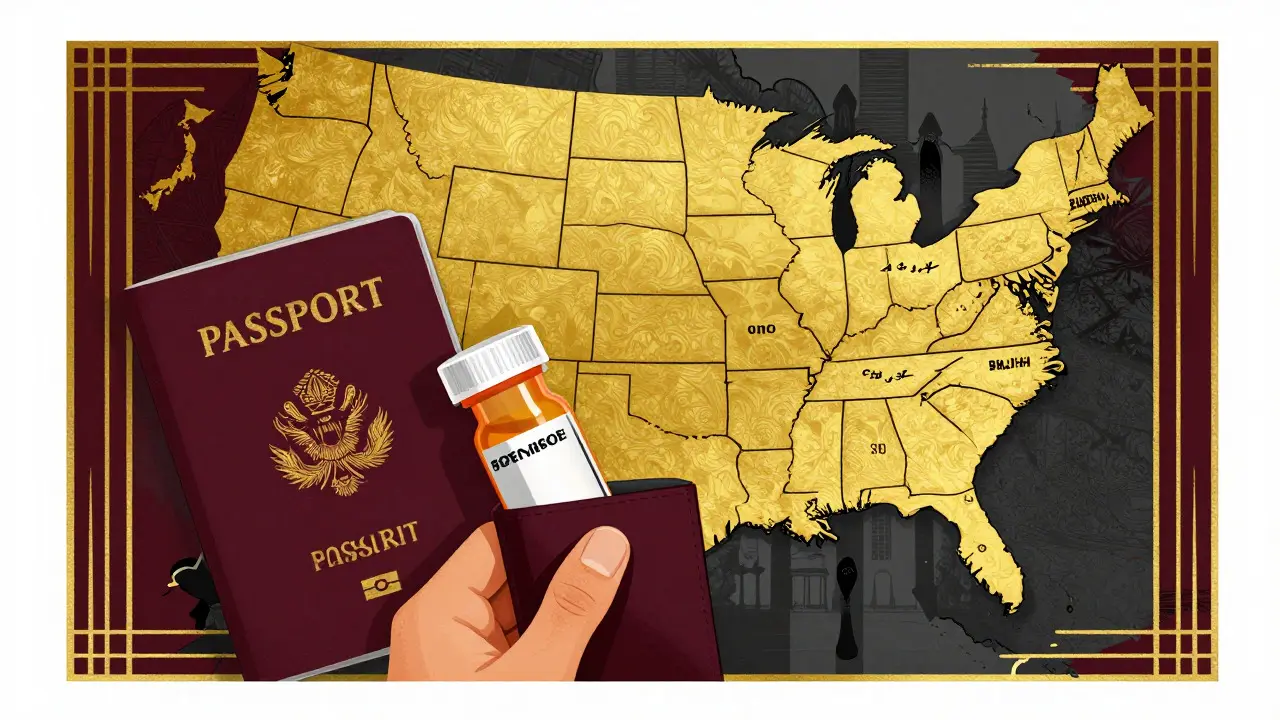
International Travel: The High-Stakes Zone
Leaving the United States changes the game entirely. International borders are guarded by customs officers who enforce local drug laws, which can be vastly different from American standards. The Centers for Disease Control and Prevention (CDC) reported that 47% of medication-related travel incidents in 2023 involved common medications deemed illegal in destination countries. Yes, the allergy medicine or painkiller you buy over-the-counter in the U.S. could land you in trouble abroad.
For example, pseudoephedrine (found in Sudafed) is prohibited in Japan, the UAE, and South Korea. Codeine-containing medications are restricted in Thailand, Singapore, and the UAE. Stimulants like Adderall and Ritalin are banned in multiple European and Middle Eastern nations. Without the original pharmacy label, proving that your pills are prescribed to you becomes nearly impossible. The label provides the critical link between the patient, the prescribing doctor, and the specific dosage.
The data supports this caution. The U.S. Embassy in Mexico reported a 68% reduction in medication-related entry denials when travelers presented medications in pharmacy-labeled containers accompanied by physician documentation. Similarly, the International Association for Medical Assistance to Travelers found that travelers with original containers experienced 73% fewer delays during customs inspections compared to those using pill organizers. In these high-stakes environments, the original bottle is your passport to freedom.
Liquids, Insulin, and Temperature Control
Solid pills are only half the battle. Many travelers rely on liquid medications, insulin pens, or creams that fall under the TSA’s liquid restrictions. The good news is that medically necessary liquids are exempt from the standard 3.4-ounce rule. As of September 2023, the TSA allows reasonable amounts of liquid medicine exceeding 3.4 ounces in carry-on bags. However, you must declare these items to a TSA officer at the start of the screening process.
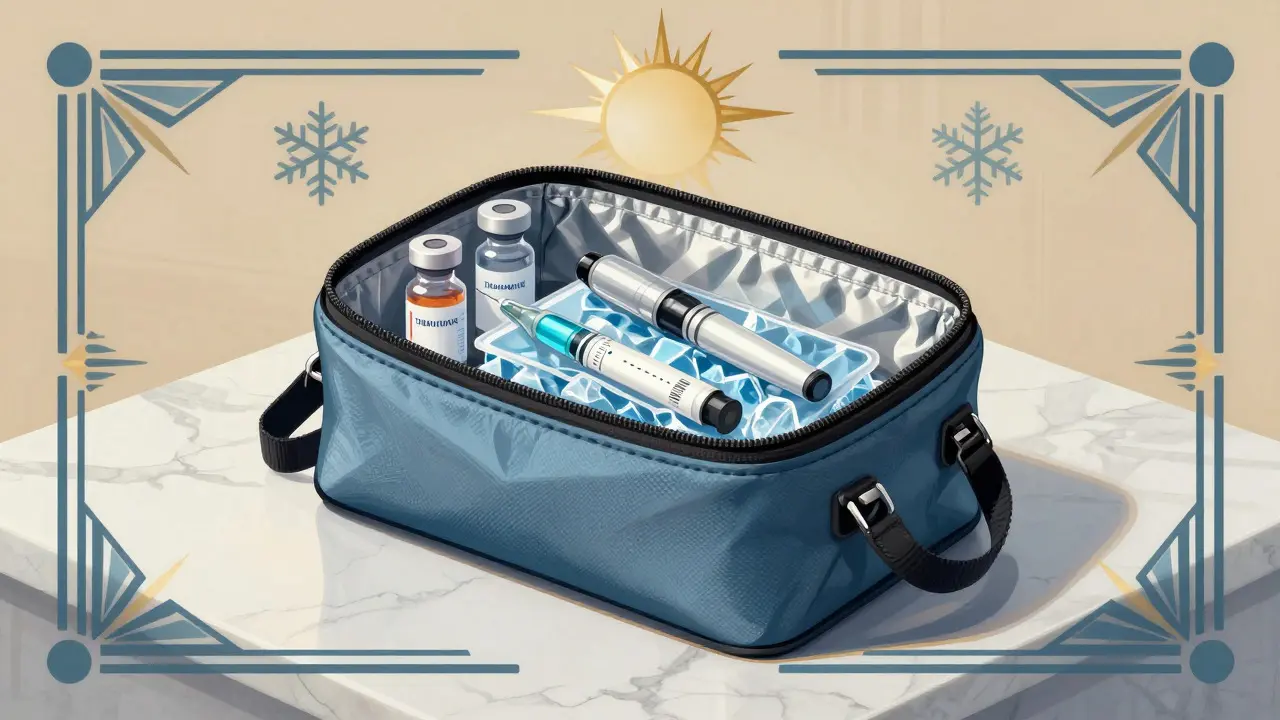
Temperature control is another silent killer for medications. The International Air Transport Association’s 2023 incident report revealed that 17.3% of medications placed in checked luggage experienced temperature excursions beyond manufacturer specifications. Cargo holds can freeze or bake, ruining the efficacy of drugs like insulin or biologic injectables. Never place medication in a checked bag. Keep it in your carry-on where you can monitor it.
If you need ice packs for temperature-sensitive meds, they are permitted but must be declared during screening. The Cleveland Clinic advises consulting your pharmacist about storage requirements before you fly. In 2023, 23% of travelers experienced medication degradation due to improper storage, a statistic that underscores the importance of planning ahead. Use insulated pouches designed for travel, and consider bringing a cooler bag that meets airline size requirements.
The Documentation Safety Net
Even with original containers, documentation is your best defense. Experts consistently recommend carrying a copy of your prescription or a letter from your doctor. This letter should describe your medical condition, list the medicines by generic name, specify the dosage, and include the prescribing physician’s license number and contact information. Printing this on official letterhead adds a layer of authenticity that border agents appreciate.
Why go to this trouble? Because visual identification isn't always enough. A bottle might look authentic, but if the name on the label doesn't match your ID or if the medication is controlled in the destination country, you need proof of medical necessity. Braven Health’s November 2023 guidance emphasizes including the generic name of the medicine, as brand names vary globally. For instance, a drug known as "Prozac" in the U.S. might be listed under its generic name "Fluoxetine" elsewhere.
Digital backups are also crucial. Take photos of all your medication labels, prescriptions, and doctor’s letters. Store them in a cloud service accessible via your phone. If your physical documents get lost or confiscated, having a digital record can help you obtain replacements or prove your case to authorities.
Practical Packing Checklist
To ensure a smooth journey, follow this streamlined packing protocol:
- Keep it original: Pack all prescription medications in their original pharmacy-labeled bottles.
- Carry-on only: Place all medications in your carry-on bag to avoid temperature extremes and loss.
- Bring extra: Pack enough medicine for your entire trip plus three extra days in case of delays.
- Declare liquids: Inform TSA officers immediately if you have liquid medications or ice packs.
- Document everything: Carry a doctor’s letter and copies of prescriptions.
- Check destination laws: Verify if your medications are legal in your destination country before booking.
By adhering to these steps, you transform a potential source of anxiety into a managed part of your travel routine. The goal is not just compliance, but peace of mind. Knowing that your health essentials are secure, labeled, and documented allows you to focus on enjoying your trip rather than worrying about customs inspections.
Does the TSA require medications to be in original bottles?
No, the TSA does not federally require medications to be in original prescription bottles. However, they highly recommend it to speed up screening and avoid confusion. State laws and international customs may still require original containers, so it is the safest practice overall.
Can I bring liquid medication over 3.4 ounces?
Yes, medically necessary liquids are exempt from the 3.4-ounce limit. You can bring reasonable amounts for your trip duration, but you must declare them to a TSA officer at the beginning of the screening process. Ice packs are also allowed if declared.
Should I put my medication in checked baggage?
Never place medication in checked baggage. Checked luggage is subject to extreme temperatures that can degrade medications, and bags can be delayed or lost. Always keep essential medicines in your carry-on bag where you can access them and monitor conditions.
What happens if I travel with medication in a pill organizer internationally?
You risk significant delays, confiscation, or denial of entry. Many countries require proof of prescription via original pharmacy labels. Without them, customs officers cannot verify the medication's legitimacy or dosage, leading to increased scrutiny and potential legal issues.
Do I need a doctor's note for traveling with medication?
While not always legally required domestically, a doctor's note is highly recommended, especially for international travel or controlled substances. The note should include your diagnosis, medication names (generic), dosages, and the doctor's contact info to facilitate smoother customs clearance.