Tyramine-Rich Foods and MAO Inhibitors: What You Must Avoid to Prevent Hypertensive Crisis
 Dec, 22 2025
When you're taking an MAO inhibitor for depression, your food choices aren't just about taste or nutrition-they can be a matter of life or death. A single bite of aged cheese, a splash of soy sauce, or a glass of red wine could send your blood pressure soaring in minutes. This isn't a myth. It's a real, documented risk called a hypertensive crisis, and it happens when tyramine builds up in your body because your MAOI blocks the enzyme that normally breaks it down.
Why Tyramine Is Dangerous with MAO Inhibitors
MAO inhibitors, or MAOIs, were among the first antidepressants developed in the 1950s. They work by stopping the enzyme monoamine oxidase from breaking down brain chemicals like serotonin, dopamine, and norepinephrine. But that same enzyme also handles tyramine-a compound naturally found in aged, fermented, or spoiled foods. When MAOIs block it, tyramine slips into your bloodstream unchecked. Once in your system, tyramine forces your nerve endings to dump stored norepinephrine. That’s like hitting the gas pedal on your blood pressure. Within 15 to 30 minutes, your systolic pressure can jump 30 to 50 points. For some, that’s enough to trigger a hypertensive crisis: a sudden, dangerous spike that can cause stroke, heart attack, or organ damage. The threshold isn’t high. As little as 5 to 10 milligrams of tyramine can trigger a reaction in people on older MAOIs like phenelzine or tranylcypromine. A 2019 study at Brown University showed that patients experienced blood pressure spikes after eating just one ounce of blue cheese-containing up to 41 mg of tyramine per 100 grams. That’s more than four times the danger zone.Which Foods Are High in Tyramine?
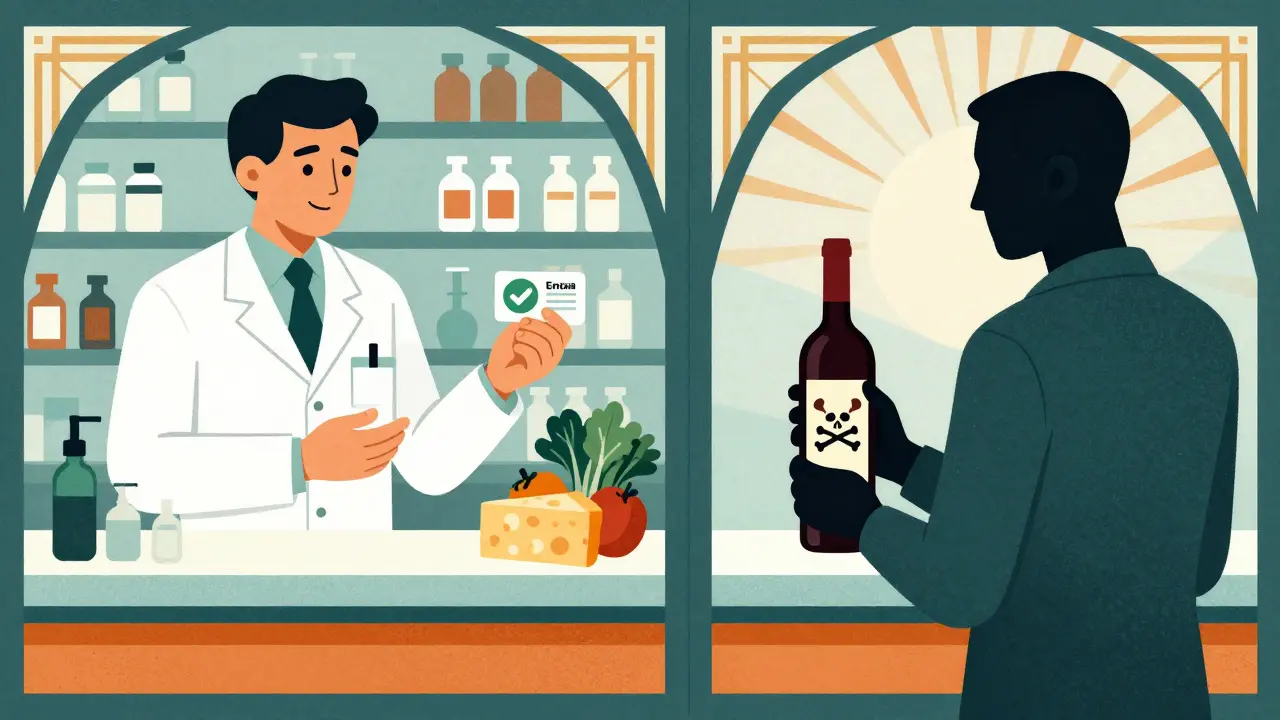
Not all foods are risky. Fresh meat, vegetables, and dairy are generally safe. The danger comes from aging, fermentation, or spoilage. Here’s what to watch out for:- Aged cheeses: Blue cheese, cheddar, Swiss, parmesan, brie, and camembert. A single ounce of blue cheese can contain 20-40 mg of tyramine. Fresh mozzarella, cottage cheese, and cream cheese are safe.
- Fermented soy products: Soy sauce, miso, tempeh, and fermented bean paste. Soy sauce alone can have 20-70 mg per 100 ml. Tamari is slightly lower but still risky.
- Cured or smoked meats: Salami, pepperoni, pastrami, and pickled herring. Pickled herring can hit 230 mg per 100 grams-enough to cause a crisis in one serving.
- Alcohol: Red wine (especially Chianti), tap beer, and aged liqueurs. Beer brewed in small batches or unpasteurized can be especially high.
- Overripe or spoiled foods: Any fruit or vegetable left too long can develop tyramine. A banana with brown spots? Skip it. Leftover stew left out overnight? Don’t risk it.
The European Food Safety Authority found that tyramine levels can jump 300-500% during aging. That means a cheese that was safe last week might be dangerous this week. Always check expiration dates and smell for off odors.
Not All MAOIs Are the Same
The risk isn’t the same for every MAOI. There are three main types, and your dietary rules depend on which one you’re taking.- Traditional irreversible MAOIs (phenelzine, tranylcypromine, isocarboxazid): These require strict limits. The Mayo Clinic advises keeping daily tyramine under 15 mg. That’s less than half an ounce of blue cheese.
- Reversible MAO-A inhibitors (moclobemide): Available in Europe and Canada, but not the U.S. These are safer because they let tyramine displace them from the enzyme. Studies show no crisis even with 100 mg of tyramine.
- Transdermal selegiline (Emsam patch): Approved by the FDA in 2006. At the lowest dose (6 mg/24 hours), it only blocks MAO-B in the gut, so tyramine is still broken down. No dietary restrictions needed. At higher doses (9 mg and 12 mg), you need to avoid very high-tyramine foods like aged cheese or pickled herring.
A 2020 review in CNS Drugs found that 87% of people on traditional MAOIs said dietary rules were their biggest struggle. Only 22% of those on the low-dose Emsam patch felt the same. That’s why new prescriptions are shifting toward transdermal options.
What Happens If You Accidentally Eat Something Risky?
Many people do. A 2023 Reddit survey of 412 MAOI users found that 74% accidentally ate a high-tyramine food at least once. Most had mild symptoms: headache, flushing, rapid heartbeat, or nausea. But 2% needed emergency care. Early warning signs of a hypertensive crisis:- Sudden, severe headache (often at the back of the head)
- Blurred vision
- Chest pain or palpitations
- Profuse sweating
- Nausea or vomiting
If your systolic blood pressure hits 180 mmHg or higher, or you have any of these symptoms, call emergency services immediately. Do not wait. The American College of Medical Toxicology now recommends nicardipine as the first-line treatment to slowly lower pressure without risking brain damage.
How to Stay Safe Without Feeling Isolated
Dietary restrictions are the #1 reason people quit MAOIs. A 2022 analysis of 317 forum posts found that 68% stopped because of social pressure. Dining out, holiday meals, or even a friend’s homemade soup can feel impossible. But there are ways to manage:- Use a food list, not guesses. Don’t rely on “I think this is okay.” Use a printed guide from your doctor or the Massachusetts General Hospital protocol. It includes exact portion sizes: e.g., “1 ounce of aged cheese = safe,” “2 tablespoons of soy sauce = dangerous.”
- Buy fresh and cook at home. Fresh chicken, fish, eggs, rice, and vegetables are your allies. Avoid pre-packaged or deli meats unless labeled “fresh” and refrigerated under 40°F.
- Ask restaurants for plain, unaged ingredients. Say: “I’m on medication that reacts with aged or fermented foods. Can I get grilled chicken with steamed vegetables and plain rice?” Most chefs will accommodate.
- Keep a blood pressure monitor at home. The American Psychiatric Nurses Association recommends daily checks. If your pressure spikes above 160/100, contact your doctor. Some devices can send alerts automatically.
Patients who followed a 45-minute educational program from Massachusetts General Hospital cut their dietary violations from 32% to just 8% in six months. Knowledge isn’t just power-it’s protection.
What’s Changing in 2025?
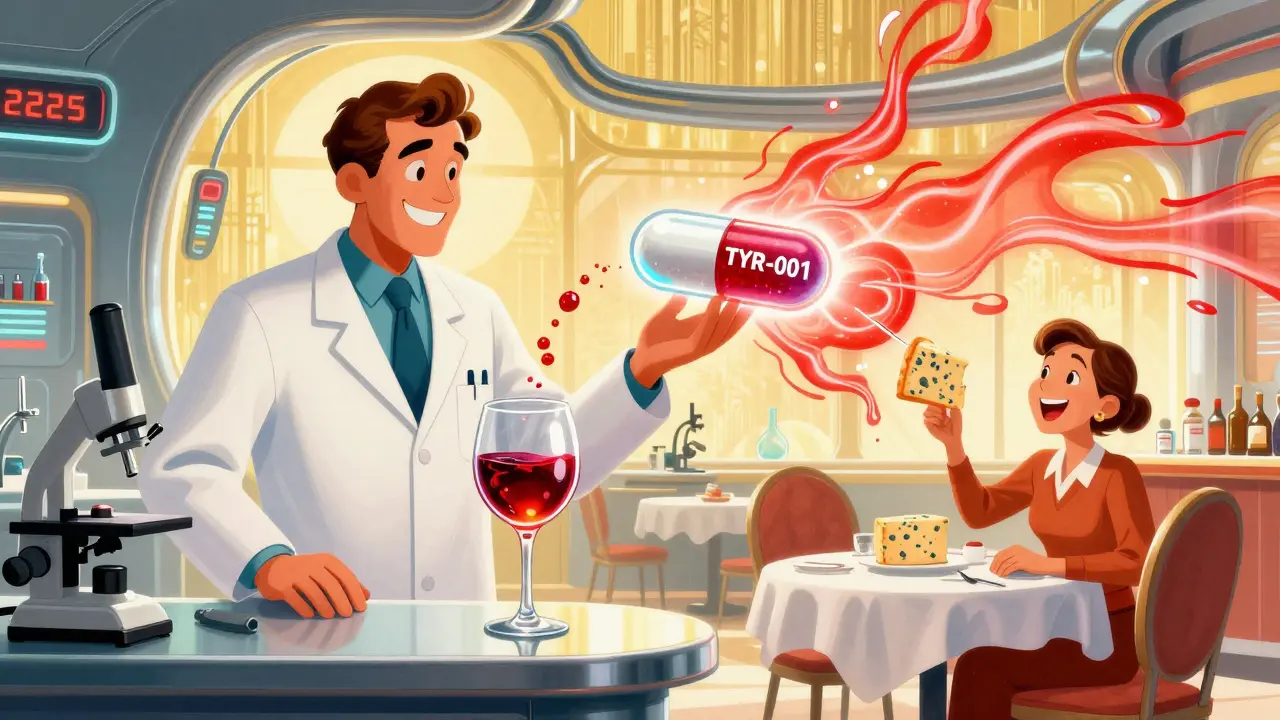
The field is evolving. In March 2024, the FDA gave breakthrough status to TYR-001, a new enzyme supplement from Sage Therapeutics. In Phase II trials, it allowed people to eat high-tyramine foods without a single hypertensive crisis-even at doses up to 50 mg. If Phase III results hold, this could change everything. Also, the FDA now requires cheese packaging in the U.S. to list tyramine content if it exceeds 10 mg per serving. That’s a big step toward transparency. In Europe, guidelines have been relaxed for transdermal selegiline, allowing all doses to avoid only extreme sources like spoiled meat or concentrated fermented pastes. Market projections show MAOI use will stay steady at 2-3% of antidepressant prescriptions through 2030. But with safer delivery methods and new enzyme therapies, that number could climb to 5-7% by 2035.Is an MAOI Right for You?
MAOIs aren’t first-line for a reason. They come with risks. But for people who’ve tried two or more other antidepressants and still struggle with depression-especially atypical depression with fatigue, oversleeping, and weight gain-they can be life-changing. A 2022 study in the Journal of Affective Disorders found that 61% of long-term MAOI users (2+ years) called their improvement “life-changing.” They didn’t say it was easy. But they said it was worth it. If you’re considering an MAOI, talk to your doctor about:- Whether you’re a candidate for transdermal selegiline
- Getting a tyramine food guide in writing
- Setting up home blood pressure monitoring
- Knowing the emergency signs and when to call 911
MAOIs aren’t for everyone. But for those who need them, they can be the last tool that brings back a life worth living. The key isn’t fear-it’s awareness, preparation, and knowing exactly what to avoid.
CHETAN MANDLECHA
December 23, 2025 AT 21:55Man, I had no idea soy sauce could do that. I dump it on everything. Guess I’m switching to tamari and praying.
Jillian Angus
December 25, 2025 AT 13:17i just eat fresh stuff and avoid anything that looks like it’s been thinking too hard about its life
niharika hardikar
December 26, 2025 AT 03:57The pharmacokinetic implications of monoamine oxidase inhibition on tyramine metabolism are not merely dietary advisories-they represent a critical neurochemical vulnerability. The enzymatic blockade permits unregulated catecholamine release, precipitating a hypertensive emergency that exceeds the threshold of physiological compensation. This is not a suggestion; it is a biochemically deterministic contraindication.
Steven Mayer
December 26, 2025 AT 09:44They’re hiding the real danger. MAOIs were pulled from the market in the 80s because Big Pharma didn’t want people curing depression without lifelong dependency. They brought them back with a side of fear so you’d keep taking their SSRIs. You think the tyramine thing is real? It’s a distraction. The real crisis is corporate control of mental health.
Charles Barry
December 27, 2025 AT 07:41Of course you’re supposed to avoid cheese. That’s what they want you to think. Meanwhile, the FDA approved a patch that’s barely regulated and lets people eat whatever they want at higher doses. This isn’t science-it’s a controlled rollout to normalize MAOI use while keeping the public terrified of cheese. Wake up.
Rosemary O'Shea
December 28, 2025 AT 15:28How quaint. You people treat dietary restrictions like a chore. In Paris, we’ve known for decades that aged cheese is sacred-and MAOIs are for the weak. If you can’t handle a little tyramine, perhaps you shouldn’t be on psychotropics at all. This isn’t nutrition. It’s character testing.
Ajay Sangani
December 30, 2025 AT 09:42you know what’s funny? the enzyme that breaks down tyramine also breaks down serotonin… so if you block it for depression… are you kinda just trading one problem for another? like… is the brain just a mess of trade-offs? maybe we’re all just one bad slice of cheddar away from chaos
Bhargav Patel
December 31, 2025 AT 14:00It is imperative to recognize that the dichotomy between therapeutic efficacy and dietary restriction represents a profound ethical dilemma in clinical psychiatry. The autonomy of the patient is compromised not by pharmacological toxicity alone, but by the social alienation induced by stringent food protocols. The transdermal selegiline paradigm, by mitigating this burden, constitutes a significant advance in patient-centered care. One must not conflate medical necessity with moral judgment.
siddharth tiwari
January 2, 2026 AT 12:05you think this is bad? wait till you hear about the hidden tyramine in store bought broths and ‘natural flavorings’… they dont even list it. i got a spike from a ‘low sodium’ soup. the FDA is in bed with the cheese lobby. trust no one.
Diana Alime
January 3, 2026 AT 13:03i just took my patch and ate a burrito with queso. if i die, at least i died happy. also who wrote this? it’s 10 pages long. i’m gonna nap now.
Payson Mattes
January 4, 2026 AT 01:54Wait-did you know that the 2024 FDA tyramine labeling rule? That’s just a cover. The real breakthrough is TYR-001. They’re testing it on veterans. They’re not telling you this, but the supplement isn’t just blocking tyramine-it’s rewriting your gut microbiome to permanently disable MAO-A. That’s why they’re pushing the patch. They’re preparing you for a world where you can’t choose to go off MAOIs. You’re being prepped for biological compliance. I’ve got the leaked Phase III data. I can send it.