What Does a Medication Expiration Date Really Mean for Your Safety?
 Mar, 19 2026
When you find an old bottle of painkillers in your medicine cabinet, you might wonder: is it still safe to take? The date printed on the label isn’t just a suggestion-it’s a legal and scientific boundary set by manufacturers to guarantee the drug works as intended. But here’s the thing: that date doesn’t always mean the medicine stops working the moment it passes. In fact, many drugs stay effective for years beyond their expiration date. The real question isn’t just expiration date, it’s how the medicine was stored and what kind of drug it is.
What the Expiration Date Actually Guarantees
The expiration date on your medication isn’t a "use-by" date like milk. It’s the last day the manufacturer guarantees the drug will be at least 90% potent and completely safe under ideal storage conditions. This isn’t a guess. The U.S. Food and Drug Administration (FDA) requires drugmakers to test their products under controlled heat, humidity, and light to figure out how long they hold up. Most drugs are tested for 12 to 60 months, and manufacturers set the expiration date conservatively-often well before the drug actually degrades.
For example, the NIH’s Shelf Life Extension Program tested over 3,000 lots of 122 different drugs for the military. The results? About 88% of them were still effective 15 years past their expiration date. Ciprofloxacin, a common antibiotic, kept 97% of its strength 12 years after expiring. Amoxicillin, another antibiotic, still worked at 94% potency eight years later. If you’ve ever wondered why the military stockpiles drugs for decades, this is why.
But Not All Medicines Are Created Equal
While many pills hold up fine, some medications degrade quickly-and dangerously. These aren’t just theoretical risks. Real people have been hurt by them.
- Nitroglycerin for chest pain loses half its potency in just 3 to 6 months after opening-even if it’s still within the printed expiration date. Taking an expired or poorly stored nitroglycerin tablet during a heart attack could mean the difference between life and death.
- Insulin breaks down fast if it gets too warm. At temperatures above 8°C, it loses 1.5% to 2.5% of its strength each month. A diabetic using degraded insulin might not realize their blood sugar is rising until it’s too late.
- Liquid antibiotics like amoxicillin-clavulanate suspension become useless after 14 days, even if the bottle says it’s good for two years. Bacteria can grow in the liquid, making it not just weak-but harmful.
- Epinephrine (EpiPens) loses 15-20% of its strength every year after expiration. In an allergic emergency, that drop could mean the auto-injector doesn’t work well enough to save a life.
- Warfarin, a blood thinner, becomes unpredictable when old. Its effectiveness can swing wildly, raising the risk of dangerous bleeding or blood clots.
The Institute for Safe Medication Practices calls these high-risk drugs Category 1. They’re the ones you should never risk using past their date. If you’re treating something life-threatening-heart disease, seizures, infections, allergies-don’t gamble with expired meds.
Storage Matters More Than You Think
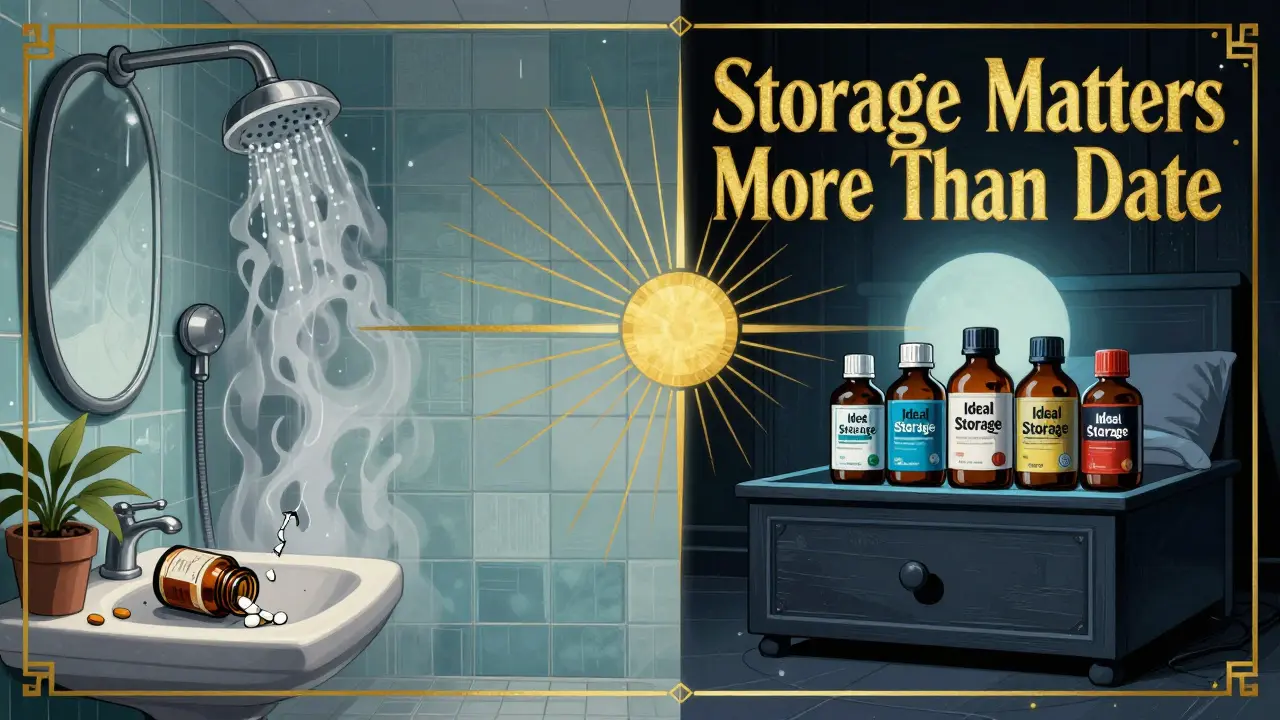
Your medicine cabinet above the sink is one of the worst places to store pills. Bathroom humidity can hit 75-85% during showers, and heat from pipes or sunlight can accelerate degradation. Studies show that keeping drugs at 30°C instead of 25°C can make them break down 40-60% faster.
The best place? A cool, dry drawer-not the bathroom, not the car, not the windowsill. Keep medications in their original bottles with child-resistant caps sealed tight. That packaging was designed to protect them from air, moisture, and light. If you see pills that are discolored, cracked, sticky, or smell weird, throw them out. That’s not just caution-it’s science.
What Experts Really Say
The FDA’s official line is clear: "Don’t use expired medicines. It’s risky." And for good reason. They’re not trying to scare you-they’re trying to prevent harm. But some of the top names in pharmacy disagree with the blanket warning.
Dr. Lee Cantrell, who runs the California Poison Control System, found that 12 prescription drugs stayed at 90% potency for 28 to 40 years past expiration when stored properly. Johns Hopkins Hospital’s chief pharmacist, Dr. Joel Davis, says for stable conditions like high blood pressure, an expired ACE inhibitor might be fine for a few extra weeks during a shortage-especially if it’s been kept cool and dry.
That doesn’t mean you should start using old heart meds or antibiotics without thinking. But it does mean the rules aren’t one-size-fits-all. For chronic conditions where you’re not on a tight schedule-like statins for cholesterol or antidepressants-there’s often a buffer. For emergencies or life-critical drugs? No buffer exists.
What Should You Do?
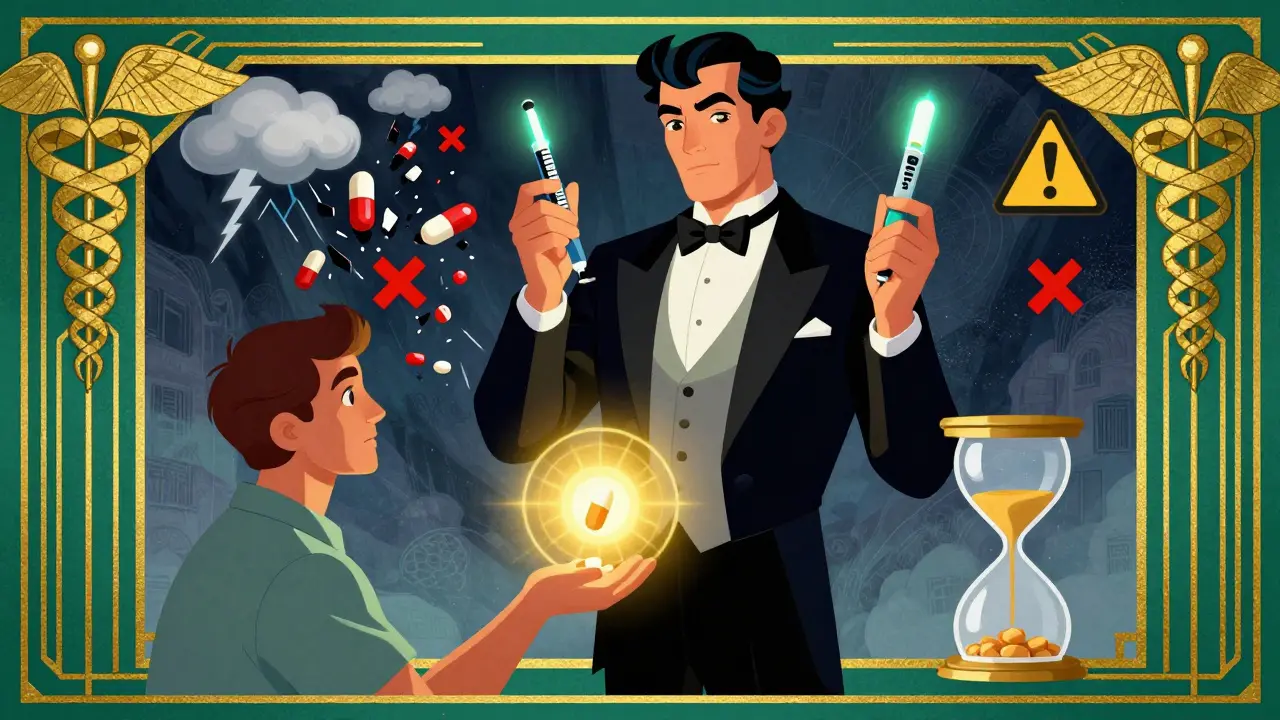
Here’s a simple guide based on real-world risk:
- Throw away immediately: Nitroglycerin, insulin, liquid antibiotics, EpiPens, and warfarin if they’re past their date.
- Use with caution: Solid pills like ibuprofen, acetaminophen, statins, or antihistamines that are only a year or two past expiration and stored well. If they look and smell normal, they’re probably fine for short-term use.
- Never use: Any medicine that’s changed color, texture, or smell. Crumbling, sticking, or crystallizing pills are signs of chemical breakdown.
If you’re unsure, call your pharmacist. They can check the batch, storage history, and whether it’s one of the risky ones. Most pharmacies also offer free disposal programs. In 2023 alone, U.S. drug take-back events collected over 900,000 pounds of unused meds. You don’t need to flush them-unless they’re on the FDA’s Flush List (like fentanyl patches or oxycodone tablets). Otherwise, drop them off at a pharmacy or local collection site.
The Bigger Picture: Waste vs. Safety
The U.S. throws away $765 billion worth of medication every year because of expiration dates. That’s 13-15% of all drug spending. The military saves $1.2 billion annually by extending the life of stockpiled drugs. New tech is emerging too-smart packaging with sensors that track temperature and update expiration dates in real time. A pilot program in 2023 showed insulin waste dropped by 22% when storage conditions were monitored.
By 2030, experts predict we could extend average drug shelf lives by nearly half, saving billions. But until then, the safest rule is simple: when in doubt, don’t take it. Especially if it’s for something serious. For everyday pain or allergies, a slightly old pill might still help. For anything that could save your life? Always use a fresh one.
Can I still take pills that expired a year ago?
For most solid pills-like ibuprofen, aspirin, or antidepressants-if they’ve been stored in a cool, dry place and look normal (no discoloration, crumbling, or odor), they’re likely still safe and effective. But don’t use them for serious conditions like heart disease, infections, or seizures. When in doubt, replace them.
Why do some drugs expire so quickly?
Drugs like insulin, nitroglycerin, and liquid antibiotics are chemically unstable. They break down faster when exposed to heat, light, or moisture. Manufacturers set short expiration dates because their safety depends on exact potency. A 10% drop in insulin can cause dangerous blood sugar swings. A weak antibiotic won’t kill bacteria-it might just make them resistant.
Is it safe to use expired EpiPens in an emergency?
If you have no other option during a life-threatening allergic reaction, using an expired EpiPen is better than doing nothing. But it may not deliver the full dose. Studies show EpiPens lose 15-20% potency per year after expiration. Always replace them before they expire, and carry two if you’re at risk for anaphylaxis.
How should I store my medications to make them last longer?
Keep them in their original containers, sealed tight, in a cool, dry place away from sunlight. A bedroom drawer is better than a bathroom cabinet. Avoid leaving pills in hot cars or near stoves. Ideal storage is below 25°C (77°F) and under 60% humidity. Use a dehumidifier if you live in a humid climate.
What’s the best way to dispose of expired medicine?
Use a drug take-back program. Many pharmacies and police stations host collection events twice a year. If that’s not available, mix pills with coffee grounds or cat litter in a sealed bag before throwing them in the trash. Never flush unless it’s on the FDA’s Flush List (like fentanyl or oxycodone). Flushing harms water systems and is only for high-risk drugs.
Paul Ratliff
March 19, 2026 AT 15:28becca roberts
March 20, 2026 AT 14:04my grandma stored her pills in a drawer for 18 years. she's 92 and still hikes. i'm not touching her meds. but i'm not calling them poison either.
Kal Lambert
March 20, 2026 AT 22:12if it's insulin, epi, or liquid antibiotic? nope.
pharmacists know this. ask one next time you're in.
Ryan Voeltner
March 21, 2026 AT 02:43the regulatory framework is conservative by design.
individual risk assessment matters more than blanket warnings.
SNEHA GUPTA
March 22, 2026 AT 03:46i have seen people take expired antihistamines for years.
no one died. no one got sicker.
but we also don't have refrigerators for every medicine.
the west treats pills like fragile art.
we treat them like tools.
both have consequences.
Nilesh Khedekar
March 23, 2026 AT 10:28think about it. if people knew pills last 10+ years, they'd stop buying new ones.
companies would lose billions.
so they push fear.
and now everyone's scared to take anything older than 6 months.
conspiracy? maybe.
but i've seen the numbers.
and i'm not convinced.
Aileen Nasywa Shabira
March 23, 2026 AT 14:46no.
i'll pay $10 for a new bottle.
because i don't want to be the guy who 'almost died' because he 'saved a buck'.
you're not a hero for taking expired meds.
you're a statistic waiting to happen.
Kendrick Heyward
March 24, 2026 AT 03:19people are too lazy to go to the pharmacy.
too cheap to replace a $5 pill.
and now we're all just taking expired junk like it's a game of russian roulette.
my uncle took expired antibiotics. got sepsis.
he's fine now.
but he could've died.
and now i'm mad.
because he didn't even have to do it.
:(
Manish Singh
March 24, 2026 AT 16:33we use old pills.
not because we're reckless.
because we're practical.
if it looks right, smells right, and doesn't make me feel worse? i use it.
if it looks like it's trying to escape the bottle? i toss it.
simple.
jared baker
March 25, 2026 AT 03:49if it's changed color? throw it.
if it's for your heart? don't risk it.
that's it.
Amadi Kenneth
March 25, 2026 AT 20:11the pharmaceutical lobby.
the fda.
the big chains.
they want you to keep buying.
they don't care if your aspirin still works.
they care if you buy a new bottle every 6 months.
and guess what?
they've been lying to you for decades.
the military knows.
the scientists know.
you? you're just a consumer.
and they're milking you.
Michelle Jackson
March 26, 2026 AT 15:00the fda changed their mind last year.
then again.
now they're saying don't use it.
then someone says it's fine.
who do i believe?
my gut?
or the guy who sold me the bottle?
i just throw it out.
it's easier.
Shameer Ahammad
March 28, 2026 AT 14:58potency does not vanish at midnight on the expiration date.
it is a continuous decay curve.
and yet, regulatory agencies enforce a cliff.
this is not science.
this is liability management.
and we are all paying for it.
Alexander Pitt
March 29, 2026 AT 15:44we get 5-10 calls a week about expired meds.
here's what i tell people:
if it's a painkiller, antihistamine, or statin? probably fine if stored well.
if it's insulin, epi, or antibiotics? no.
if it smells funny or looks weird? throw it out.
if you're not sure? call us.
we don't charge.
we just want you alive.
Robin Hall
March 31, 2026 AT 00:12it is a legal liability threshold.
the manufacturer is not responsible after that date.
if you take it and get sick? you have no recourse.
this is not about science.
this is about lawsuits.
and if you choose to ignore it?
you are accepting full responsibility.
for yourself.
and for your family.